


Module 4: Google Ads / SEM (Search Engine Marketing)
Running ads is easy, but running them profitably is an art and a science. Many advertisers waste money on ineffective campaigns due to poor structuring, vague targeting, or unoptimized bidding strategies. That’s where Google Ads Optimization comes in. It’s the process of refining your campaigns to achieve lower costs and higher ROI.
In this lesson of our Digital Marketing Course by Kamlesh Singad from CWK Agency, you’ll learn how to practically optimize your Google Ads campaigns with real-world examples and data-driven strategies.
What is Google Ads Optimization?
Google Ads Optimization involves continuous monitoring and tweaking of your campaign settings, targeting, bidding, keywords, and ad copies to improve performance. The goal is to achieve maximum results with minimum spend.
Core Objectives:
- Reduce Cost Per Click (CPC)
- Improve Click Through Rate (CTR)
- Lower Cost Per Conversion (CPA)
- Increase Conversion Rate (CR)
- Enhance Return on Ad Spend (ROAS)
Also Read: Cyber War Explained in 5 Minutes: What Is Cyber War? A Beginner’s Guide to Cyber Security


How Google Ads Works: A Quick Refresher
Before optimizing, understand how the ad auction works:
- Ad Rank = Quality Score x Bid Amount
- Quality Score includes CTR, ad relevance, and landing page experience
- Google favors relevant and high-performing ads, often reducing CPC for optimized ads
So, optimizing your campaigns improves Quality Score, leading to lower costs and higher ROI.
25 Key Areas for Google Ads Optimization
1. Account Structure
- Organize campaigns by theme, product, or service
- Use separate ad groups for tightly related keyword sets
2. Keyword Match Types
- Use a mix of broad match, phrase match, and exact match
- Avoid overusing broad match which can waste budget
3. Negative Keywords
- Block irrelevant searches that eat into your budget
- Regularly review search terms report and add negatives
4. Ad Extensions
- Use sitelinks, callouts, and structured snippets to increase ad real estate
- Improves CTR and Quality Score
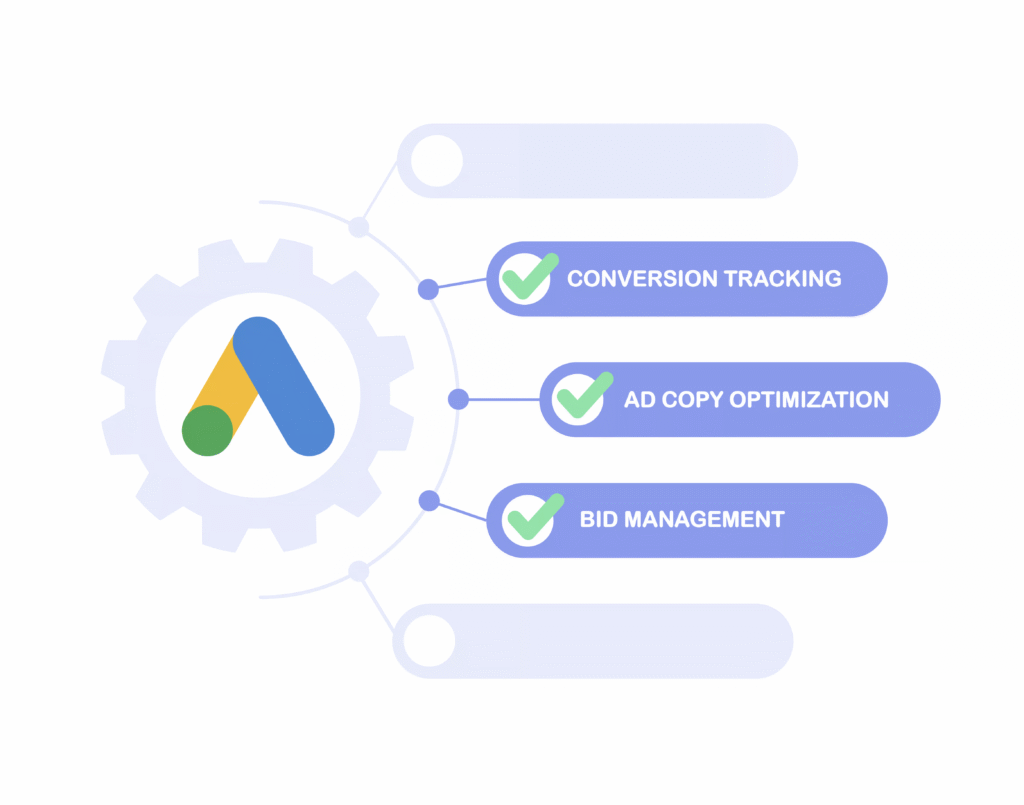
5. Responsive Search Ads
- Let Google test multiple headlines and descriptions
- Boosts performance through machine learning
Also Read: What Is Agile Methodology? A 6-Minute Beginner’s Guide

6. Geographic Targeting
- Focus your budget on high-performing locations
- Exclude non-converting regions
7. Ad Scheduling
- Run ads during peak hours only
- Analyze time-of-day performance
8. Device Targeting
- Adjust bids for desktop, mobile, and tablets based on results
9. Demographic Targeting
- Target by age, gender, income, etc.
- Exclude poor-performing demographics
10. Bidding Strategy
- Start with manual CPC for control
- Move to automated strategies like Maximize Conversions or Target CPA as data grows
11. Conversion Tracking
- Ensure accurate tracking setup with Google Tag Manager
- Track sales, form submissions, phone calls, etc.
12. Landing Page Optimization
- Ensure fast loading, mobile responsiveness, and relevance
- Align messaging with ad copy
13. Quality Score Improvement
- Improve CTR, ad relevance, and landing page experience
- Monitor each keyword’s Quality Score in your account
14. Remarketing Campaigns
- Retarget visitors who didn’t convert
- Use personalized ads to bring them back
15. A/B Testing Ads
- Test different versions of headlines, CTAs, and descriptions
- Pause underperforming ads
Also Read: Introduction to Software Development Life Cycle (SDLC): What Is Software Development?

16. Smart Campaign Setup
- Use Google’s AI to auto-optimize based on conversion data
17. Campaign Budget Allocation
- Shift budget to high-performing campaigns
- Reduce waste from underperforming ones
18. Use Google Recommendations Wisely
- Review “Optimization Score” suggestions
- Apply only those aligned with your goals
19. Use Google Analytics with Ads
- Deeper insight into user behavior
- Identify which keywords drive post-click engagement
20. Dynamic Keyword Insertion (DKI)
- Match user’s query in the ad copy
- Increases relevance and CTR
21. Exclude Display Network (if not required)
- For lead generation, search network often performs better
22. Check Impression Share
- Increase budget or improve bids to capture missed impressions
23. Run Brand Campaigns
- Protect your brand name in search results
24. Use Custom Audiences
- Target users based on their online behavior
25. Regular Optimization Routine
- Weekly checks: CTR, CPC, conversions
- Monthly audits: Bids, budget, keyword performance
Real-Life Case Study by CWK Agency
A real estate company approached CWK Agency with ₹50,000 ad spend and low conversions.
Optimization Strategy:
- Reorganized campaigns by property type
- Excluded broad match keywords like “cheap house”
- Added callout extensions & CTA-rich ads
- Used Target CPA after testing manual CPC
Results in 30 Days:
- CPC dropped by 38%
- Conversions increased by 65%
- ROI improved by 2.5x
Key Lesson: Optimization unlocks profits from the same ad spend.

Tools for Google Ads Optimization
- Google Ads Editor – Bulk changes
- Google Analytics 4 – Behavior analysis
- Google Tag Manager – Conversion tracking setup
- Semrush / Ahrefs – Keyword analysis
- Looker Studio – Performance dashboards
- CWK Audit Toolkit – Custom optimization checklists
Common Mistakes in Google Ads Campaigns
- Not using negative keywords
- Ignoring mobile bid adjustments
- Weak or generic ad copy
- Not tracking conversions properly
- Targeting too broad an audience
Conclusion: From Spend to Smart Investment
Google Ads Optimization is the difference between spending money and making money. With the right strategy, you can drive lower cost and higher ROI, even on small budgets.
Whether you’re running ads for eCommerce, lead generation, or services, use this optimization guide from Kamlesh Singad at CWK Agency to improve your results on practical grounds.
Optimization isn’t a one-time task; it’s a continuous process. But with patience and proper tools, Google Ads can become your most profitable digital marketing channel.
FAQs
What is Google Ads Optimization?
Answer: Google Ads Optimization is the ongoing process of improving your Google Ads campaigns to reduce cost-per-click (CPC), increase conversions, and maximize return on investment (ROI). It involves tweaking keywords, bids, ad copy, targeting, and campaign structure.
How does optimization help achieve lower cost and higher ROI?
Answer: By optimizing your campaigns, you improve your Quality Score, reduce wasted ad spend, and attract more relevant traffic. This leads to lower ad costs and better conversion rates, resulting in a higher ROI from the same or lower budget.
What are the most important elements to optimize in Google Ads?
Answer: Key elements include:
- Campaign structure
- Keyword match types
- Negative keywords
- Bidding strategy
- Ad creatives and extensions
- Audience targeting
- Device and location settings
- Landing page experience
How often should I optimize my Google Ads campaigns?
Answer: Ideally, you should review performance weekly and perform in-depth optimizations monthly. Continuous monitoring and testing are essential to adapt to changes in audience behavior and competition.
What is Quality Score and how does it impact ad performance?
Answer: Quality Score is Google’s rating of the relevance and quality of your ads, keywords, and landing pages. Higher scores lead to lower CPC and better ad placements. It is influenced by expected CTR, ad relevance, and landing page experience.
Can I achieve good results with a small Google Ads budget?
Answer: Yes. With smart optimization techniques like precise targeting, negative keywords, and relevant ad copy, even a small budget can deliver high ROI. Focus on high-intent keywords and track conversions closely.
What bidding strategy is best for maximizing ROI?
Answer: It depends on your campaign goal and data. Beginners may start with Manual CPC for control. Once enough data is available, switching to automated strategies like Target CPA or Maximize Conversions can improve ROI.
How can CWK Agency help in optimizing my Google Ads campaigns?
Answer: At CWK Agency, Kamlesh Singad and team offer expert Google Ads audits, advanced campaign structuring, conversion tracking setup, and continuous optimization support to deliver high-performing ad campaigns with lower costs and higher ROI.
Is there a tool to check if my ads are optimized?
Answer: Yes. Use Google Ads’ built-in Optimization Score tool, and third-party tools like Google Analytics, Looker Studio, and CWK Agency’s Audit Toolkit to measure ad efficiency and identify areas of improvement.
What’s the role of landing pages in Google Ads Optimization?
Answer: A well-optimized landing page improves user experience, increases conversion rates, and contributes to a better Quality Score. It must be fast, mobile-friendly, relevant to the ad, and have a clear CTA.