Tag: Digital Marketing Trends

  • Top 10 Local SEO Trends for 2025

    Top 10 Local SEO Trends for 2025

    Local SEO continues to evolve rapidly. For small businesses that rely on foot traffic, localized leads, or neighborhood clients, staying ahead of trends is critical. In 2025, the rules are shifting—not just in how search engines operate, but in how consumers discover nearby services. Below, we explore the top 10 Local SEO trends you must watch (and act on) to ensure your business remains visible, competitive, and profitable.

    Why Local SEO Still Matters (and Even More in 2025)

    Before diving into trends, let’s reestablish why local SEO is so important for small businesses:

    • According to recent statistics, 76% of people who search “near me” visit a business within a day.
    • 88% of consumers conducting local searches on smartphones will call or visit a store within a day.
    • Local search is high-intent; users often have immediate needs (e.g. “plumber near me,” “coffee shop open now”).
    • Even with AI, maps, voice assistants, and evolving features, the core remains: show up when someone nearby is looking for your service.

    So neglecting local SEO is akin to turning off your “open for business” sign in the digital world.

    Now, let’s see where local SEO is heading in 2025.

    Trend 1: Hyperlocal & Micro-Neighborhood Targeting

    In 2025, generic city-level optimization is not enough. Users don’t just search “plumber Mumbai” — they search “plumber in Bandra East near Linking Road” or “best bakery in Andheri West with vegan options.”

    What this means for small businesses:

    • Create hyperlocal pages: If your business serves multiple neighborhoods or zones, consider separate landing pages per micro-area (e.g. “Salon in Powai East,” “Salon near Hiranandani Gardens”).
    • Include landmarks, corridors, street names: Add references to well-known roads, apartment complexes, shopping malls in your content and meta tags.
    • Local content / blog posts tied to neighborhoods: Write posts like “Top 5 AC repair services in Vile Parle West” or “How to choose café near Marine Drive.”
    • Geo-tag assets: Photos, videos, and metadata should carry geolocation tags where possible.

    This hyperlocal focus helps match ultra-specific queries and strengthens local relevance.

    Trend 2: Voice & Conversational Search Optimization

    Voice search continues its upward trajectory, especially for local queries. People speak differently than they type—more conversational, with longer phrases and natural language.

    Actions to take:

    • Use question-format keywords: “Where can I get dry cleaning near me”, “Which plumber is open now in Surat.”
    • Provide direct answers in your content (e.g. FAQ sections) so voice assistants can easily pick them.
    • Use natural tone and context rather than robotic keyword stuffing.
    • Ensure your business name, address, phone (NAP) is precise and standardized across platforms—voice assistants heavily rely on this data.

    Voice queries often tie directly into local intent, giving an advantage to businesses well optimized for spoken language queries.

    Trend 3: Mobile-First & Performance Optimization

    Google has already shifted to mobile-first indexing, meaning the mobile version of your site is the primary one considered for rankings.

    In local search especially, users on mobile devices expect instant access to directions, contact, hours, and map links.

    What small businesses should ensure:

    • Responsive design optimized for small screens.
    • Fast load times, especially on mobile (minimize heavy images, scripts).
    • Clean interface: clickable phone numbers, map buttons, service buttons.
    • Local landing pages accessible and well-structured on mobile.

    If your mobile site is poor, you’ll lose local visitors and rankings.

    Trend 4: AI, Machine Learning & Predictive Local Search

    AI is no longer a background helper—it’s shaping how local search results are curated and personalized. Search engines increasingly use machine learning models to tailor local results based on user behavior, context, and intent.

    Implications for you:

    • Behavior signals matter: CTRs, dwell time, map interactions influence your local ranking strength.
    • Personalization & user signals: Repeat searches, user profiles, past visits can shift ranking priority.
    • Use AI in your local SEO process: Tools that analyze competitor maps listings, suggest gaps, or forecast local trends can help you outperform.
    • Optimize for generative AI / answer engines: As search interfaces evolve to include AI-overviews, optimization for these answer engines (sometimes called AEO or “answer engine optimization”) is becoming relevant.

    You’ll need to blend traditional local SEO with strategies that anticipate AI-driven local ranking shifts.

    Trend 5: Google Business Profile (GBP) Evolves & Becomes More Central

    Your Google Business Profile (formerly Google My Business) remains a pillar of local visibility. But in 2025, its features, expectations, and importance are expanding.

    Key evolutions:

    • Richer GBP content: Services, products, descriptions, attributes, posts, menus, booking links.
    • Messaging, Q&A, appointment booking directly via GBP.
    • Frequent updates matter: posts, offers, event info help signal activity.
    • More weight on actionable attributes: “Women-led,” “Free Wi-Fi,” “Offers delivery,” etc.
    • Reviews & responses must be managed diligently (see next trend).

    For small businesses, maintaining a fully optimized, active GBP is non-negotiable.

    Trend 6: Reviews, Ratings & User-Generated Content (UGC)

    In local SEO, reviews act as social proof and ranking signal. In 2025, not just the star count, but the quality, richness, recency, and response to reviews matter more than ever.

    Best practices:

    • Encourage customers to leave detailed reviews, not just “Great service.”
    • Ask them to mention particulars: “XYZ salon in Powai did my hair color beautifully.”
    • Respond to both positive and negative reviews quickly, with thoughtful replies.
    • Feature user photos in reviews, and tag those photos (e.g. location, product used).
    • Periodically audit for deleted reviews or spam—monitor review health.
    • Integrate UGC in your site (e.g. review snippets, testimonial sections, local photos).

    Well-managed reviews boost trust and local ranking strength.

    Trend 7: Local Link Building & Community Mentions

    Local backlinks and citations from nearby, relevant websites still carry weight—but in 2025, Google emphasizes community involvement, mentions, and local context over just link volume.

    Approaches to focus on:

    • Get mentions from local news sites, blogs, community portals (even non-link mentions can help).
    • Collaborate with neighboring businesses, nonprofits, local events, sponsorships.
    • Press releases around local events or causes.
    • Ensure citations (business listings) in local directories, maps apps, local listing sites.
    • Guest posts on city blogs, hyperlocal content websites.

    The more your business is seen and mentioned in your geography, the stronger your local authority signal.

    Trend 8: Visual & Video Content for Local SEO

    Search engines increasingly support visual and video elements in local results: image carousels, map-based visuals, video previews.

    What to do:

    • Upload high-quality, geo-tagged images and videos (e.g. virtual tours, shop walkthroughs).
    • Use short video snippets (Reels, Shorts) showing interior, services, staff.
    • Add descriptive captions and alt texts referencing your neighborhood.
    • Use “Google Posts” or “GBP posts” with images or videos to engage users.
    • Consider AR / visual search elements (images that map to “what’s nearby” claims).

    Rich media helps your listing stand out and may improve click-throughs from local result listings.

    Trend 9: Structured Data, Schema & Local Signals

    Structured data (schema markup) helps search engines understand your content context. In local SEO, adding the right schemas can improve your chances in rich snippets, map packs, and AI answer surfaces.

    Recommended schema:

    • LocalBusiness schema (with name, address, phone, opening hours)
    • Review / AggregateRating schema for your business reviews
    • Service or Product schema for services offered
    • FAQ schema (especially for queries like “Does this store deliver?”)
    • Event schema (if you host local events or workshops)
    • GeoCoordinates schema in structured format

    Using structured data helps Google and AI systems better parse your business’s relevance.

    Trend 10: Syndication with AI & Answer Engine Optimization (AEO / GEO)

    As AI-powered systems and generative answer engines grow, local businesses must not only optimize for search, but optimize for being referenced by AI agents (sometimes known as Answer Engine Optimization or Generative Engine Optimization—GEO).

    Strategies to adopt:

    • Produce concise, SEO-friendly answer snippets in your content (for example, answer a question clearly at the start).
    • Use authoritative, local citations and references, so AI systems are more likely to cite your content.
    • Maintain freshness and topical relevance—AI systems prefer up-to-date answers.
    • Optimize for question-answer pairings and conversational queries.
    • Monitor AI / SERP answer panels to see where your business is cited or omitted.

    In 2025, it’s not just about ranking in Google; it’s about getting cited by the AI systems users increasingly rely on.

    Implementation Roadmap for Small Businesses

    Knowing trends is useful—but execution is what counts. Here’s a practical roadmap:

    1. Audit your current local presence
      • Check GBP completeness, mobile site, citations, reviews.
      • Identify neighborhood gaps or missing location pages.
    2. Choose priority trends to act on
      • For many small businesses, start with GBP optimization, review management, local citations, and hyperlocal pages.
    3. Produce local, conversational content
      • Blog posts, FAQs, neighborhood guides, “near me” landing pages.
    4. Collect reviews & encourage detail
      • Ask satisfied customers to mention service + location.
      • Respond professionally and promptly.
    5. Develop local link/mention strategy
      • Partner with local bloggers, news sites, chambers, events.
      • Request mention or feature in local directories and community sites.
    6. Add structured data / schema
      • Use LocalBusiness, review, FAQ, event schemas.
      • Validate schema with structured data testing tools.
    7. Optimize for voice / answer queries
      • Build conversational FAQs and answer boxes in pages.
      • Monitor voice search performance.
    8. Visual & local media deployment
      • Upload geo-tagged photos, video tours, virtual walkthroughs.
      • Use GBP posts regularly with images/videos.
    9. Track & iterate based on data
      • Use Google Business Insights, Search Console, analytics to see which location pages, posts, or review types drive conversions.
      • Adjust and refine.
    10. Monitor AI / answer engine citations
      • Track when your content is used in AI summaries or answer panels.
      • Update content accordingly.

    Real-World Examples & Small Business Use Cases

    • A neighborhood café in Pune created separate pages for each locality it delivered to (“Café in Kalyani Nagar,” “Café near Aundh”) and saw each page start ranking in local SERPs.
    • A dental clinic prompted patients to write reviews specifying “root canal in Goregaon West by Dr. X” instead of “good clinic” — these richer reviews started showing in GBP and map pack highlights.
    • A boutique store uploaded 360° video tours tagged with geo-coordinates and saw increased map-clicks from Google Maps.
    • A local plumber added an FAQ “Is your service 24/7?” and was featured as a quick answer in voice search results.
    • A home repair business got featured on a community blog, and that mention, even without a backlink, improved its local credibility.

    Common Pitfalls & How to Avoid Them

    • Ignoring negative reviews — respond to them diplomatically to show care.
    • Over-optimizing without context — stuffing “near me” everywhere looks unnatural.
    • Broken or inconsistent NAP data — even small discrepancies can confuse search engines.
    • Neglecting mobile performance — slow or non-responsive pages kill conversions.
    • Ignoring AI/answer engine trends — if you wait, your competitors may gain advantage.

    Summary & Final Thoughts

    Local SEO in 2025 is not about doing the same tactics from years ago more aggressively—it’s about precision, context, experience, and adaptation. Small businesses need to:

    • Get hyperlocal and specific.
    • Speak naturally (voice & conversational).
    • Keep their mobile presence flawless.
    • Embrace AI insights and shift toward being cited in answer engines.
    • Manage GBP, reviews, visuals, local mentions actively.
  • 8 Benefits of Hiring a Digital Marketing Consultant for business growth and strategy optimization

    8 Benefits of Hiring a Digital Marketing Consultant for business growth and strategy optimization

    In today’s fast-paced, technology-driven world, the significance of a robust digital presence cannot be overstated. Whether you’re a small startup or a well-established enterprise, effective digital marketing is the key to success. But with the digital landscape continuously evolving, staying ahead can be challenging. This is where a Digital Marketing Consultant can make a world of difference. Hiring a seasoned professional to guide your digital marketing efforts offers a multitude of benefits, from strategic planning to executing targeted campaigns. In this article, we’ll explore eight transformative benefits of hiring a Digital Marketing Consultant and why it might be the best investment for your business.

    What is a Digital Marketing Consultant?

    A Digital Marketing Consultant is a seasoned expert who specializes in the strategic planning and execution of online marketing campaigns. These professionals bring a wealth of knowledge and experience, enabling businesses to navigate the complexities of the digital world. Their role typically involves analyzing your current marketing efforts, identifying areas of improvement, and developing strategies that align with your business goals. By leveraging various digital channels—such as SEO, content marketing, social media, email marketing, and paid advertising—a Digital Marketing Consultant ensures that your brand reaches the right audience at the right time.

    Also Read: Marketing Automation Trends 2024

    Benefits of Hiring a Digital Marketing Consultant

    Understanding the Role of a Digital Marketing Consultant

    Before delving into the benefits, it’s crucial to understand what a Digital Marketing Consultant brings to the table. Unlike in-house teams that may focus on day-to-day tasks, a consultant takes a more holistic approach. They assess your entire digital marketing ecosystem, including website performance, content strategy, social media engagement, and advertising ROI. They then create a comprehensive plan designed to optimize every aspect of your digital presence. With their help, businesses can avoid common pitfalls, capitalize on emerging trends, and stay competitive in a rapidly changing market.

    Benefits of Hiring a Digital Marketing Consultant

    In a world where digital trends shift almost daily, businesses need more than just a basic understanding of online marketing. They need expertise, insight, and a strategic approach that only a Digital Marketing Consultant can provide. Here are eight compelling reasons why hiring one could be the game-changer your business needs.

    Expertise in the Latest Digital Marketing Trends

    The digital marketing landscape is in a constant state of flux, with new technologies, platforms, and strategies emerging regularly. Staying updated on these changes can be overwhelming, especially for business owners who already have their hands full. A Digital Marketing Consultant brings specialized knowledge of the latest trends, tools, and best practices. They can quickly adapt your strategy to leverage new opportunities, ensuring your brand remains relevant and competitive.

    For instance, while your in-house team might be skilled in traditional marketing tactics, a consultant will introduce you to advanced techniques like programmatic advertising, AI-driven analytics, or influencer marketing. This expertise ensures that your campaigns are not only current but also optimized for maximum impact.

    Also Read: What is a Content Community? Examples

    Cost-Effective Solution for Small and Medium Businesses

    Hiring a full-time digital marketing team can be costly, particularly for small and medium-sized businesses. On the other hand, working with a Digital Marketing Consultant offers a more cost-effective solution. You gain access to top-tier expertise without the overhead costs associated with hiring full-time employees. This means you can allocate your budget more efficiently, focusing on areas that deliver the highest return on investment (ROI).

    Moreover, a consultant’s experience allows them to identify cost-saving opportunities that an in-house team might overlook. Whether it’s negotiating better rates for advertising or optimizing your spending on digital tools, a Digital Marketing Consultant ensures your marketing budget goes further.

    Customized Strategies Tailored to Your Business Needs

    Every business is unique, and so are its marketing needs. A Digital Marketing Consultant understands this and takes the time to develop strategies tailored specifically to your brand. They don’t rely on one-size-fits-all solutions. Instead, they conduct a thorough analysis of your business, industry, and target audience to create a customized marketing plan.

    This personalized approach ensures that your campaigns resonate with your audience and align with your business objectives. Whether you’re looking to increase brand awareness, drive traffic, or boost sales, a consultant will develop a strategy that addresses your specific goals.

    Increased Focus on Core Business Activities

    Running a business requires juggling multiple responsibilities, and digital marketing can quickly become overwhelming. By hiring a Digital Marketing Consultant, you can delegate the complexities of online marketing to an expert, allowing you to focus on your core business activities. This not only reduces stress but also ensures that your marketing efforts are in capable hands.

    With a consultant managing your digital strategy, you can concentrate on what you do best—whether it’s product development, customer service, or expanding your operations. This division of labor allows for greater efficiency and productivity across your business.

    Also Read: What is Video Marketing? Definition, How it Works, Examples, and Strategies

    Digital Marketing Consultant

    Enhanced Return on Investment (ROI)

    One of the primary goals of any marketing campaign is to achieve a high ROI. A Digital Marketing Consultant is skilled at optimizing your marketing efforts to deliver the best possible results. They use data-driven insights to fine-tune your campaigns, ensuring that every dollar spent contributes to your bottom line.

    Consultants are experts at identifying underperforming areas and reallocating resources to more effective strategies. For example, if a particular social media platform isn’t generating leads, a consultant might recommend shifting your focus to SEO or content marketing, where you might see a better return. This level of optimization is difficult to achieve without the specialized knowledge that a consultant brings.

    Access to Advanced Tools and Technologies

    Digital marketing relies heavily on various tools and technologies for analytics, automation, and campaign management. These tools can be expensive and require specialized knowledge to use effectively. A Digital Marketing Consultant not only has access to these advanced tools but also knows how to leverage them to maximize your marketing efforts.

    From using sophisticated SEO software to track your search engine rankings to utilizing analytics platforms to monitor campaign performance, a consultant ensures that your digital marketing is data-driven and results-oriented. This access to cutting-edge technology gives your business a competitive edge.

    Scalability and Flexibility

    As your business grows, your marketing needs will evolve. A significant advantage of hiring a Digital Marketing Consultant is the scalability and flexibility they offer. Consultants can easily adjust your marketing strategy to accommodate changes in your business size, market conditions, or goals.

    For example, if you’re launching a new product or entering a new market, a consultant can quickly develop and implement a targeted campaign to support your expansion. Conversely, if you need to scale back on certain activities due to budget constraints, they can help you prioritize the most critical areas. This adaptability ensures that your marketing remains effective regardless of the circumstances.

    Objective and Unbiased Perspective

    Sometimes, being too close to your business can cloud your judgment, leading to biased decisions in your marketing strategy. A Digital Marketing Consultant provides an objective, third-party perspective that can be invaluable. They aren’t influenced by internal politics or preconceived notions, allowing them to offer honest, constructive feedback.

    This unbiased approach is particularly useful when it comes to identifying weaknesses or missed opportunities in your current marketing efforts. A consultant will give you a clear, unfiltered view of what’s working and what needs improvement, helping you make informed decisions that benefit your business.

    Also Read: What is Influencer Marketing?

    Digital Marketing Consultant: The Key to Sustainable Growth

    In the dynamic world of digital marketing, staying ahead of the competition requires more than just a basic understanding of online platforms. It demands strategic planning, continuous optimization, and a deep understanding of the latest trends and technologies. A Digital Marketing Consultant brings all of this and more to the table, making them an invaluable asset to any business looking to thrive in the digital age.

    From providing expert insights and customized strategies to enhancing your ROI and offering scalability, the benefits of hiring a Digital Marketing Consultant are clear. They not only help you navigate the complexities of digital marketing but also ensure that your business remains agile and competitive.

    Conclusion

    In an era where digital marketing plays a crucial role in business success, the value of hiring a Digital Marketing Consultant cannot be overstated. These experts bring the knowledge, tools, and strategies needed to navigate the complex digital landscape and achieve sustainable growth. Whether you’re looking to enhance your current marketing efforts, stay ahead of the competition, or simply free up time to focus on other aspects of your business, a Digital Marketing Consultant offers the expertise and support you need to succeed.

    Also Read: What is Live Streaming Technology, and How Does it Work?

    Benefits of hiring a Digital Marketing Consultant for business growth and strategy optimization

    Frequently Asked Questions

    What exactly does a Digital Marketing Consultant do?
    A Digital Marketing Consultant specializes in analyzing, developing, and executing digital marketing strategies tailored to a business’s specific needs. They work across various channels like SEO, content marketing, social media, and paid advertising to optimize brand visibility and drive growth.

    How can a Digital Marketing Consultant improve my ROI?
    A Digital Marketing Consultant uses data-driven insights to fine-tune marketing campaigns, ensuring that your budget is spent efficiently. By identifying high-performing strategies and eliminating wasteful spending, they maximize your return on investment.

    Is hiring a Digital Marketing Consultant expensive?
    While there are costs involved, hiring a Digital Marketing Consultant is often more cost-effective than building an in-house team. The consultant’s expertise can lead to significant savings in the long run by improving the efficiency and effectiveness of your marketing efforts.

    Can a Digital Marketing Consultant help with social media marketing?
    Yes, social media marketing is often a key component of the strategies that a Digital Marketing Consultant develops. They can help you optimize your social media presence, engage with your audience, and leverage platforms like Facebook, Instagram, and LinkedIn to drive business results.

    How do I know if I need a Digital Marketing Consultant?
    If you’re struggling to keep up with the latest digital marketing trends, not seeing the desired results from your current efforts, or simply want to enhance your online presence, hiring a Digital Marketing Consultant could be a wise decision.

    What should I look for in a Digital Marketing Consultant?
    Look for a consultant with a proven track record, relevant experience in your industry, and a deep understanding of digital marketing tools and strategies. It’s also important to choose someone who can provide a tailored approach to meet your specific business needs.

  • 20 Key Advertising Trends To Watch in 2024

    20 Key Advertising Trends To Watch in 2024

    In the ever-evolving world of digital marketing, staying ahead of the curve is essential for any brand looking to maintain a competitive edge. As 2024 approaches, businesses and marketers alike are keen to understand the advertising trends that will dominate the industry. From emerging technologies to shifts in consumer behavior, the landscape of advertising is set to experience significant changes. This comprehensive guide explores the top 20 advertising trends that will shape the future of marketing in 2024.

    1. The Rise of AI-Powered Advertising

    Artificial Intelligence (AI) continues to revolutionize the advertising industry. In 2024, AI-powered advertising will become even more prevalent, allowing brands to deliver highly personalized and targeted ads at scale. From AI-driven ad creation tools to predictive analytics, AI will enable marketers to optimize campaigns in real-time, improving both efficiency and effectiveness.

    Also Read: 14 SEO Best Practices for Better Rankings

    Advertising Trends

    2. Increased Focus on Privacy and Data Ethics

    With growing concerns over data privacy, consumers are becoming more cautious about how their personal information is used. As a result, 2024 will see a greater emphasis on privacy and data ethics in digital marketing. Brands will need to prioritize transparent data practices, ensuring compliance with regulations like GDPR and CCPA while building trust with their audience.

    3. The Growth of Video Advertising

    Video continues to dominate as a preferred content format. In 2024, video advertising will become even more integral to digital marketing strategies. Short-form videos, in particular, will gain traction, driven by platforms like TikTok and Instagram Reels. Marketers will need to create engaging, bite-sized content that captures attention quickly and delivers a compelling message.

    4. Social Commerce and Shoppable Ads

    The integration of e-commerce with social media platforms is one of the most significant advertising trends for 2024. Social commerce and shoppable ads allow consumers to purchase products directly within social media apps, streamlining the buying process. Brands will increasingly leverage this trend, using platforms like Instagram, Facebook, and Pinterest to create seamless shopping experiences.

    Also Read: Free Digital Marketing Course with Certificate [2024]

    5. Augmented Reality (AR) in Advertising

    Augmented Reality (AR) is poised to become a mainstream advertising tool in 2024. AR ads offer an interactive experience that engages users in a unique way, allowing them to visualize products in their own environment. From virtual try-ons to immersive brand experiences, AR will play a crucial role in enhancing consumer engagement.

    6. The Shift Towards Sustainable Advertising

    Sustainability is no longer a niche concern; it’s a priority for consumers and brands alike. In 2024, sustainability will be a key focus in advertising, with brands adopting eco-friendly practices and messaging. This trend will extend to digital marketing strategies, where marketers will need to consider the environmental impact of their campaigns and promote sustainability authentically.

    7. The Evolution of Influencer Marketing

    Influencer marketing is set to evolve in 2024, with a shift towards micro and nano-influencers. These influencers, who have smaller but highly engaged audiences, offer brands a more authentic and cost-effective way to reach niche markets. Additionally, there will be a greater emphasis on long-term partnerships between brands and influencers, fostering more meaningful connections with consumers.

    8. The Role of Voice Search and Voice Advertising

    As voice search continues to gain popularity, optimizing for voice queries will become essential in 2024. Voice advertising will also emerge as a significant trend, with brands creating audio ads tailored for smart speakers and voice-activated devices. Marketers will need to adapt their digital marketing strategies to accommodate the rise of voice search, focusing on conversational keywords and natural language.

    Also Read: Affiliate Marketing Tutorial For Beginners 2024 (Step by Step)

    9. Contextual Advertising Over Behavioral Targeting

    With increasing restrictions on third-party cookies and tracking, contextual advertising is making a comeback. In 2024, brands will shift towards contextual advertising, where ads are served based on the content of a web page rather than user behavior. This approach offers a privacy-friendly alternative to behavioral targeting and aligns with the growing emphasis on data ethics.

    2024 Key Advertising Trends and Digital Marketing Strategies

    10. Expansion of Programmatic Advertising

    Programmatic advertising will continue to expand in 2024, offering brands more efficient and automated ad buying processes. Advances in AI and machine learning will enhance programmatic capabilities, enabling real-time bidding and hyper-targeted ad placements. As a result, marketers will be able to reach their target audience more precisely and at scale.

    11. The Impact of 5G on Advertising

    The rollout of 5G technology will have a profound impact on digital marketing and advertising in 2024. With faster data speeds and reduced latency, 5G will enable more dynamic and immersive ad experiences, such as high-definition video streaming and real-time interactive content. Brands will need to explore new creative possibilities to leverage the full potential of 5G.

    12. The Importance of First-Party Data

    As third-party cookies phase out, first-party data will become increasingly valuable in 2024. Brands will need to focus on collecting and leveraging data directly from their customers, using it to create personalized and relevant advertising experiences. Building a robust first-party data strategy will be critical for maintaining a competitive edge in the evolving digital landscape.

    13. Embracing Diversity and Inclusion in Advertising

    Diversity and inclusion will be more than just buzzwords in 2024; they will be essential components of successful advertising strategies. Consumers are increasingly seeking brands that represent diverse perspectives and promote inclusivity. Marketers will need to ensure that their advertising campaigns reflect a broad range of voices and resonate with diverse audiences.

    14. Omnichannel Marketing Strategies

    In 2024, an omnichannel approach will be crucial for delivering a seamless and consistent brand experience across multiple touchpoints. Brands will need to integrate their marketing efforts across online and offline channels, ensuring that messaging and branding remain cohesive. This trend emphasizes the importance of a unified customer journey, where consumers can interact with a brand seamlessly, regardless of the channel.

    Also Read: What is Influencer Marketing: A Strategy Guide for 2024

    15. Personalized Advertising at Scale

    Personalization will continue to be a key driver of advertising success in 2024. However, the challenge will be delivering personalized experiences at scale. Advances in AI and machine learning will enable brands to create hyper-personalized ads that resonate with individual consumers, while still reaching a broad audience. Marketers will need to balance personalization with efficiency to maximize the impact of their campaigns.

    16. The Growth of Interactive Content

    Interactive content, such as polls, quizzes, and interactive videos, will gain momentum in 2024. This type of content engages users more effectively than static content, driving higher levels of interaction and retention. Brands will increasingly incorporate interactive elements into their advertising strategies to create more engaging and memorable experiences for their audience.

    17. The Emergence of Blockchain in Advertising

    Blockchain technology is set to disrupt the advertising industry in 2024 by offering greater transparency and security. Blockchain can help combat ad fraud, ensure the accuracy of ad delivery, and provide a more transparent view of ad spending. As the technology matures, more brands will explore its potential to enhance trust and efficiency in their digital marketing efforts.

    Digital Marketing

    18. The Power of Storytelling in Advertising

    Storytelling will remain a powerful tool in advertising in 2024. Consumers are drawn to narratives that resonate on an emotional level, and brands that can tell compelling stories will stand out in a crowded market. Whether through video, social media, or content marketing, storytelling will be a critical component of successful advertising campaigns.

    19. The Continued Dominance of Mobile Advertising

    Mobile advertising will continue to dominate in 2024, driven by the increasing use of smartphones and mobile devices. Brands will need to optimize their ads for mobile platforms, ensuring that they are responsive, fast-loading, and visually appealing on smaller screens. As mobile commerce grows, mobile advertising will play an even more significant role in driving sales and engagement.

    20. The Integration of Artificial Intelligence and Creativity

    While AI has traditionally been associated with data and automation, its role in creativity is set to expand in 2024. AI tools that assist in content creation, design, and ad copywriting will become more sophisticated, enabling brands to combine data-driven insights with creative execution. The integration of AI and creativity will open up new possibilities for innovative and effective advertising.

    Also Read: Free Online Google Certification Courses

    Conclusion

    As we move into 2024, the advertising landscape is set to undergo significant transformations, driven by technological advancements, changing consumer behaviors, and new regulations. Staying ahead of these advertising trends will be crucial for brands looking to succeed in the competitive world of digital marketing. By embracing AI-powered advertising, prioritizing data privacy, and exploring new formats like AR and interactive content, businesses can create more effective and engaging campaigns that resonate with their audience. Keep these key advertising trends in mind as you plan your marketing strategies for 2024, and you’ll be well-positioned to thrive in the year ahead.


    FAQs

    What is the biggest advertising trend to watch in 2024?

    One of the biggest advertising trends in 2024 is the rise of AI-powered advertising, which allows for more personalized and efficient ad campaigns.

    How will privacy concerns impact advertising in 2024?

    Privacy concerns will lead to a greater focus on data ethics and the use of first-party data, with brands needing to prioritize transparent and ethical data practices.

    Why is video advertising important in 2024?

    Video advertising is crucial because it remains one of the most engaging content formats, with platforms like TikTok and Instagram Reels driving the popularity of short-form videos.

    How can brands leverage social commerce in 2024?

    Brands can leverage social commerce by using shoppable ads on platforms like Instagram and Facebook, allowing consumers to purchase products directly within the app.

    What role will AR play in advertising in 2024?

    Augmented Reality (AR) will play a significant role by providing interactive and immersive ad experiences that enhance consumer engagement.

    How should brands prepare for the phasing out of third-party cookies?

    Brands should focus on building robust first-party data strategies and explore alternatives like contextual advertising to reach their target audience effectively.

  • Free Digital Marketing Course with Certificate [2024]

    Free Digital Marketing Course with Certificate [2024]

    In the rapidly evolving world of digital marketing, staying updated with the latest trends and techniques is crucial. A free digital marketing course with a certificate can be a game-changer, offering invaluable knowledge and a recognized credential without the financial burden. This guide explores the top free courses available in 2024, providing insights into their content, benefits, and how they can enhance your career.

    Introduction

    Digital marketing is the cornerstone of modern business strategies, encompassing everything from social media and content marketing to SEO and email campaigns. As the demand for skilled digital marketers continues to surge, obtaining certification has become increasingly important. Not only does it validate your expertise, but it also enhances your employability and career growth prospects.

    Free Digital Marketing Course with Certificate opportunities abound in 2024, catering to beginners and seasoned professionals alike. These courses offer a comprehensive understanding of various digital marketing facets, equipping you with the skills needed to excel in this dynamic field.

    Benefits of Enrolling in a Free Digital Marketing Course with Certificate

    Cost-Effective Learning

    One of the most significant advantages of a free digital marketing course is the cost savings. Traditional education can be expensive, but free courses make high-quality education accessible to everyone, regardless of financial constraints.

    Flexible Learning Schedules

    Free digital marketing courses often provide flexible schedules, allowing you to learn at your own pace. This flexibility is ideal for working professionals or students who need to balance their studies with other commitments.

    Access to Expert Knowledge

    These courses are usually developed by industry experts and leading institutions, ensuring you receive up-to-date and relevant information. Learning from seasoned professionals can provide insights that are directly applicable to real-world scenarios.

    Recognized Certification

    Upon completion, these courses offer certificates that can be added to your resume or LinkedIn profile. A recognized certification can significantly enhance your credibility and attractiveness to potential employers.

    image 42

    Top Free Digital Marketing Courses with Certificates in 2024

    Google Digital Garage: Fundamentals of Digital Marketing

    Google Digital Garage offers a comprehensive free digital marketing course with a certificate upon completion. The course covers essential topics such as search engine optimization (SEO), content marketing, social media, and more. It’s designed for beginners but also provides valuable insights for those looking to refresh their knowledge.

    Key Features:

    • 26 modules created by Google trainers
    • Practical exercises and real-world examples
    • Certificate of completion recognized globally

    HubSpot Academy: Inbound Marketing Certification

    HubSpot Academy is renowned for its high-quality marketing courses. The Inbound Marketing Certification course covers the fundamentals of inbound marketing, including content creation, social media promotion, and lead nurturing. This course is ideal for those looking to specialize in inbound marketing techniques.

    Key Features:

    • Comprehensive modules on inbound marketing strategies
    • Interactive videos and quizzes
    • Globally recognized certification

    Coursera: Digital Marketing Specialization

    Offered by the University of Illinois, the Digital Marketing Specialization on Coursera provides an in-depth understanding of digital marketing concepts. Although the course is free to audit, obtaining a certificate requires payment. However, financial aid is available for those who qualify.

    Key Features:

    • Seven-course specialization covering all aspects of digital marketing
    • Hands-on projects and case studies
    • Certification from a prestigious university

    LinkedIn Learning: Digital Marketing Trends

    LinkedIn Learning offers a range of free digital marketing courses, with Digital Marketing Trends being particularly popular. This course provides insights into the latest trends and strategies in digital marketing, helping you stay ahead of the curve.

    Key Features:

    • Up-to-date content reflecting current trends
    • Expert-led courses
    • Certificate of completion

    Alison: Diploma in E-Business

    Alison’s Diploma in E-Business course is perfect for those looking to understand the broader scope of digital marketing within the context of e-business. The course covers various digital marketing channels and strategies, providing a well-rounded education.

    Key Features:

    • Extensive modules on e-business and digital marketing
    • Free certification upon completion
    • Accessible learning platform

    How to Choose the Right Free Digital Marketing Course with Certificate

    Identify Your Goals

    Before enrolling in a course, it’s crucial to identify your learning objectives. Are you looking to start a career in digital marketing, or do you want to enhance your existing skills? Understanding your goals will help you choose a course that aligns with your career aspirations.

    Consider Course Content

    Examine the course syllabus to ensure it covers the topics you are interested in. A good course should offer a balanced mix of theoretical knowledge and practical skills.

    Check the Credibility of the Provider

    Opt for courses offered by reputable institutions or industry leaders. This ensures that the content is reliable and that the certification holds value in the job market.

    Read Reviews and Testimonials

    Reading reviews and testimonials from past students can provide insights into the course’s effectiveness and quality. Look for courses with positive feedback and high completion rates.

    image 43

    Importance of Certification in Digital Marketing

    Enhanced Employability

    A certification in digital marketing demonstrates your commitment to professional development and your expertise in the field. Employers often prefer candidates with recognized certifications as it reduces the training time and costs.

    Career Advancement

    For those already working in digital marketing, certification can open doors to promotions and higher-paying positions. It showcases your dedication to staying updated with industry trends and best practices.

    Increased Credibility

    Certification from a reputable source can enhance your credibility among peers and clients. It signifies that you possess the necessary skills and knowledge to execute successful digital marketing campaigns.

    Real-World Applications of Digital Marketing Skills

    Creating Effective SEO Strategies

    SEO is a cornerstone of digital marketing. Understanding how to optimize websites for search engines can significantly improve online visibility and drive organic traffic. Free digital marketing courses often include comprehensive SEO training, equipping you with the skills to enhance your website’s ranking.

    Crafting Engaging Content

    Content is king in digital marketing. Learning how to create compelling and valuable content can help attract and retain customers. Courses often cover various content types, including blog posts, videos, infographics, and social media updates.

    Utilizing Social Media Platforms

    Social media marketing is a powerful tool for reaching a broad audience. Courses teach you how to leverage platforms like Facebook, Twitter, Instagram, and LinkedIn to promote products and services effectively.

    Analyzing Marketing Data

    Data analysis is crucial for measuring the success of marketing campaigns. Courses provide training on using analytics tools to interpret data, track performance, and make informed decisions.

    Success Stories: How a Free Digital Marketing Course with Certificate Transformed Careers

    From Novice to Professional

    Many individuals have transitioned from beginners to professionals through free digital marketing courses. For example, Jane Doe, a marketing enthusiast, completed Google Digital Garage’s Fundamentals of Digital Marketing course. With her new skills and certification, she secured a job as a digital marketing specialist at a leading agency.

    Boosting Existing Careers

    Experienced marketers have also benefited from these courses. John Smith, a seasoned marketer, took HubSpot’s Inbound Marketing Certification course to update his skills. This certification helped him land a promotion to Marketing Manager, overseeing a team of digital marketers.

    The Future of Digital Marketing Education

    Increasing Accessibility

    The future of digital marketing education looks promising, with more institutions offering free courses to democratize access to quality education. This trend ensures that anyone with an internet connection can learn and grow in the field.

    Innovative Learning Methods

    Advancements in technology are transforming how digital marketing is taught. Interactive videos, virtual reality simulations, and AI-driven personalized learning experiences are making education more engaging and effective.

    Focus on Continuous Learning

    The digital marketing landscape is ever-changing. Continuous learning and upskilling are becoming essential. Free digital marketing courses with certificates will continue to evolve, providing updated content to keep learners ahead of the curve.

    FAQs

    What are the benefits of a free digital marketing course with a certificate?

    Free digital marketing courses offer cost-effective learning, flexible schedules, access to expert knowledge, and recognized certification. These benefits make them an excellent choice for anyone looking to start or advance their career in digital marketing.

    Are free digital marketing courses worth it?

    Absolutely. Free digital marketing courses provide valuable knowledge and skills that are essential for a successful career in digital marketing. The certification adds credibility and can enhance your employability.

    How do I choose the best free digital marketing course?

    Identify your learning goals, consider the course content, check the credibility of the provider, and read reviews and testimonials. These steps will help you choose a course that aligns with your career aspirations.

    Can I get a job with a free digital marketing course certificate?

    Yes, many employers recognize the value of certifications from reputable institutions. A free digital marketing course certificate can enhance your resume and improve your chances of securing a job in the field.

    How long does it take to complete a free digital marketing course?

    The duration varies depending on the course. Some courses can be completed in a few weeks, while others may take a few months. Most courses offer flexible schedules, allowing you to learn at your own pace.

    What topics are covered in a free digital marketing course?

    Topics typically include SEO, content marketing, social media marketing, email marketing, data analytics, and more. Each course may vary in its specific content and depth of coverage.

    image 44

    Conclusion

    Enrolling in a free digital marketing course with a certificate in 2024 is a strategic move for anyone looking to thrive in the digital marketing industry. These courses offer a wealth of knowledge, practical skills, and recognized certifications that can significantly boost your career prospects. Whether you’re a beginner or an experienced marketer, there’s a course out there that can help you achieve your professional goals.

    Embark on your learning journey today, and unlock the doors to a successful career in digital marketing.

    Logo

    Contact Person: Kamlesh Singad

    Phone no. +91 9131341638

    Web Page: https://kamleshsingad.in/

    contact@kamleshsingad.com

    https://kamleshsingad.com

    Read More –

    SEO Best Practices: How to Rank Higher on Google in 2024
    – https://kamleshsingad.in/seo-best-practices-how-to-rank-higher-on-google-in-2024/

    Power of Social Media Marketing: Building Your Brand Online
    – https://kamleshsingad.in/power-of-social-media-marketing-building-your-brand-online/

    Content Marketing: How to Create Content That Converts
    – https://kamleshsingad.in/content-marketing-how-to-create-content-that-converts/

  • Top Emerging Digital Marketing Trends You Must Know as a Marketer

    Top Emerging Digital Marketing Trends You Must Know as a Marketer

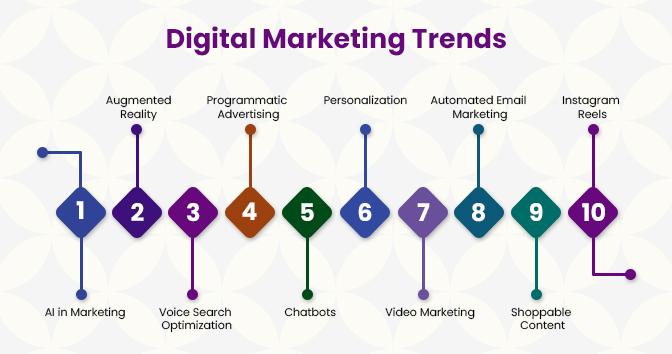
    In the fast-paced world of digital marketing, staying ahead of the curve is crucial for success. What worked yesterday may not work today, and as a marketer, you need to adapt to the ever-evolving landscape. In this blog, we’ll explore the top emerging digital marketing trends you must know as Digital Marketer, and we’ll break them down into simple language with real-world examples of Digital Marketer.

    Video Marketing Continues to Soar

    Video marketing is not new, but its significance is growing exponentially. People love watching videos, and platforms like YouTube, TikTok, and Instagram Reels are perfect examples of this trend.

    Example: Let’s say you run a small bakery. Instead of just posting pictures of your delicious treats, you could create short videos showcasing the baking process, customer reviews, or even behind-the-scenes footage. This engages your audience and gives them a more immersive experience.

    Conversational Marketing with Chatbots

    Chatbots are becoming smarter and more personalized. They can provide instant answers to customer queries, making user interactions smoother and more efficient.

    Example: If you have an e-commerce website, you can implement a chatbot that asks visitors what they are looking for and guides them to the right products. It can also handle frequently asked questions, reducing the workload on your customer support team.

    Also Read: 10 Powerful Reasons Why You Should Outsource Your Digital Marketing

    Digital Marketing Trends

    AI-Powered Personalization

    Artificial Intelligence (AI) is changing the game in digital marketing. AI algorithms can analyze user data to offer highly personalized content and product recommendations.

    Example: Think about Netflix. It uses AI to suggest movies and shows based on your viewing history. As a marketer, you can employ AI to send personalized email campaigns, tailored product recommendations, and even website content.

    Voice Search Optimization

    Voice assistants like Siri, Alexa, and Google Assistant are becoming increasingly popular. Optimizing your content for voice search is a must.

    Example: If you’re a local pizza restaurant, optimizing for voice search means focusing on long-tail keywords and answering questions like, “Where’s the nearest pizza place?” in your website content. This can help you rank higher when someone asks their voice assistant for pizza recommendations.

    Digital Marketing Trends

    Influencer Marketing Evolution

    Influencer marketing is not just about celebrities anymore. Micro-influencers (those with smaller but highly engaged followings) are gaining traction.

    Example: Instead of paying a celebrity chef to promote your kitchen gadgets, you could collaborate with a food blogger who has a dedicated audience of home cooks. Their recommendations are often perceived as more authentic and trustworthy.

    Augmented Reality (AR) and Virtual Reality (VR)

    AR and VR technologies are making their way into digital marketing. They allow consumers to interact with products and experiences in immersive ways.

    Example: Imagine you’re in the fashion industry. You could develop an AR app that lets customers “try on” clothes virtually before making a purchase. This enhances the online shopping experience and reduces return rates.

    User-Generated Content

    User-generated content (UGC) involves customers creating content related to your brand. It’s a powerful way to build trust and authenticity.

    Example: If you run a fitness brand, encourage your customers to share their workout videos or before-and-after photos on social media using a specific hashtag. You can then showcase this UGC on your website or social channels, demonstrating real people achieving real results with your products.

    Also Read: Advanced Digital Marketing Course in Indore | Learn with Code With Kamlesh Agency

    Data Privacy and Transparency

    With increasing concerns about data privacy, marketers need to be transparent about how they collect and use customer data.

    Example: Make sure your website clearly outlines your data collection practices and gives users the option to opt out. Being transparent builds trust, and customers are more likely to share their information if they know it’s handled responsibly.

    Conclusion

    The digital marketing landscape is dynamic, and staying updated on emerging trends is vital for success. From video marketing and chatbots to AI-powered personalization and AR/VR experiences, these trends offer exciting opportunities for Digital Marketer to connect with their audience in innovative ways. Embracing these trends and adapting your strategies accordingly can help you stay at the forefront of digital marketing and drive better results for your brand or business.

    Also Read: Advanced AI Digital Marketing Course in Indore by Code With Kamlesh

    Digital Marketing Trends
  • Digital Marketing Services in India

    Digital Marketing Services in India

    In today’s fast-paced digital age, businesses in India are continually evolving to meet the demands of the online consumer. Digital marketing has emerged as a powerful tool for companies to connect with their target audience, promote their products or services, and drive growth. In this comprehensive guide, we will explore the world of digital marketing services in India, breaking down the key components, strategies, and trends that are shaping the landscape.

    Chapter 1: Understanding Digital Marketing

    Digital marketing is a multifaceted approach to promoting products, services, or brands through digital channels. In India, it has witnessed explosive growth in recent years due to increased internet penetration and smartphone usage. Let’s delve into the fundamental aspects of digital marketing:

    1.1. Channels of Digital Marketing

    • Search Engine Optimization (SEO)
    • Social Media Marketing (SMM)
    • Email Marketing
    • Content Marketing
    • Pay-Per-Click (PPC) Advertising
    • Affiliate Marketing
    • Influencer Marketing

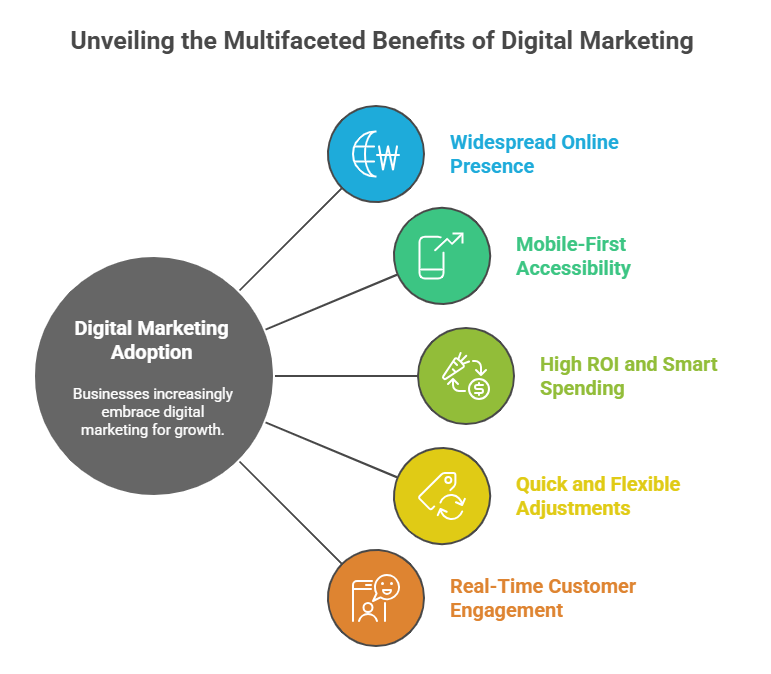
    1.2. Importance of Digital Marketing

    • Cost-Effective
    • Targeted Reach
    • Measurable Results
    • Real-Time Engagement
    • Global Reach
    Digital Marketing Services in India

    Chapter 2: The Role of SEO

    Search Engine Optimization (SEO) plays a pivotal role in digital marketing. It involves optimizing a website’s content and structure to rank higher in search engine results pages (SERPs). In India, SEO is an essential component of any digital marketing strategy:

    2.1. On-Page SEO

    • Keyword Research
    • Content Optimization
    • Meta Tags
    • URL Structure

    2.2. Off-Page SEO

    • Backlink Building
    • Social Signals
    • Guest Blogging

    2.3. Local SEO

    • Google My Business
    • Local Citations
    • Reviews and Ratings

    Chapter 3: The Power of Social Media Marketing

    Social Media Marketing (SMM) is an integral part of digital marketing services in India. With millions of active social media users, businesses can’t afford to ignore this channel:

    3.1. Popular Social Media Platforms in India

    • Facebook
    • Instagram
    • Twitter
    • LinkedIn
    • YouTube

    3.2. Strategies for Effective SMM

    • Content Planning and Creation
    • Audience Segmentation
    • Paid Advertising
    • Engagement and Interaction
    • Analytics and Measurement

    Chapter 4: The Impact of Email Marketing

    Email marketing remains a potent tool for reaching and engaging with your audience. In India, email marketing is used for various purposes, including customer acquisition and retention:

    4.1. Building an Email List

    • Opt-In Forms
    • Lead Magnets

    4.2. Creating Compelling Email Campaigns

    • Personalization
    • A/B Testing
    • Automation

    4.3. Legal Considerations

    • GDPR Compliance
    • CAN-SPAM Act Compliance

    Chapter 5: The Art of Content Marketing

    Content is king in the digital marketing world. High-quality content can drive traffic, engage audiences, and establish authority. In India, content marketing is an indispensable strategy:

    5.1. Types of Content

    • Blog Posts
    • Infographics
    • Videos
    • Ebooks
    • Podcasts

    5.2. Content Creation and Distribution

    • Content Calendar
    • SEO-Optimized Content
    • Social Media Sharing
    • Email Newsletters

    Chapter 6: The World of Pay-Per-Click Advertising

    Pay-Per-Click (PPC) advertising is a way to buy visits to your website rather than earning them organically. In India, PPC is a competitive arena:

    6.1. Google Ads

    • Keyword Research
    • Ad Campaigns
    • Quality Score

    6.2. Facebook Ads

    • Targeting Options
    • Ad Formats
    • Budgeting

    6.3. Measuring PPC Success

    • Click-Through Rate (CTR)
    • Conversion Rate
    • Return on Investment (ROI)

    Chapter 7: Affiliate and Influencer Marketing

    Affiliate marketing and influencer marketing are innovative approaches to expand your reach and generate sales:

    7.1. Affiliate Marketing

    • Affiliate Programs
    • Commission Structure
    • Tracking Sales

    7.2. Influencer Marketing

    • Finding the Right Influencers
    • Collaboration Strategies
    • Measuring Influencer ROI

    Chapter 8: Digital Marketing Trends in India

    The digital marketing landscape in India is constantly evolving. Stay ahead of the curve by keeping an eye on the latest trends:

    8.1. Voice Search Optimization

    • Siri, Google Assistant, Alexa
    • Long-tail Keyword Usage

    8.2. Video Marketing

    • Short-Form Videos (TikTok, Reels)
    • Live Streaming

    8.3. Chatbots and AI

    • Customer Service Automation
    • Personalized Recommendations

    8.4. Data Privacy and Compliance

    • GDPR and India
    • Data Security Measures

    Chapter 9: Challenges and Opportunities

    While digital marketing in India presents immense opportunities, it also comes with challenges:

    9.1. Competition

    • Saturated Markets
    • Rising Advertising Costs

    9.2. Changing Algorithms

    • SEO and Social Media Algorithm Updates

    9.3. Talent Shortage

    • Demand for Skilled Digital Marketers

    9.4. Navigating Cultural Diversity

    • Tailoring Marketing Messages

    Chapter 10: Hiring Digital Marketing Services in India

    If you’re a business owner in India, you might be considering outsourcing your digital marketing efforts. Here’s how to choose the right agency or freelancer:

    10.1. Evaluating Your Needs

    • Define Your Goals
    • Budget Considerations

    10.2. Researching Agencies or Freelancers

    • Portfolio
    • Client Reviews
    • Case Studies

    10.3. Communication and Collaboration

    • Clear Expectations
    • Regular Reporting

    Conclusion

    In the ever-evolving landscape of digital marketing services in India, staying informed and adapting to trends and changes is crucial. As the digital sphere continues to grow, businesses in India have a unique opportunity to leverage the power of digital marketing to expand their reach, engage with their audience, and drive growth. Whether you choose to handle your digital marketing in-house or work with a professional agency, the key is to remain agile and responsive to the dynamic digital world.

    Remember, digital marketing is not just a trend; it’s an essential component of success in the modern business landscape in India. Embrace it, harness its power, and watch your business flourish in the digital era.

    Thank You!

    Read More –

    How to search topics or content research for Youtube videos? – https://kamleshsingad.com/agency/how-to-search-topics-or-content-research-for-youtube-videos/

    Top 10 niche to create youtube channels and earn passive income – https://kamleshsingad.com/agency/top-10-niche-to-create-youtube-channels-and-earn-passive-income/

    Why SEO is important for website ? – https://kamleshsingad.com/agency/why-seo-is-important-for-website/