Category: Blog

  • Top 10 Digital Marketing Topics to Learn in 2024

    Top 10 Digital Marketing Topics to Learn in 2024

    Future-Proof Your Skills: Top 10 Digital Marketing Topics to Master in 2024

    As digital landscapes continue to evolve at a breakneck pace, staying ahead in the digital marketing game demands constant learning and adaptation. The year 2024 is poised to bring groundbreaking changes and innovations, making it crucial for marketers to update their knowledge and skills. Here’s a rundown of the top 10 digital marketing topics that are set to dominate the scene in 2024, offering insights into future trends and tools that will shape the marketing strategies of tomorrow.

    image 32

    Some statistics to prove to you the importance of digital marketing

    Digital marketing has cemented its role as a cornerstone of modern business strategy, driven by the expanding digital footprint of consumers worldwide. The importance of digital marketing is underscored by a wealth of statistics that highlight its effectiveness and reach. Here are several compelling statistics that prove the importance of digital marketing:

    Global Internet Usage: As of 2023, over 4.9 billion people use the internet globally, which is more than 60% of the world’s population. This number is continuously growing, providing a vast audience for digital marketing campaigns.

    E-commerce Sales: Global e-commerce sales are expected to reach $6.3 trillion in 2023 and are projected to grow to $8.1 trillion by 2026. Digital marketing plays a crucial role in driving these sales through online advertising, SEO, and social media marketing.

    Digital Advertising Spend: In 2023, worldwide digital ad spending is expected to surpass $520 billion, indicating the significant investment businesses are making in digital marketing to reach their target audiences.

    Mobile Marketing: With over 5 billion mobile users worldwide, mobile marketing has become a key strategy for businesses. In fact, mobile accounts for approximately half of the web traffic globally, highlighting the importance of optimizing digital marketing strategies for mobile devices.

    SEO Impact: Search engines drive 93% of all website traffic, and SEO leads have a 14.6% close rate, compared to only 1.7% for traditional outbound marketing methods. This demonstrates the effectiveness of SEO as a digital marketing strategy.

    Social Media Influence: As of 2023, there are over 4.2 billion active social media users. Businesses using social media marketing strategies report an increase in exposure, traffic, and lead generation, with 90% of marketers confirming increased exposure for their business through social media.

    Email Marketing ROI: Email marketing remains one of the most effective digital marketing strategies, with an average return on investment (ROI) of $42 for every $1 spent.

    Video Marketing Growth: Video is projected to account for over 82% of all internet traffic by the end of 2023, making video marketing a critical strategy for engaging audiences and promoting products or services.

    Influencer Marketing: The influencer marketing industry is set to grow to approximately $16.4 billion in 2023. With 89% of marketers stating that ROI from influencer marketing is comparable to or better than other marketing channels, it underscores the effectiveness of this strategy.

    Consumer Trust and Reviews: Online reviews influence the purchasing decisions of 93% of consumers, highlighting the importance of reputation management and customer feedback in digital marketing strategies.

    These statistics clearly illustrate the growing significance of digital marketing across various industries. By leveraging digital channels, businesses can reach wider audiences more efficiently, enhance engagement, and drive significant growth, making digital marketing an indispensable part of any successful business strategy.

    Importance of Digital Marketers in Today’s Business World

    image 33

    In today’s digital-first world, the role of digital marketers has become more crucial than ever. These professionals leverage online platforms to promote brands, connect with potential customers, and drive business growth. Their expertise in SEO, social media, and content marketing helps businesses increase online visibility, engage with audiences, and stay competitive in their respective industries. Digital marketers not only adapt to the ever-changing digital landscape but also anticipate trends, making them indispensable for businesses aiming to thrive in the digital age.

    Top 10 Digital Marketing Topics to Master in 2024

    1. Artificial Intelligence in Marketing
    AI continues to redefine the marketing sector, offering unparalleled insights and automation capabilities. In 2024, delve into how AI can optimize customer journeys, personalize marketing messages, and analyze data more efficiently than ever before.

    Example: Netflix uses AI algorithms to analyze viewing patterns and preferences, enabling personalized recommendations for each user. This customization enhances user engagement and satisfaction, encouraging longer viewing times and subscription loyalty.

    2. Voice Search Optimization
    With the rising use of voice-activated devices, optimizing for voice search is becoming crucial. Understanding the nuances of natural language queries and integrating them into your SEO strategy will be key to capturing this growing market.

    Example: Voice search optimization involves tailoring content and SEO strategies to align with the conversational tone and phrasing people use when conducting searches through voice-activated devices. A prime example is optimizing for long-tail keywords and questions that users are likely to ask. For instance, instead of focusing solely on the keyword “Italian restaurants,” you would optimize for a full question that someone might ask a voice assistant, such as “What are the best Italian restaurants near me?” This approach involves including natural language patterns in your content, ensuring your business information is up-to-date on local listings, and structuring content to directly answer common questions, enhancing the likelihood of appearing in voice search results.

    3. Visual and Video Search
    As technology advances, so does the way we search for information. Learning how to optimize content for visual and video search engines can set your brand apart and tap into new audiences who prefer these dynamic search methods.

    Example: A pioneer in visual search technology, Pinterest introduced Lens, allowing users to snap a photo of an object in the real world and find related images or pins on the platform. Whether it’s a piece of clothing, a home decor item, or a plant, Pinterest Lens uses advanced image recognition technology to connect users with similar or related content.

    4. Influencer Marketing Evolution
    Influencer marketing is set to become more nuanced, with a shift towards long-term partnerships and a focus on micro and nano influencers. Understanding how to leverage these relationships authentically will be vital.

    Example: With the advent of social media, everyday people began gaining significant followings based on their expertise, interests, or personalities. These influencers, often micro-influencers at the beginning, were seen as more relatable and trustworthy by their followers compared to traditional celebrities.

    5. Social Media Shopping
    E-commerce and social media are becoming increasingly intertwined. Mastering social media shopping features and strategies will be essential for brands looking to capitalize on direct-to-consumer sales channels.

    Example: Social media shopping allows users to discover and buy products directly from social media platforms, often through posts or ads from influencers or brands. This seamless integration of shopping into the social media experience has transformed the way people shop online.

    6. Sustainability in Digital Marketing
    As consumers become more environmentally conscious, they expect the same from brands. Learning how to integrate sustainability into your marketing efforts can boost your brand’s image and appeal to a broader audience.

    Example: A company selling sustainable, eco-friendly products could use digital marketing to highlight the environmental benefits of their products. They could create content that educates consumers about the importance of sustainability and how their products contribute to a greener lifestyle. This content could be shared on social media, in email campaigns, and on their website.

    Additionally, the company could partner with eco-conscious influencers to promote their products to a wider audience. By aligning their digital marketing efforts with sustainability values, the company not only attracts environmentally conscious consumers but also demonstrates its commitment to reducing its environmental impact.

    7. Privacy-Focused Marketing
    With increasing concerns over data privacy, marketers need to navigate the fine line between personalization and privacy. Strategies that respect user consent and data protection will become increasingly important.

    Example: Privacy-focused marketing involves strategies that prioritize user privacy and data protection, such as contextual advertising, emphasis on first-party data, transparency in data collection practices, and data minimization.

    8. Blockchain for Marketing
    Blockchain technology offers new ways to ensure transparency, security, and trust in marketing practices. Familiarizing yourself with blockchain applications in marketing can provide a competitive edge.

    Example: Blockchain technology can be used in marketing for various purposes, such as enhancing transparency, improving data security, and enabling decentralized advertising networks. For example, blockchain can be used to track the provenance of products, ensuring authenticity and reducing counterfeiting. It can also be used in digital advertising to create a more transparent and efficient ecosystem by verifying ad delivery and ensuring that advertisers get what they pay for. Overall, blockchain has the potential to revolutionize marketing by providing a secure and transparent way to track and verify transactions.

    9. Content Experience
    Beyond content marketing, creating immersive content experiences will be crucial. This involves using AR, VR, and interactive elements to engage users in novel and memorable ways.

    Example: Content experience refers to how content is presented and consumed by users. An example of content experience is a well-designed website that offers a seamless and engaging experience for visitors, with easy navigation, visually appealing layouts, and high-quality content that is relevant and valuable to the audience.

    10. Agile Marketing
    The ability to quickly adapt and respond to market changes and consumer behavior is more critical than ever. Embracing agile marketing methodologies can help teams stay flexible and innovative.

    Example: Agile marketing is a methodology that applies the principles of agile software development to marketing processes. It emphasizes flexibility, adaptability, and rapid iteration to respond quickly to changing market conditions and customer feedback. In short, agile marketing involves breaking down marketing campaigns into smaller, manageable tasks called “sprints,” which are completed in short timeframes, typically 1-4 weeks. This allows marketing teams to quickly test ideas, gather feedback, and make adjustments to improve campaign performance.

    image 34

    Conclusion
    As we look towards 2024, the digital marketing landscape is set to be more dynamic and integrated with emerging technologies. By focusing on these top 10 topics, marketers can ensure they’re well-equipped to navigate the future of digital marketing, driving growth and building meaningful connections with their audiences in an ever-evolving digital world.

    Logo

    Contact Person: Kamlesh Singad

    Phone no. +91 9131341638

    Web Page: https://kamleshsingad.in/

    contact@kamleshsingad.com

    https://kamleshsingad.com/

    Read More –

    Best Digital marketing agency in Bhopal – https://kamleshsingad.in/digital-marketing-agency-in-bhopal-indian-seo/

    AI and Content Generation: The Future of Digital Storytelling – https://kamleshsingad.in/ai-and-content-generation-the-future-of-digital-storytelling/

    How to Scale Your Customer Service with Chatbots – https://kamleshsingad.in/how-to-scale-your-customer-service-with-chatbots/

  • Why is Data Privacy Management important?

    Why is Data Privacy Management important?

    Guardians of the Digital Realm: Navigating the Intricacies of Privacy and Data Management

    In the era of digital transformation, the concepts of privacy and data management have evolved from mere compliance requirements to fundamental aspects of organizational integrity and trust. As individuals and businesses navigate through vast digital landscapes, the management of personal and organizational data becomes a pivotal concern, balancing between accessibility and confidentiality. This detailed exploration delves into the essence of privacy and data management, offering insights and strategies to navigate these complex waters effectively.

    Privacy: A Fundamental Right in the Digital Age

    Privacy, once considered a straightforward concept, has morphed into a multifaceted issue in the digital age. It encompasses the right to individual autonomy, the control over personal information, and the freedom from unauthorized surveillance. This evolution reflects the increasing digital footprint of individuals, necessitating robust frameworks to protect personal data from misuse and exploitation.

    Data Management: The Backbone of Digital Security

    Data management involves the systematic control of information flow within an organization, from acquisition to storage and disposal. Effective data management practices ensure data integrity, availability, and confidentiality, serving as the backbone of digital security and regulatory compliance.

    image 28

    What is Data Privacy Management?

    Data Privacy Management refers to the processes and strategies implemented by organizations to ensure that the collection, processing, storage, and sharing of personal data comply with legal requirements, ethical standards, and best practices. It involves establishing policies and technologies to protect sensitive information from unauthorized access, misuse, or breaches, while also respecting individuals’ rights to control their own data. The goal is to balance the need for organizations to use data for legitimate purposes with the necessity to protect individuals’ privacy rights.

    The Intersection of Privacy and Data Management

    The intertwining of privacy and data management reveals a landscape where personal data is both a valuable asset and a potential liability. Navigating this landscape requires a nuanced understanding of regulatory frameworks, ethical considerations, and technological solutions.

    Understanding Data Privacy Laws and Regulations

    In the digital era, where personal information is constantly being collected, shared, and utilized by businesses and governments alike, understanding data privacy laws and regulations has become crucial. These laws are designed to protect individuals’ personal information from misuse and to give individuals rights over their data. Here’s a breakdown of key aspects and global perspectives on data privacy laws and regulations:

    Fundamental Principles

    Data privacy laws across the globe share common principles, including:

    • Consent: Individuals must give their consent for their data to be collected and processed.
    • Purpose Limitation: Data can only be used for the purpose stated at the time of collection.
    • Data Minimization: Only the data necessary for the specified purpose should be collected.
    • Security: Collected data must be protected from breaches and unauthorized access.
    • Accountability: Entities that handle personal data must be accountable for managing it in compliance with the law.

    Global Landscape of Data Privacy Laws

    The global landscape of data privacy laws varies, with different regions implementing their frameworks:

    • General Data Protection Regulation (GDPR) (European Union): Considered the gold standard of data protection laws, the GDPR imposes strict rules on data processing and grants individuals a wide range of rights over their data, including access, rectification, deletion, and the right to object to data processing.
    • California Consumer Privacy Act (CCPA) (United States): The CCPA provides California residents with rights similar to the GDPR, including the right to know what personal data is being collected and the right to opt-out of the sale of their personal data.
    • Personal Information Protection and Electronic Documents Act (PIPEDA) (Canada): PIPEDA governs how private sector organizations collect, use, and disclose personal information in the course of commercial business.
    • Data Protection Act (DPA) (United Kingdom): Post-Brexit, the UK has its own version of the GDPR, ensuring that it maintains high standards of protection for personal data.

    Compliance Challenges

    Compliance with data privacy laws presents challenges, particularly for multinational corporations that must navigate a patchwork of regulations. Key challenges include:

    • Jurisdictional Variations: Laws differ not just in content but also in scope and applicability, requiring businesses to adapt their practices in each market.
    • Technology Pace: The rapid evolution of technology often outpaces legislation, creating gray areas in compliance.
    • Resource Intensity: Implementing robust data protection measures can be resource-intensive, particularly for small and medium-sized enterprises.

    The Importance of Compliance

    Non-compliance with data privacy laws can result in hefty fines, legal battles, and significant damage to a company’s reputation. Beyond compliance, there is a growing recognition that good data privacy practices can provide a competitive advantage, enhancing customer trust and loyalty.

    As digital technologies continue to advance and integrate into every aspect of daily life, the importance of data privacy laws will only increase. Individuals, businesses, and lawmakers must engage in continuous dialogue to ensure that data privacy regulations evolve to meet new challenges, protect individuals, and enable innovation in a balanced and effective manner.

    Understanding data privacy laws and regulations is not just about legal compliance; it’s about fostering a culture of respect for individual rights and contributing to the creation of a safer, more trustworthy digital environment.

    image 29

    Regulatory Frameworks: Navigating Compliance and Beyond

    The introduction of stringent regulatory frameworks, such as the General Data Protection Regulation (GDPR) in Europe and the California Consumer Privacy Act (CCPA) in the United States, underscores the global emphasis on privacy and data management. Compliance with these regulations is not merely a legal obligation but a commitment to ethical practices and customer trust.

    Ethical Considerations: The Moral Compass of Data Management

    Beyond legal compliance, ethical considerations play a crucial role in shaping privacy and data management practices. Organizations must navigate the delicate balance between data utilization and individual rights, fostering a culture of respect and integrity towards personal information.

    Technological Solutions: Harnessing Innovation for Privacy

    Advancements in technology offer promising solutions to enhance privacy and data management. Encryption, anonymization, and blockchain are examples of technologies that can secure data transactions and storage, minimizing the risk of breaches and unauthorized access.

    Building a Culture of Cybersecurity

    Cultivating a culture of cybersecurity involves raising awareness, providing training, and fostering an environment where privacy and data security are ingrained values. It’s about empowering individuals and organizations to take proactive steps in protecting their digital assets.

    Challenges and Opportunities

    The dynamic nature of digital threats and the evolving legal landscape present ongoing challenges to privacy and data management. However, these challenges also offer opportunities for innovation, collaboration, and the development of best practices that can set new standards for digital privacy and security.

    Data Privacy vs. Data Security: What’s the Difference?

    AspectData PrivacyData Security
    DefinitionData privacy involves the proper handling, processing, and consent related to personal information.Data security refers to the protective measures implemented to prevent unauthorized access to data.
    FocusPrivacy focuses on the use and governance of personal data.Security focuses on protecting data from breaches and cyber-attacks, regardless of the data’s nature.
    ObjectiveTo ensure that personal data is used in compliance with laws and regulations, and respects individual rights.To protect data from unauthorized access, corruption, or theft.
    ConcernsConsent, notice, and regulatory compliance regarding personal information.Protecting data integrity, confidentiality, and access controls.
    MeasuresPrivacy policies, data protection impact assessments, consent management.Encryption, firewalls, anti-virus software, multi-factor authentication.
    Regulatory FrameworkGoverned by laws such as GDPR, CCPA, and more, depending on the jurisdiction.Often guided by standards and frameworks like ISO 27001, NIST, and cybersecurity policies.
    ImpactAffects how organizations collect, use, and share personal information.Ensures that all types of data, whether personal or not, are securely stored and transmitted.
    Legal ComplianceRequires adherence to specific laws governing personal data protection.While also regulated, it focuses more on the technical and administrative aspects of keeping data secure.
    End GoalTo protect individuals’ rights and freedoms concerning their personal data.To safeguard data against unauthorized or accidental modification, disclosure, or destruction.

    5 Key Concepts for Data Privacy Management

    Data privacy management is an essential aspect of modern business, encompassing strategies and practices designed to ensure the responsible handling, processing, and storage of personal information. Here are five key concepts that form the backbone of effective data privacy management:

    1. Consent Management

    Consent management involves obtaining and documenting explicit permission from individuals before collecting, using, or sharing their personal data. This principle is fundamental in respecting user autonomy and is a cornerstone of regulations like the GDPR. Effective consent management ensures that individuals are informed about the purpose of data collection and have the ability to easily withdraw their consent at any time.

    2. Data Minimization

    Data minimization refers to the practice of collecting only the data that is directly necessary for the specified purpose. This concept encourages businesses to evaluate the data they collect critically and to retain only what is essential, reducing the risk of unnecessary exposure and complying with privacy regulations that promote minimal data collection practices.

    3. Transparency and Accountability

    Transparency requires organizations to be open about their data collection and processing activities, ensuring that individuals understand how their data is used. Accountability extends beyond transparency, requiring organizations to take responsibility for managing personal data in accordance with legal and ethical standards. This includes implementing data protection measures, conducting privacy impact assessments, and documenting compliance efforts.

    4. Privacy by Design

    Privacy by design is an approach that integrates data protection into the development and operation of products, services, and business practices, from the outset. This proactive stance involves considering privacy at every stage of the design process, ensuring that privacy is an integral part of the product or service lifecycle, rather than an afterthought. This concept is increasingly being adopted as a regulatory requirement.

    5. Security Measures

    Implementing robust security measures is crucial for protecting personal data from unauthorized access, disclosure, alteration, and destruction. This involves a combination of physical, technical, and administrative controls, including encryption, access controls, secure data storage solutions, and regular security training for employees. Effective data security not only protects privacy but also helps to build trust with customers and stakeholders.

    Together, these five key concepts provide a comprehensive framework for managing data privacy effectively. By prioritizing these principles, organizations can ensure they meet regulatory requirements, protect individual rights, and maintain high standards of privacy and data protection in their operations.

    image 31

    Automation With Data Privacy Management Software

    In the rapidly evolving digital landscape, the management of data privacy has become increasingly complex. With the proliferation of data breaches and stringent regulatory requirements, organizations are turning to automation as a solution to efficiently manage and protect personal data. Automation with data privacy management software offers a robust framework for ensuring compliance, enhancing security, and fostering trust. Here’s how automation is revolutionizing the field of data privacy management:

    Streamlined Compliance Processes

    Data privacy management software automates the compliance process, making it easier for organizations to adhere to various regulations such as GDPR, CCPA, and more. These tools can automatically map out personal data flows, assess privacy risks, and generate compliance reports, reducing the manual effort and minimizing the risk of human error.

    Efficient Consent Management

    Automated systems streamline the consent management process by tracking user consents and preferences across different platforms in real-time. This ensures that personal data is collected, processed, and shared in accordance with the individual’s consent, thereby maintaining compliance and enhancing user trust.

    Enhanced Data Discovery and Classification

    One of the foundational steps in protecting personal data is knowing where it resides. Automation tools can scan through vast amounts of data across an organization’s systems to identify and classify personal data. This not only aids in compliance but also helps in applying appropriate security measures to sensitive data.

    Proactive Data Privacy Impact Assessments

    Data privacy management software can automate the process of conducting Privacy Impact Assessments (PIAs). By identifying potential privacy risks and issues at the early stages of project development, organizations can proactively address them, ensuring that new projects are designed with privacy in mind from the outset.

    Automated Data Subject Access Requests (DSARs) Handling

    Responding to DSARs can be a time-consuming process. Automation simplifies this by providing a standardized workflow for receiving, processing, and fulfilling requests from individuals seeking to access, correct, or delete their personal data, in compliance with privacy laws.

    Real-time Privacy Monitoring and Alerts

    Automated monitoring systems offer continuous surveillance of an organization’s data processing activities, ensuring that any deviations from privacy policies or potential breaches are detected in real time. This enables quick response and remediation, reducing the impact of any data privacy issues.

    Benefits of Automation in Data Privacy Management

    • Efficiency: Automation significantly reduces the time and resources required to manage data privacy, allowing staff to focus on more strategic tasks.
    • Accuracy: Automated tools minimize the risk of human error, ensuring that data is handled accurately and consistently.
    • Scalability: As organizations grow, automated systems can easily scale to manage increased data volumes and complexity.
    • Compliance: Automated documentation and reporting simplify the process of demonstrating compliance with data privacy regulations.

    Conclusion

    The realm of privacy and data management is complex and ever-evolving, reflecting the broader shifts in our digital society. By embracing a holistic approach that combines regulatory compliance, ethical considerations, and technological innovation, individuals and organizations can navigate these waters with confidence. The path forward requires vigilance, adaptability, and a commitment to upholding the principles of privacy and data integrity in our increasingly digital world.

    FAQs

    How can individuals protect their privacy online?
    Individuals can protect their privacy online by using strong, unique passwords, enabling two-factor authentication, being cautious about the information they share on social media, and using privacy-focused browsers and search engines.

    What are the key components of effective data management?
    Effective data management includes data governance, quality control, data security, lifecycle management, and compliance with regulatory requirements.

    How do regulatory frameworks impact data management practices?
    Regulatory frameworks establish legal obligations for data protection, influence the development of data management policies, and encourage transparency and accountability in handling personal data.

    What role does technology play in enhancing data privacy?
    Technology plays a crucial role in enhancing data privacy through encryption, secure data storage solutions, and tools that enable individuals to control their personal information online.

    Can small businesses afford to implement robust data management and privacy practices?
    Yes, small businesses can afford to implement robust data management and privacy practices by leveraging cost-effective technologies, adopting best practices, and focusing on the most critical areas of data protection relevant to their operations.

    Logo

    Contact Person: Kamlesh Singad

    Phone no. +91 9131341638

    Web Page: https://kamleshsingad.in/

    contact@kamleshsingad.com

    https://kamleshsingad.com/

    Read More –

    How to Become a Freelance Digital Marketer: Your 2024 Guide – https://kamleshsingad.in/how-to-become-a-freelance-digital-marketer/

    AI and Content Generation: The Future of Digital Storytelling – https://kamleshsingad.in/ai-and-content-generation-the-future-of-digital-storytelling/

    How to Scale Your Customer Service with Chatbots – https://kamleshsingad.in/how-to-scale-your-customer-service-with-chatbots/

  • Sustainability in Brand Messaging: Shaping the Future of Branding

    Sustainability in Brand Messaging: Shaping the Future of Branding

    Sustainability in Brand Messaging

    In an era where environmental concerns are more pressing than ever, sustainability has become more than just a buzzword—it’s a crucial element of brand identity and messaging that resonates deeply with today’s conscious consumers. As people increasingly seek out brands that align with their values, integrating sustainability into your brand’s narrative is not just ethically right but a strategic necessity. This comprehensive guide delves into the importance of sustainability in brand messaging, its impact on consumer loyalty, and strategies for effectively communicating your brand’s commitment to eco-friendly practices.

    The Rising Tide of Consumer Consciousness

    The shift towards sustainability is driven by a growing awareness of environmental issues and a collective desire to mitigate the impacts of climate change, pollution, and waste. Consumers are scrutinizing brands more closely, favoring those that demonstrate a genuine commitment to sustainability. This change in consumer behavior underscores the need for brands to adopt and communicate sustainable practices sincerely and transparently.

    image 25

    Sustainability as a Brand Differentiator

    In a saturated market, sustainability can set your brand apart, offering a unique value proposition that appeals to eco-conscious consumers. However, it’s crucial that sustainability is woven into the fabric of your brand’s identity and not just used as a marketing gimmick. Authenticity in your sustainability efforts can help build trust and foster a deeper connection with your audience.

    Crafting a Compelling Sustainable Brand Narrative

    Creating a sustainable brand narrative involves more than highlighting eco-friendly products or initiatives; it’s about telling a story that encapsulates your brand’s overall mission and values regarding sustainability. Here are strategies to ensure your sustainability messaging strikes a chord with your audience:

    1. Transparency: Be open about your sustainability goals, the progress you’ve made, and the challenges you face. Consumers appreciate honesty and are more likely to support brands that don’t shy away from the realities of their sustainability journey.
    2. Education: Use your platform to educate your audience about sustainability issues related to your industry and how your brand is working to address them. This not only informs but also engages your audience in a meaningful conversation.
    3. Partnerships: Collaborate with organizations and initiatives that further your sustainability goals. Such partnerships can amplify your efforts and lend additional credibility to your brand.
    4. Innovation: Showcase how your brand is investing in sustainable technologies, materials, and practices. Innovation stories are compelling and demonstrate your commitment to making a real difference.
    5. Empowerment: Encourage and enable your customers to participate in your sustainability efforts, whether through recycling programs, sustainable use of products, or community initiatives. Making sustainability a shared mission can enhance customer loyalty and brand advocacy.

    The Impact of Greenwashing

    While the temptation to jump on the sustainability bandwagon can be strong, brands should beware of greenwashing—making misleading claims about the environmental benefits of a product, service, or company practices. Greenwashing can damage your brand’s reputation and consumer trust irreparably. Ensuring that your sustainability claims are backed by concrete actions and third-party certifications is essential to maintaining credibility.

    Measuring the Impact of Sustainability on Brand Perception

    Assessing how your sustainability efforts affect brand perception and loyalty can provide valuable insights into the effectiveness of your messaging. Surveys, social media engagement, and sales data can all serve as indicators of consumer response to your sustainability initiatives.

    image 26

    5 tips to get sustainable messaging right

    Incorporating sustainability into your brand’s messaging is a powerful way to connect with today’s environmentally conscious consumers. However, getting sustainable messaging right requires a delicate balance of authenticity, transparency, and action. Here are five tips to ensure your brand communicates its sustainability initiatives effectively and resonantly.

    1. Lead with Authenticity

    Your sustainability efforts should stem from genuine concern and commitment to environmental and social issues, not just the desire to tap into a trend. Start by integrating sustainability into your brand’s core values and operations. Share real stories about your sustainability journey, including the challenges and setbacks. Authenticity in storytelling builds trust and relatability.

    2. Ensure Transparency

    Be open about where your products come from, how they are made, and the impact of your operations on the environment. Transparency about your supply chain and business practices is crucial. Regularly update your audience on your progress towards sustainability goals, and don’t shy away from discussing setbacks. This honesty fosters a deeper sense of trust and partnership with your consumers.

    3. Back Claims with Evidence

    Support your sustainability claims with facts, figures, and, where possible, third-party certifications. This evidence strengthens your credibility and helps avoid accusations of greenwashing. Show commitment to continuous improvement by setting clear, measurable sustainability goals and regularly reporting on progress.

    4. Engage and Educate Your Audience

    Use engaging and informative content to educate your audience about sustainability issues and what your brand is doing to address them. This can include blog posts, videos, infographics, and social media content. Empower your customers to be part of the solution. Offer practical tips for sustainable living that align with your brand and provide ways for them to get involved in your sustainability initiatives.

    5. Foster Community and Collaboration

    Encourage a sense of community among your customers around shared values of sustainability. This can be facilitated through social media, forums, or events. Partner with other organizations, NGOs, and even competitors to tackle larger sustainability challenges. These collaborations can amplify your impact and demonstrate a commitment to making a difference beyond just your brand.

    Getting sustainable messaging right is not just about promoting eco-friendly products or initiatives; it’s about fostering a genuine connection with your audience based on shared values of environmental stewardship and social responsibility. By following these tips, brands can create sustainable messaging that not only resonates with consumers but also contributes to a larger dialogue and action towards a more sustainable future.

    image 27

    Getting Sustainability Messaging Right Through Meaningful Content

    In today’s eco-conscious marketplace, sustainability is not just a trend but a fundamental aspect that shapes consumer choices and loyalty. However, the challenge for brands lies in effectively communicating their sustainability efforts without falling into the trap of greenwashing. The key to overcoming this challenge is through creating meaningful content that accurately reflects the brand’s genuine commitment to sustainability. Here’s how brands can get their sustainability messaging right through meaningful content.

    1. Start with Authenticity

    Authenticity should be the cornerstone of any sustainability messaging. This means being honest about your brand’s environmental impact, acknowledging the areas where there’s room for improvement, and sharing your genuine efforts towards making a positive change. Authentic content resonates more deeply with audiences, establishing a foundation of trust.

    Actionable Insight: Share behind-the-scenes stories of your sustainability journey, including the challenges you face and the steps you’re taking to overcome them.

    2. Educate Your Audience

    Use your platform to educate your audience about the sustainability issues that your brand is passionate about. This doesn’t mean simply broadcasting your achievements; it involves creating content that adds value by informing and inspiring your audience to make more sustainable choices themselves.

    Actionable Insight: Create blog posts, videos, or infographics that explain complex environmental issues in accessible terms, and offer practical advice on how consumers can contribute to positive change.

    3. Focus on Storytelling

    Humans are naturally drawn to stories. Crafting compelling narratives around your sustainability initiatives can make your message more memorable and impactful. Share stories of the people, communities, and ecosystems that benefit from your sustainability efforts to humanize your brand and make the abstract concept of sustainability feel more concrete and relatable.

    Actionable Insight: Highlight success stories from your supply chain, such as how sustainable practices have improved livelihoods or restored natural habitats.

    4. Highlight Transparency

    Transparency is critical in sustainability messaging. Consumers are increasingly skeptical of vague or overblown claims and appreciate when brands are open about their processes, progress, and even their setbacks. Providing clear, accessible information about your sustainability efforts can help demystify your processes and make your claims more credible.

    Actionable Insight: Publish detailed reports on your website about your environmental impact, including the source of your materials, your carbon footprint, and the steps you’re taking to reduce it.

    5. Engage with Your Community

    Sustainability is a collective effort, and engaging with your community can amplify your impact. Encourage your audience to get involved with your sustainability initiatives, whether through participating in recycling programs, contributing ideas for sustainable practices, or sharing their own stories of making eco-friendly choices.

    Actionable Insight: Organize community clean-up events, sustainability challenges, or workshops on eco-friendly living, and share these experiences across your social media platforms.

    6. Measure and Share Your Impact

    Finally, it’s important to measure the impact of your sustainability initiatives and share these results with your audience. This not only demonstrates your commitment to making a difference but also encourages your audience to continue supporting your sustainability journey.

    Actionable Insight: Regularly update your audience on your progress towards sustainability goals, such as reducing waste, increasing energy efficiency, or supporting conservation projects, and celebrate these milestones together.

    Conclusion: Embracing Sustainability as a Core Brand Value

    Integrating sustainability into your brand messaging is a journey that requires commitment, innovation, and authenticity. By aligning your brand with the values of sustainability, you not only contribute to a better planet but also build a stronger, more resilient brand that resonates with the consumers of today and tomorrow. In the end, sustainability in brand messaging is about creating a legacy of positive impact that inspires others and leads the way in the global shift towards a more sustainable future.

    Logo

    Contact Person: Kamlesh Singad

    Phone no. +91 9131341638

    Web Page: https://kamleshsingad.in/

    contact@kamleshsingad.com

    https://kamleshsingad.com/

    Read More –

    Best Digital marketing agency in Bhopal – https://kamleshsingad.in/digital-marketing-agency-in-bhopal-indian-seo/

    AI and Content Generation: The Future of Digital Storytelling – https://kamleshsingad.in/ai-and-content-generation-the-future-of-digital-storytelling/

    How to Scale Your Customer Service with Chatbots – https://kamleshsingad.in/how-to-scale-your-customer-service-with-chatbots/

  • Marketing Automation Trends 2024

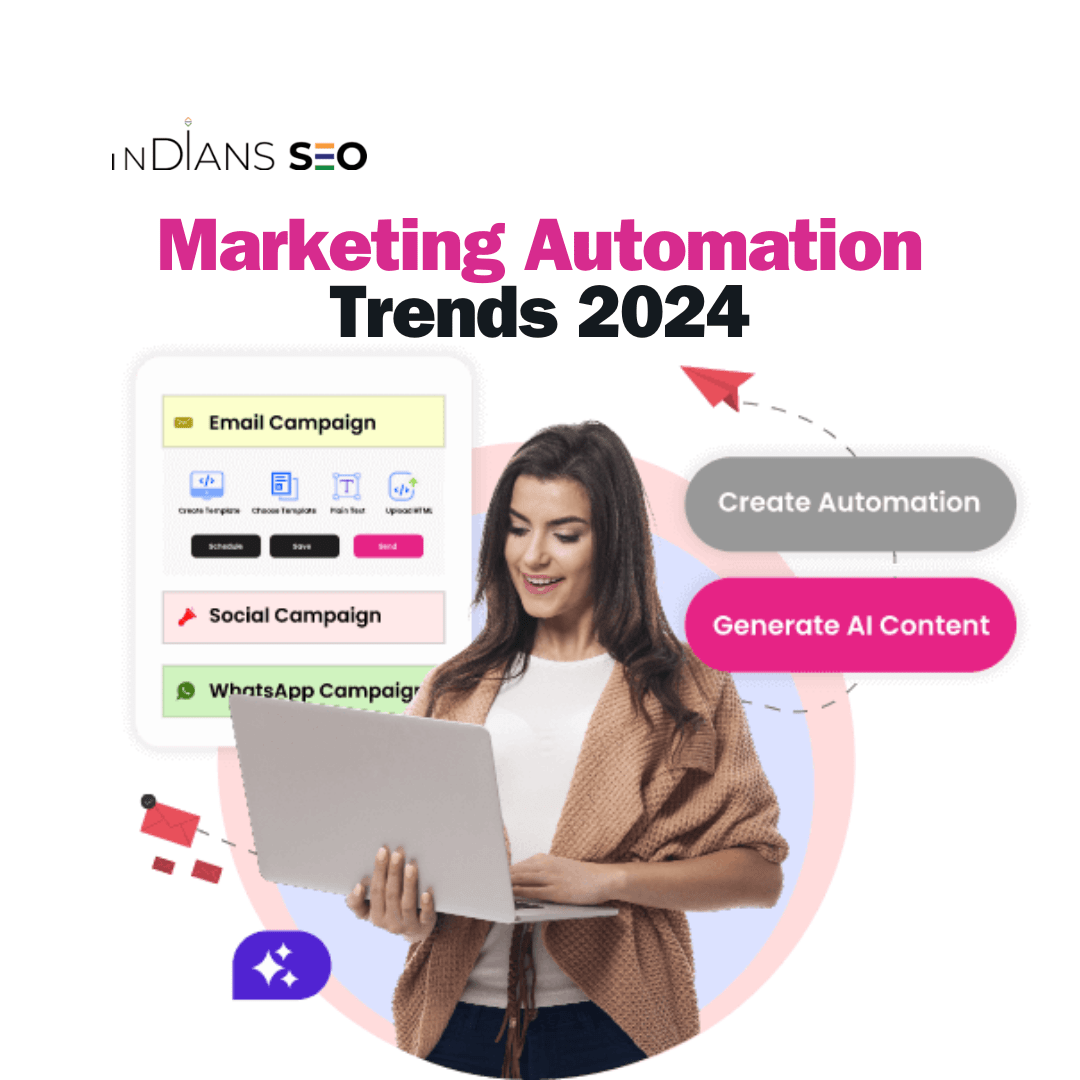
    Marketing Automation Trends 2024

    Navigating the Future: Key Marketing Automation Trends Reshaping the Digital Landscape

    In the fast-evolving world of digital marketing, automation stands out as a transformative force, streamlining operations, enhancing customer engagement, and driving strategic decision-making. As technology advances, marketing automation continues to evolve, offering new ways for brands to connect with their audiences efficiently and effectively. This article delves into the latest marketing automation trends, highlighting innovations and strategies poised to define the future of marketing.

    The Rise of AI and Machine Learning

    Artificial Intelligence (AI) and Machine Learning (ML) are at the forefront of revolutionizing marketing automation, enabling unprecedented levels of personalization and efficiency. AI-powered tools can analyze customer data, predict behaviors, and automate personalized marketing messages across multiple channels, ensuring each interaction is tailored to the individual’s preferences and behaviors.

    Predictive Analytics in Decision Making

    Predictive analytics, fueled by AI and ML, allows marketers to anticipate customer needs, preferences, and future actions. By analyzing historical data and identifying patterns, businesses can forecast trends, optimize campaign strategies, and allocate resources more effectively, ensuring they stay ahead of customer expectations and market shifts.

    image 22

    Enhanced Personalization Through Automation

    Personalization remains a key trend, with automation technologies pushing its boundaries further. Beyond basic customization, advanced automation tools can now deliver hyper-personalized content, recommendations, and experiences at scale, significantly improving customer engagement and loyalty.

    Integration Across Platforms and Channels

    As the digital ecosystem becomes more complex, the integration of marketing automation tools across various platforms and channels becomes crucial. Seamless integration ensures a unified view of the customer journey, allowing for more cohesive and consistent marketing efforts that resonate with audiences regardless of where they interact with your brand.

    Chatbots and Conversational Marketing

    Chatbots and conversational AI have transformed customer service and engagement, providing instant, personalized interactions. As these technologies become more sophisticated, they’re being integrated into broader marketing strategies, offering real-time assistance, gathering insights, and facilitating purchases without human intervention.

    Voice Search Optimization

    With the increasing use of voice-activated assistants, optimizing for voice search has become a priority for marketers. Automation tools that can adapt content for voice search queries and leverage natural language processing are becoming essential for staying visible in this rapidly growing search space.

    Privacy-Focused Marketing Automation

    In an era where privacy concerns are paramount, marketing automation is adapting to ensure personalization does not come at the expense of user privacy. New tools and strategies are emerging that respect consumer data privacy while still delivering personalized marketing messages, aligning with global data protection regulations.

    image 23

    Social Media Automation

    Automation tools for social media marketing are evolving to offer more sophisticated capabilities, including automated content creation, posting schedules, and engagement analysis. These tools help brands maintain a consistent presence on social media while optimizing their engagement strategies based on data-driven insights.

    Visual and Video Content Automation

    As visual and video content continue to dominate user engagement, automation tools are emerging that streamline the creation, distribution, and optimization of visual assets. These tools help marketers efficiently produce high-quality, engaging content tailored to various platforms and audience preferences.

    AI-Driven Content Creation

    AI’s role in content creation is expanding, with tools now capable of generating written content, graphics, and even video elements. While human oversight remains essential, AI-driven content creation can significantly speed up the content production process and support a more dynamic content strategy.

    10 Marketing Automation Trends for 2024 to Increase Your ROI

    As we approach 2024, the digital marketing landscape is rapidly evolving, with marketing automation at the forefront of this transformation. Leveraging automation not only streamlines operations but also significantly enhances the engagement and conversion rates, directly impacting ROI. Here are ten marketing automation trends for 2024 that businesses should embrace to stay ahead of the curve and maximize their return on investment.

    1. AI-Driven Personalization at Scale

    Artificial Intelligence (AI) continues to refine the capabilities of marketing automation, enabling hyper-personalized customer experiences at scale. By analyzing user behavior, preferences, and engagement patterns, AI-driven tools can tailor content, recommendations, and interactions for each user, significantly boosting engagement and conversions.

    2. Predictive Analytics for Strategic Forecasting

    Predictive analytics will play a crucial role in forecasting customer behaviors, preferences, and purchase probabilities. Utilizing AI and machine learning, marketing automation tools can predict future trends, allowing businesses to adjust their strategies proactively for optimal results.

    3. Voice and Conversational User Interfaces

    With the rise of smart speakers and voice-activated devices, voice search optimization and conversational user interfaces will become essential components of marketing automation. Businesses will leverage these technologies to provide seamless, hands-free interactions, expanding their reach and improving user engagement.

    4. Seamless Omnichannel Experiences

    Creating a unified customer experience across all digital platforms and channels will be vital. Marketing automation tools will increasingly offer advanced integration capabilities, ensuring consistent messaging and branding across all touchpoints, from social media to email to websites.

    5. Privacy-Focused Marketing Automation

    As consumer awareness and regulatory scrutiny around data privacy continue to grow, businesses will adopt privacy-focused marketing automation practices. This includes transparent data collection methods, enhanced security features, and compliance with global data protection regulations, building trust with customers.

    6. Advanced Content Automation

    Content creation and distribution will see increased automation, with AI-powered tools capable of generating personalized, high-quality content. From dynamic email content to automated social media posts, these solutions will enable marketers to maintain a consistent and relevant presence across multiple channels.

    7. Interactive and Immersive Content

    The demand for interactive and immersive content, such as augmented reality (AR) experiences and interactive videos, will drive innovation in marketing automation. Tools that can automate the creation and distribution of such content will become increasingly popular, offering new ways to engage audiences.

    8. E-commerce Integration and Automation

    For e-commerce businesses, automation will extend beyond marketing into sales and customer service. Automated chatbots, personalized shopping experiences, and seamless checkout processes will become the norm, enhancing the customer journey and driving sales.

    9. Social Media Automation with a Human Touch

    While social media automation will continue to evolve, there will be a greater emphasis on maintaining authenticity and a human touch. Automation tools will become more sophisticated, enabling personalized responses and interactions at scale without sacrificing the personal connection.

    10. Real-Time Analytics and Adaptation

    Real-time analytics will empower marketers to make data-driven decisions instantaneously. Marketing automation platforms will offer more advanced analytics capabilities, allowing businesses to adapt their strategies in real-time based on customer interactions and campaign performance.

    image 24

    Why You Need to Embrace Marketing Automation Trends?

    Embracing marketing automation trends is no longer a choice but a necessity for businesses aiming to thrive in the digital age. The dynamic nature of consumer behaviors, coupled with technological advancements, mandates a shift towards more efficient, personalized, and strategic marketing approaches. Here’s why keeping pace with marketing automation trends is essential:

    1. Enhanced Customer Experiences

    At the heart of marketing automation is the ability to create personalized customer experiences. By understanding and anticipating customer needs, preferences, and behaviors through data analysis, businesses can tailor their interactions to meet individual customer expectations, significantly enhancing satisfaction and loyalty.

    2. Increased Operational Efficiency

    Marketing automation streamlines repetitive tasks, from email campaigns to social media posting, allowing marketing teams to focus on more strategic and creative initiatives. This not only boosts productivity but also reduces the likelihood of human error, ensuring a more consistent and reliable marketing effort.

    3. Improved Lead Management

    With the proliferation of digital channels, managing and nurturing leads manually has become impractical. Automation tools provide sophisticated lead scoring and nurturing capabilities, enabling businesses to effectively guide prospects through the sales funnel based on their engagement level and readiness to purchase.

    4. Data-Driven Insights and Decision Making

    Marketing automation platforms are equipped with advanced analytics and reporting tools that offer real-time insights into campaign performance, customer engagement, and ROI. This wealth of data empowers businesses to make informed decisions, adjust strategies promptly, and optimize marketing efforts for better outcomes.

    5. Scalability

    As businesses grow, their marketing strategies must scale accordingly. Automation allows for the scaling of marketing campaigns and activities without a proportional increase in resources or expenses. This scalability ensures that marketing efforts can expand to meet growing business needs without compromising quality or engagement.

    6. Competitive Advantage

    In a crowded digital marketplace, staying ahead of competitors is crucial. By leveraging the latest automation trends, such as AI-driven personalization and predictive analytics, businesses can offer unique, cutting-edge experiences that set them apart, attracting and retaining more customers.

    7. Enhanced ROI

    Ultimately, the goal of any marketing strategy is to generate a positive return on investment. Marketing automation increases efficiency, reduces costs, and improves campaign effectiveness—leading to higher conversion rates and a better overall ROI. The ability to track and measure the performance of automated campaigns in real-time further helps in fine-tuning strategies for maximum impact.

    8. Compliance and Security

    With increasing concerns over data privacy and security, automation tools offer sophisticated features to ensure compliance with global data protection regulations, such as GDPR. By automating data handling and consent management processes, businesses can safeguard customer information and maintain trust.

    The Future of Email Marketing Automation

    Email marketing continues to evolve with automation, introducing more dynamic content, better segmentation, and AI-driven personalization. The future of email marketing lies in creating highly personalized, engaging emails that are sent at the optimal time for each recipient, enhancing the effectiveness of email campaigns.

    Conclusion: Embracing Automation for Marketing Success

    As these trends illustrate, the future of marketing automation is dynamic, with technologies like AI and ML leading the charge in creating more personalized, efficient, and engaging marketing strategies. For businesses looking to stay competitive in the digital age, embracing these trends and integrating advanced automation tools into their marketing efforts is not just an option—it’s a necessity. By staying informed and adaptable, marketers can leverage automation to not only streamline their operations but also create more meaningful connections with their audiences, driving growth and success in an ever-changing digital landscape.

    Logo

    Contact Person: Kamlesh Singad

    Phone no. +91 9131341638

    Web Page: https://kamleshsingad.in/

    contact@kamleshsingad.com

    https://kamleshsingad.com/

    Read More –

    Mastering YouTube SEO: A Comprehensive Guide to Video Ranking and Discovery – https://kamleshsingad.in/what-is-youtube-seo-mastering-youtube-seo-tips-tools-skills/

    Mastering Email Marketing: Your Path to Connecting and Growing – https://kamleshsingad.in/what-is-email-marketing-your-path-to-connecting-and-growing/

    What is PPC? Pay Per Click Advertising Guide – https://kamleshsingad.in/mastering-ppc-potential-of-its-advertising/

  • What is a Content Community? Examples

    What is a Content Community? Examples

    Exploring Content Communities: The Future of Online Engagement

    In the digital era, content communities have emerged as powerful platforms where individuals with shared interests congregate to exchange information, ideas, and inspiration. These communities, ranging from niche forums to expansive social networks, offer a unique space for members to engage deeply with content tailored to their interests and needs. This comprehensive guide delves into what content communities are, their importance, how to build and manage them effectively, and the strategies for fostering vibrant, engaging online spaces.

    Understanding Content Communities

    Content communities are online platforms where users can create, share, and discuss content around specific topics or interests. Unlike broader social media networks, these communities often focus on niche subjects, offering a more targeted and immersive experience. They can take various forms, including forums, dedicated social media groups, and platforms like Reddit or Quora, where content curation and discussion are central.

    image 19

    What is a Content community?

    A content community is an online platform where individuals gather to share, create, discuss, and engage with content centered around specific interests, topics, or themes. These communities are built on the premise of collective knowledge sharing and collaboration, enabling users to contribute various forms of content such as articles, videos, images, and discussions. Unlike general social media networks, content communities often focus on niche subjects, offering members a targeted space to explore their interests more deeply.

    Content communities can take many forms, including forums, dedicated social media groups, content-sharing platforms like Reddit or Pinterest, and question-and-answer sites like Quora. The core of a content community lies in its user-generated content, where the value is derived from the contributions of its members, ranging from expert insights to personal experiences related to the community’s focus.

    These communities are characterized by a sense of belonging and engagement, as members can interact with others who share similar interests, ask for advice, exchange ideas, and stay informed about their passions or professional fields. For brands and content creators, content communities offer a unique opportunity to engage directly with highly engaged and targeted audiences, providing a space for meaningful interactions and insights into consumer needs and preferences.

    Examples of content communities

    Content communities span a wide array of platforms, each catering to different interests, from general topics to niche hobbies. Here are several examples that showcase the diversity and reach of content communities across the internet:

    Reddit: Often referred to as “the front page of the internet,” Reddit is a massive collection of forums where people can share news and content or comment on other people’s posts. Subreddits cater to nearly every possible interest, from broad topics like technology and science to niche hobbies like rare plant collecting.

    Quora: A question-and-answer platform where people can ask questions on a variety of topics and get answers from experts or those with relevant experiences. It’s a space for deeper insights and discussions on a wide range of subjects.

    Stack Overflow: A community for developers and programmers to ask and answer technical questions. It’s an invaluable resource for professionals and hobbyists looking to solve coding issues and share development knowledge.

    Behance: Aimed at creative professionals, Behance allows users to showcase their portfolios, discover creative work, and engage with other artists and designers. It’s a platform for sharing and critiquing art, design, photography, and more.

    Goodreads: A community for book lovers, Goodreads enables users to discover new books, share reviews, and participate in book clubs and discussions. It’s a hub for recommendations, literary discussions, and connecting with fellow readers.

    Pinterest: While often seen as a social media platform, Pinterest functions as a content community where users can discover, share, and curate content related to their interests, from DIY projects and recipes to travel and fashion inspiration.

    LinkedIn Groups: Professional content communities within LinkedIn where members can share industry news, ask for advice, and engage in discussions related to their professional field or interests.

    Dribbble: A community for designers to share their work, receive feedback, and find inspiration. It’s focused on visual design work, including UI/UX design, graphic design, and illustration.

    GitHub: Primarily a platform for code sharing and collaboration, GitHub also hosts a community of developers working on open-source projects, where they can contribute to projects, discuss improvements, and share development tips.

    Hacker News: A content community focused on computer science and entrepreneurship, where users can post stories, ask questions, and share links to interesting tech news or startup resources.

    These examples represent just a fraction of the content communities available online, each providing a unique space for sharing knowledge, fostering discussions, and building connections around shared interests. Whether for professional development, creative expression, or personal hobbies, there’s likely a content community out there for everyone.

    image 20

    The Importance of Content Communities

    These specialized communities offer a plethora of benefits, not only for their members but also for brands and content creators looking to engage with highly targeted audiences. They provide a space for knowledge exchange, support, and networking among individuals with similar interests. For businesses, they represent an opportunity to build brand loyalty, gather insights into consumer needs, and directly engage with potential customers in a meaningful way.

    Building a Thriving Content Community

    Creating a content community involves strategic planning and a deep understanding of your target audience. Here are the steps to get started:

    1. Identify Your Niche: Focus on a specific topic that is both relevant to your brand and of interest to your target audience.
    2. Choose the Right Platform: Select a platform that supports the type of content and interaction your community will most engage with.
    3. Set Clear Guidelines: Establish community guidelines to foster respectful and constructive interactions.
    4. Promote Active Participation: Encourage members to contribute content, share ideas, and participate in discussions to keep the community dynamic and engaging.

    Engagement Strategies for Content Communities

    Engagement is the lifeblood of any content community. Here are strategies to keep your community active and growing:

    1. Regular Content Creation: Provide consistent, high-quality content that adds value and sparks conversation.
    2. Interactive Content: Utilize polls, quizzes, and challenges to encourage active participation.
    3. Member Spotlights: Feature community members or user-generated content to highlight contributions and foster a sense of belonging.
    4. Exclusive Events: Host webinars, live chats, or Q&A sessions with experts to provide learning opportunities and boost engagement.

    Managing Content Communities

    Effective community management is crucial for maintaining a healthy online space. This involves moderating discussions to prevent spam and ensure conversations remain respectful and within the community guidelines. Additionally, providing regular feedback and engaging personally with community members can help build trust and loyalty.

    image 21

    How content communities enhance undergraduate research

    Content communities play a pivotal role in enhancing undergraduate research by providing students with access to a wealth of resources, collaborative opportunities, and platforms for sharing and receiving feedback on their work. These online communities, tailored around specific academic disciplines or interests, can significantly impact the depth and breadth of undergraduate research projects. Here’s how:

    Access to Diverse Information and Resources: Content communities are treasure troves of information, offering articles, research papers, datasets, and multimedia resources that students might not find through traditional academic channels. This access can broaden their research scope and introduce novel perspectives or methodologies.

    Collaboration and Networking: These platforms enable students to connect with peers, academics, and professionals who share similar research interests. Through these connections, students can engage in discussions, seek advice, and form collaborations that enrich their research experience and potentially open doors to future opportunities.

    Feedback and Peer Review: Sharing research findings or hypotheses in a content community can elicit constructive feedback from a diverse audience. This peer review process can help students refine their work, address potential weaknesses, and strengthen their arguments before official submission or publication.

    Exposure to Cutting-edge Research and Trends: Content communities often feature the latest research findings, discussions on emerging trends, and advancements in various fields. This exposure can inspire students to explore innovative research topics or incorporate contemporary issues into their projects.

    Development of Communication Skills: Participating in content communities requires students to articulate their research findings, ask insightful questions, and engage in academic discourse. This practice can significantly enhance their written and verbal communication skills, crucial for academic and professional success.

    Learning from Real-world Applications: Many content communities include professionals and practitioners who apply academic theories in real-world contexts. Interacting with these members can provide students with practical insights into how their research can have tangible impacts beyond academia.

    Enhanced Research Visibility: Sharing research within a content community can increase the visibility of a student’s work, drawing attention from a wider audience than would typically be accessible. This enhanced visibility can lead to recognition, citation, and even collaboration opportunities.

    Support and Encouragement: Research can be a challenging and isolating process, especially for undergraduates new to this level of academic rigor. Content communities can offer moral support, advice on navigating research challenges, and encouragement from fellow researchers and experienced academics.

    Cultivation of Critical Thinking and Analytical Skills: Engaging with diverse viewpoints and critiques within content communities encourages students to critically evaluate their own work and the work of others. This critical engagement is essential for developing strong analytical skills.

    Inspiration and Idea Generation: Seeing the work of peers and professionals can spark new ideas, inspire creative approaches to problem-solving, and motivate students to pursue their research with renewed enthusiasm.

    By leveraging the collective knowledge, collaborative potential, and supportive environment of content communities, undergraduate students can significantly enhance the quality, depth, and impact of their research. These communities not only serve as invaluable academic resources but also as platforms for professional development and networking that can benefit students long after their undergraduate studies.

    The Future of Content Communities

    As digital spaces continue to evolve, content communities are set to play an increasingly significant role in how people connect, learn, and share online. Advances in technology, such as AI and machine learning, could further personalize the community experience, making these platforms even more engaging and valuable to their members.

    Conclusion: Harnessing the Power of Content Communities

    Content communities offer a unique blend of targeted engagement, knowledge sharing, and networking opportunities, making them an invaluable asset in the digital landscape. Whether you’re a brand looking to build closer relationships with your audience or an individual seeking a space to share your passions, understanding and leveraging the dynamics of content communities can lead to profound connections and insights. As we look to the future, the role of content communities in fostering online engagement and community-building is undoubtedly set to grow, reshaping the way we interact with content and with each other online.

    Logo

    Contact Person: Kamlesh Singad

    Phone no. +91 9131341638

    Web Page: https://kamleshsingad.in/

    contact@kamleshsingad.com

    https://kamleshsingad.com/

    Read More –

    Ongoing Content Marketing Trends: – https://kamleshsingad.in/latest-content-marketing-trends/

    What is social media marketing ? – https://kamleshsingad.in/social-media/

    What is SEO ? – https://kamleshsingad.in/digital-marketing-strategies-seo/

  • What is Video Marketing? Definition, How it Works, Examples, and Strategies

    What is Video Marketing? Definition, How it Works, Examples, and Strategies

    Unlocking the Power of Video Marketing: A Comprehensive Guide to Enhancing Your Brand’s Online Presence

    In today’s digital age, video marketing has emerged as a cornerstone of effective online branding and communication. With its ability to convey messages quickly, evoke emotional responses, and increase engagement, it’s no wonder many businesses are turning to video content to connect with their audience. This guide delves into the strategies, benefits, and practical steps to leverage video marketing for your brand’s success.

    What is video marketing?

    Video marketing is a dynamic digital strategy that involves using video content to promote, educate, or engage a target audience. It encompasses a wide range of formats, from short social media clips and educational webinars to product demonstrations and customer testimonials. This approach capitalizes on video’s ability to convey complex information in an easily digestible, engaging, and emotionally resonant form. As a versatile and highly effective tool, video marketing can significantly enhance a brand’s online presence, boost audience engagement, and drive sales by providing a rich, immersive experience that text and images alone cannot achieve.

    image 16

    Why is video marketing important?

    Video marketing has surged to the forefront of digital marketing strategies for several compelling reasons, making it an indispensable tool for brands aiming to capture the attention of their audience and foster deeper connections. Here’s why it’s so important:

    Increased Engagement: Videos are inherently more engaging than static content. They have the power to capture attention quickly and maintain it longer, encouraging viewers to interact with your brand.

    Enhanced SEO: Search engines favor video content, which means incorporating videos into your strategy can significantly boost your website’s search engine ranking, leading to more visibility and organic traffic.

    Higher Conversion Rates: Videos can convey emotions and demonstrate products or services in action, which text and images alone cannot. This can lead to higher conversion rates, as customers are more likely to make a purchase after watching a video.

    Improved Information Retention: People generally retain information from videos better than text. A compelling video can make your brand more memorable, enhancing brand recall.

    Versatility: Video content can serve multiple purposes across various platforms. Whether it’s social media, your website, or email marketing, videos can be tailored to fit and enhance your marketing strategy across the board.

    Strengthens Trust and Credibility: Videos allow brands to showcase their products, share customer testimonials, and tell their story in an authentic way, building trust and credibility with their audience.

    Social Sharing Potential: Videos are more likely to be shared than any other content type, increasing your brand’s reach and potential for virality on social media platforms.

    Accessibility: With the rise of smartphones and mobile internet, videos have become easily accessible to a wide audience, making it a crucial tool for reaching and engaging mobile users.

    Emotional Connection: Through storytelling and visual effects, videos can evoke emotions, making a more profound impact on the viewer and creating a stronger emotional connection with the brand.

    Competitive Advantage: Utilizing video marketing effectively can set you apart from competitors, showcasing your brand as forward-thinking and customer-focused.

    In essence, video marketing is important because it aligns with how people prefer to consume content today. It offers a unique blend of entertainment, information, and engagement that can drive brand awareness, customer loyalty, and sales, making it a critical element of modern digital marketing strategies.

    Benefits of video marketing

    Video marketing offers a plethora of benefits that can transform the way brands engage with their audience, enhance their online presence, and drive business growth. Here are some of the key advantages:

    1. Boosts Conversion Rates and Sales: Videos can make products or services come alive unlike any other medium, providing a clearer, more engaging demonstration that can significantly boost conversion rates and directly influence sales.
    2. Enhances SEO Performance: Incorporating videos into your content strategy can improve your website’s search engine ranking. Videos encourage longer visit durations and higher engagement rates, both of which are positive signals to search engines.
    3. Builds Brand Awareness and Recall: Video content, with its ability to engage through storytelling and visuals, can increase brand awareness and recall. Memorable content leads to higher brand recognition over time.
    4. Improves Social Media Engagement: Videos are more likely to be shared, liked, and commented on across social media platforms compared to text and images, leading to increased engagement and visibility.
    5. Facilitates Complex Information Delivery: Whether it’s explaining a complicated product or conveying an intricate story, videos can break down complex information into digestible, easy-to-understand pieces.
    6. Strengthens Emotional Connections: Videos have the unique ability to evoke emotions, whether through music, storytelling, or visuals, creating a stronger emotional connection with the audience.
    7. Increases Customer Trust: Through testimonials, behind-the-scenes looks, and product demos, video content can build trust and credibility with potential customers by showcasing transparency and authenticity.
    8. Reaches a Wider Audience: Given their shareability and the fact that many people prefer watching over reading, videos have the potential to reach and engage a broader audience.
    9. Adaptable Across Various Platforms: Video content is incredibly versatile, capable of being repurposed across multiple channels including websites, social media, email campaigns, and more, maximizing its reach and effectiveness.
    10. Engages Even the Laziest Buyers: Video marketing caters to all audience types, including those who want information delivered in the quickest, most engaging way possible without needing to read through text.
    11. Optimizes Mobile User Engagement: With the increasing prevalence of smartphones, videos offer a mobile-friendly content format that appeals to the vast number of users who access content on their devices.
    12. Enhances Email Marketing Campaigns: Including video content in emails can increase open rates and click-through rates, revitalizing email marketing efforts.
    13. Offers Measurable Analytics: Video platforms provide detailed analytics, allowing marketers to measure the success of their videos in real time and adjust strategies accordingly.
    14. Future-Proofs Marketing Strategy: As consumer preferences continue to shift towards visual content, incorporating video marketing ensures that your strategy remains relevant and effective.
    15. Personalizes Brand Experience: Videos allow for a personalized connection with your audience, whether through direct communication in vlogs or tailored content that speaks to different segments of your market.

    Incorporating video marketing into your strategy can lead to substantial benefits, from improved engagement and conversion rates to stronger emotional connections with your audience. Its versatility and effectiveness make it an essential component of modern marketing strategies.

    image 17

    Creating a video marketing campaign

    Creating a successful video marketing campaign involves strategic planning, creativity, and a keen understanding of your target audience. Here’s a step-by-step guide to crafting a campaign that resonates with viewers and achieves your marketing objectives:

    Understand Your Audience and Objectives: Knowing who you’re speaking to is crucial. Understand their preferences, challenges, and where they spend their time online. Determine what you want to achieve with your video marketing campaign. Objectives can range from increasing brand awareness to driving sales or engagement.

    Plan Your Video Content: Based on your objectives and audience, choose the video type that would be most effective. This could be explainer videos, customer testimonials, product demonstrations, or brand stories. Storytelling is at the heart of engaging video content. Develop a narrative that captivates your audience, communicates your message, and encourages viewers to take action. Prepare a detailed script and storyboard to outline the video’s visual and auditory elements. This will serve as a blueprint during production.

    Production and Post-Production: Depending on your budget and the type of video, select the appropriate equipment. High-quality content can often be produced with just a smartphone and good lighting. Follow your script and storyboard closely during filming, but also be open to improvisation if it can enhance the final product. In post-production, edit your footage to match the storyboard. Add effects, transitions, and music to enhance the video’s appeal. Ensure the final edit is polished and aligns with your brand’s tone.

    Optimize for Different Platforms: Each social media platform has its own specifications and audience preferences. Customize your video for each platform, whether it’s a shorter version for Instagram or a longer format for YouTube. Use relevant keywords in your video’s title, description, and tags to improve its visibility on search engines and within platforms.

    Launch and Promote Your Campaign: Distribute your video across channels where your target audience is most active. This could include social media, your website, or email newsletters. Share your video on social media platforms to engage your followers. Consider paid advertising to extend your reach further.

    Measure and Analyze Results: Use analytics tools to measure the success of your video marketing campaign. Look at views, engagement rates, conversion rates, and social shares. Analyze the performance data to understand what worked and what didn’t. Use these insights to refine future video marketing efforts.

    Engage with Your Audience: Engagement doesn’t end when your video is published. Interact with your viewers by responding to comments and feedback to build a community around your brand.

    Creating a video marketing campaign is an iterative process that requires attention to detail, creativity, and strategic planning. By understanding your audience, crafting compelling content, optimizing for different platforms, and analyzing your results, you can create effective video marketing campaigns that resonate with your target audience and help achieve your business goals.

    image 18

    Video marketing statistics

    Video marketing has rapidly evolved, becoming an essential part of digital marketing strategies for businesses across all industries. The effectiveness and growing preference for video content are reflected in a multitude of statistics that highlight its impact on consumer behavior, engagement, and business results. Here are some key video marketing statistics that underscore the significance of incorporating video into your marketing strategy:

    • Consumer Preference and Consumption
    • Impact on Purchase Behavior
    • Video and Email Marketing
    • Video on Landing Pages
    • Social Media and Video Engagement
    • Search Engine Optimization
    • Future Trends
    • Video Marketing ROI
    • Importance for Marketers
    • Consumer Preferences for Learning About Products

      These statistics paint a clear picture of video marketing’s critical role in today’s digital landscape. They not only demonstrate the growing preference for video among consumers but also highlight the tangible benefits for businesses in terms of engagement, conversion rates, and ROI. As technology continues to evolve and consumer habits shift, the importance of video marketing is only expected to increase, making it an indispensable tool in the digital marketer’s toolkit.

      The Essence of Video Marketing

      At its core, video marketing involves using video content to promote your brand, products, or services. It’s a dynamic tool that can boost your online presence, enhance customer engagement, and drive sales.

      The Strategic Foundations of Effective Video Marketing

      Before diving into the creation process, understanding the strategic foundations is crucial. This section explores the planning phase, including setting clear objectives, understanding your target audience, and choosing the right platforms for distribution.

      Crafting Engaging Video Content: The Creative Process

      Creating captivating video content is both an art and a science. This part of the guide covers everything from storytelling techniques and visual aesthetics to technical aspects like video length and format, ensuring your content resonates with your audience.

      Maximizing Reach with Video SEO

      Discover how to optimize your video content for search engines to increase visibility and reach a wider audience. This includes tips on using keywords, tags, and compelling descriptions.

      Leveraging Social Media for Video Marketing

      Social media platforms offer vast opportunities for video marketing. Learn how to tailor your content for different platforms, engage with your audience, and measure the success of your campaigns.

      Video Marketing on Your Website

      Incorporating video content on your website can enhance user experience and improve SEO rankings. This section provides insights on best practices for embedding videos and using them to guide the customer journey.

      Email Marketing and Video: A Winning Combination

      Integrating video content into your email marketing strategy can significantly increase open rates and engagement. Discover the best practices for embedding videos in emails and using them to drive action.

      Interactive Video Content: Engaging Your Audience on a New Level

      Interactive videos offer a unique way to engage viewers by allowing them to participate actively in the content. Explore how interactive elements can enhance the viewer experience and increase engagement.

      Measuring Success: Video Marketing Analytics

      Understanding how to measure the success of your video marketing efforts is essential. This section covers key metrics, tools, and techniques for analyzing your video’s performance and optimizing future campaigns.

      The Future of Video Marketing: Trends and Innovations

      Stay ahead of the curve by exploring the latest trends and innovations in video marketing, including virtual reality, 360-degree videos, and personalized video content.

      Overcoming Common Video Marketing Challenges

      Creating effective video content comes with its set of challenges. This part of the guide addresses common obstacles and provides solutions to overcome them.

      Incorporating User-Generated Content in Your Video Marketing Strategy

      User-generated content can add authenticity and trust to your brand. Discover how to encourage and leverage user-generated videos for marketing purposes.

      The Role of Influencers in Video Marketing

      Influencer collaborations can amplify your video marketing efforts. Learn how to partner with influencers and create compelling content that resonates with their followers.

      Budget-Friendly Video Marketing: Tips for Small Businesses

      Video marketing doesn’t have to break the bank. This section offers tips for creating high-quality video content on a budget, including DIY techniques and affordable tools.

      Legal Considerations in Video Marketing

      Navigating the legal landscape of video marketing is crucial. Understand the importance of copyright, permissions, and privacy laws to ensure your video content is compliant.

      Creating a Video Marketing Calendar: Planning for Success

      A well-planned video marketing calendar can help you stay organized and consistent. Learn how to create a content calendar that aligns with your marketing objectives and audience’s interests.

      Leveraging Live Video for Real-Time Engagement

      Live video offers a unique opportunity for real-time engagement with your audience. Explore best practices for live streaming, including platforms, promotion, and audience interaction.

      Virtual Events and Webinars: Extending Your Reach with Video

      Virtual events and webinars have become integral parts of video marketing strategies. Discover how to host successful online events that engage and convert your audience.

      Educational Video Content: Positioning Your Brand as an Industry Leader

      Educational videos can help position your brand as a thought leader in your industry. Learn how to create informative content that adds value to your audience.

      Behind-the-Scenes Videos: Building Brand Authenticity

      Behind-the-scenes videos can humanize your brand and build trust with your audience. Explore how to craft compelling behind-the-scenes content that showcases your brand’s personality.

      Customer Testimonial Videos: Leveraging Social Proof

      Customer testimonials are powerful tools for building credibility and trust. Learn how to create testimonial videos that effectively convey customer satisfaction and positive experiences.

      Analyzing Competitors’ Video Marketing Strategies

      Understanding your competitors’ video marketing strategies can provide valuable insights. Discover how to analyze their content and identify opportunities for differentiation.

      Incorporating Animation in Video Marketing

      Animation offers a creative and versatile way to convey complex messages. Learn about the benefits of using animated videos and tips for creating engaging animated content.

      Conclusion: Embracing the Power of Video Marketing for Brand Success

      Video marketing holds immense potential for brands looking to enhance their online presence, engage with their audience, and drive business results. By understanding the strategies, tools, and best practices outlined in this guide, businesses of all sizes can effectively leverage video content to achieve their marketing goals.

      Logo

      Contact Person: Kamlesh Singad

      Phone no. +91 9131341638

      Web Page: https://kamleshsingad.in/

      contact@kamleshsingad.com

      https://kamleshsingad.com/

      Read More –

      Introduction to Digital Marketing – https://kamleshsingad.in/introduction-to-digital-marketing/

      Instagram Follower Growth: Organic Strategies for Success – https://kamleshsingad.in/instagram-follower-growth-organic-strategies-for-success/

      Best Digital marketing agency in Bhopal – https://kamleshsingad.in/digital-marketing-agency-in-bhopal-indian-seo/

    1. What is Influencer Marketing?

      What is Influencer Marketing?

      Influencer Marketing: Navigating the Digital Age’s Most Dynamic Advertising Frontier

      In the ever-evolving landscape of digital marketing, influencer marketing has emerged as a powerhouse strategy, altering how brands connect with their audiences. This phenomenon leverages the reach and trust of social media influencers to promote products, services, and messages, crafting authentic connections and driving engagement in a cluttered digital space. In this deep dive, we’ll explore the intricacies of influencer marketing, its unparalleled benefits, and practical steps for crafting an impactful influencer marketing strategy.

      The digital era has gifted marketers with numerous channels to reach their audience, but few have been as transformative as influencer marketing. This strategy taps into the credibility and persuasive power of influencers – individuals who have amassed a dedicated following on social media platforms due to their expertise, charisma, or unique content. Here’s a closer look at how influencer marketing is reshaping the advertising world.

      Table of Content

      • The Essence of Influencer Marketing
      • What is influencer marketing and how does it work?
      • Is influencer marketing effective?
      • Why Influencer Marketing Works
      • Crafting an Influencer Marketing Strategy
      • Limitations of influencer marketing
      • Challenges and Considerations
      • How to create an influencer marketing strategy
      • Tips for working with social media influencers
      • What works in Influencer Marketing
      • The Future of Influencer Marketing
      • Conclusion

      The Essence of Influencer Marketing

      Influencer marketing is not merely about celebrity endorsements or superficial product placements. It’s about forging genuine partnerships between brands and influencers whose ethos, audience, and content align with the brand’s values and objectives. This synergy enables the creation of authentic, relatable content that resonates with the influencer’s followers, often leading to increased brand awareness, customer loyalty, and conversions.

      image 13

      What is influencer marketing and how does it work?

      Influencer marketing is a strategy where brands collaborate with individuals who have a significant, engaged following on social media or other online platforms to promote products, services, or campaigns. These individuals, known as influencers, leverage their credibility and relationship with their audience to influence buying decisions or shape perceptions about the brand.

      The process works through a partnership between a brand and an influencer, where the influencer agrees to share content about the brand’s offerings to their followers. This can take various forms, including sponsored posts, reviews, stories, or videos. The content is typically crafted to look authentic and align with the influencer’s usual style, making the promotion feel natural to their audience. The goal is to tap into the influencer’s audience to increase brand awareness, drive traffic, or boost sales in a more relatable and trustworthy manner than traditional advertising methods.

      Is influencer marketing effective?

      Influencer marketing can be effective when executed properly. It involves partnering with individuals who have a strong influence over your target audience to promote your brand, product, or service.

      Effectiveness depends on several factors, including the influencer’s relevance to your audience, their credibility and trustworthiness, the authenticity of the partnership, and the quality of the content created. When these elements align, influencer marketing can help increase brand awareness, reach new audiences, and drive engagement and sales. However, it’s important to carefully select influencers and collaborate on campaigns that align with your brand values and goals for the best results.

      Why Influencer Marketing Works

      • Authenticity: Influencers have built their following based on trust and authenticity. When they recommend a product, their audience is more likely to take notice.
      • Targeted Reach: By collaborating with influencers who align with your brand, you can reach a specific demographic or niche market effectively.
      • Content Creation: Influencers are content creators at heart. They can showcase your product in a creative, engaging manner that stands out.
      • Cost-Effectiveness: Compared to traditional advertising, influencer marketing can be more cost-effective, especially for brands looking to maximize their marketing budget impact.

      Crafting an Influencer Marketing Strategy

      1. Define Your Goals: Start by clarifying what you want to achieve with your influencer marketing campaign. Goals can range from increasing brand awareness to boosting sales.
      2. Know Your Audience: Understanding who you’re trying to reach is crucial. This knowledge will guide you in selecting influencers whose followers mirror your target audience.
      3. Choose the Right Influencers: Look for influencers who share your brand’s values and have an engaged, active following. Engagement rate often trumps follower count, as it indicates a loyal and attentive audience.
      4. Foster Genuine Partnerships: Successful influencer marketing is built on authentic relationships. Approach potential influencers with respect for their work and offer them creative freedom to ensure content feels genuine to their style.
      5. Measure Success: Establish key performance indicators (KPIs) related to your goals, such as engagement rate, website traffic, or conversion rate. Use these metrics to assess the campaign’s effectiveness and inform future strategies.
      image 14

      Limitations of influencer marketing

      While influencer marketing can be effective, it also has limitations:

      • Authenticity concerns: Consumers are becoming more wary of sponsored content and may perceive influencer endorsements as inauthentic, especially if the partnership is not genuine or if the influencer promotes too many products.
      • Audience targeting: It can be challenging to ensure that the influencer’s audience aligns with your target demographic, leading to potential mismatch in messaging and lower conversion rates.
      • Cost: Working with influencers, especially those with large followings, can be expensive. The return on investment (ROI) may not always justify the cost, especially for smaller businesses.
      • Risk of negative publicity: If an influencer is involved in controversy or their reputation is tarnished, it can reflect poorly on your brand if you are associated with them.
      • Limited control over content: Once you partner with an influencer, you have limited control over the content they create. This can lead to messaging that does not align perfectly with your brand or campaign objectives.
      • Short-term impact: Influencer marketing campaigns can generate immediate results, but they may not always have a long-lasting impact on brand awareness or customer loyalty.

      To mitigate these limitations, it’s important to carefully vet influencers, establish clear objectives and expectations, and monitor campaigns closely to ensure they align with your brand values and goals.

      Challenges and Considerations

      While influencer marketing holds immense potential, it’s not without its challenges. Brands must navigate issues related to transparency, influencer vetting, and regulatory compliance. The Federal Trade Commission (FTC) has guidelines requiring influencers to disclose sponsored content, ensuring consumer trust remains intact.

      How to create an influencer marketing strategy

      Creating an influencer marketing strategy involves several key steps. Here’s a simplified outline in points:

      Define your goals: Determine what you want to achieve with your influencer marketing campaign, whether it’s increasing brand awareness, driving sales, or reaching a new audience.

      Identify your target audience: Understand who your ideal customers are and identify influencers who have a similar audience demographic and interests.

      Find the right influencers: Research and vet potential influencers based on relevance, reach, engagement rates, and authenticity. Consider micro and macro influencers depending on your budget and goals.

      Develop a budget: Allocate a budget for your influencer marketing campaign, taking into account influencer fees, content creation costs, and any additional expenses.

      Create a campaign brief: Clearly outline your campaign objectives, messaging guidelines, and any specific requirements or restrictions for the influencers.

      Collaborate with influencers: Reach out to selected influencers and propose a collaboration. Negotiate terms, timelines, and deliverables, ensuring that both parties are aligned.

      Create compelling content: Work with influencers to create engaging content that resonates with their audience while aligning with your brand’s message and values.

      Monitor and measure: Track the performance of your campaign using relevant metrics such as engagement, reach, and conversions. Analyze the results to assess the effectiveness of your strategy and make adjustments as needed.

      Build long-term relationships: Nurture relationships with influencers who perform well and consider ongoing partnerships for future campaigns.

      Compliance and disclosure: Ensure that influencers comply with relevant regulations and guidelines regarding sponsored content and disclose their relationship with your brand transparently.

      By following these steps, you can create an effective influencer marketing strategy that helps you achieve your marketing goals and drive meaningful results.

      image 15

      Tips for working with social media influencers

      Working with social media influencers can be a powerful way to amplify your brand’s message and reach a wider audience. Here are some tips for collaborating with influencers effectively:

      Set clear goals: Define your objectives for the influencer campaign, whether it’s increasing brand awareness, driving traffic to your website, or generating sales.

      Choose the right influencers: Look for influencers whose values, audience, and content style align with your brand. Consider factors such as reach, engagement rates, and audience demographics.

      Establish clear expectations: Clearly communicate your campaign brief, including key messages, deliverables, timeline, and any guidelines or restrictions.

      Provide creative freedom: While it’s important to communicate your brand’s messaging, allow influencers to be creative and authentic in how they promote your brand. This can help create more genuine and engaging content.

      Compensate fairly: Offer fair compensation to influencers for their time and effort. This can include monetary payment, free products, or other incentives.

      Monitor and measure performance: Track the performance of your influencer campaign using relevant metrics such as reach, engagement, and conversions. Use this data to evaluate the success of the campaign and make adjustments for future collaborations.

      Build long-term relationships: Nurture relationships with influencers who align well with your brand. Long-term partnerships can lead to more authentic and impactful collaborations over time.

      Ensure compliance: Familiarize yourself with relevant regulations and guidelines for influencer marketing, such as disclosure requirements for sponsored content.

      Be transparent: Be transparent with your audience about your partnership with influencers. Disclose sponsored content clearly to maintain trust and credibility.

      Stay engaged: Stay engaged with influencers throughout the campaign, providing support and feedback as needed. A positive working relationship can lead to more successful collaborations in the future.

      What works in Influencer Marketing

      Several strategies and tactics can work well in influencer marketing. Here are some key approaches that are often effective:

      Authenticity: Authenticity is crucial in influencer marketing. Audiences respond well to influencers who genuinely use and believe in the products or services they promote.

      Relevance: Choosing influencers who are relevant to your brand and target audience is key. Their content should align with your brand values and resonate with their followers.

      Engagement: Look for influencers with high engagement rates, indicating that their audience is active and interested in their content. This can lead to higher levels of engagement with your brand.

      Micro-influencers: Micro-influencers, who typically have smaller but highly engaged audiences, can be very effective for niche marketing. They often have a more personal connection with their followers, leading to higher levels of trust and influence.

      Creative content: Collaborate with influencers to create creative and engaging content that captures the attention of their audience. This can include videos, photos, stories, and other formats that showcase your brand in an authentic and compelling way.

      Long-term partnerships: Building long-term relationships with influencers can be more beneficial than one-off campaigns. It allows for deeper integration of your brand into their content and can lead to more authentic endorsements.

      Measure and optimize: Use data and analytics to measure the performance of your influencer campaigns. Identify what works and what doesn’t, and optimize your approach based on these insights.

      Influencer events and takeovers: Hosting events or allowing influencers to take over your social media accounts can create buzz and engagement around your brand.

      Affiliate marketing: Implementing an affiliate marketing program with influencers can incentivize them to promote your products or services more effectively.

      User-generated content: Encouraging influencers and their followers to create and share user-generated content related to your brand can amplify your reach and engagement.

      By incorporating these strategies into your influencer marketing efforts, you can create more impactful campaigns that resonate with your target audience and drive results for your brand.

      The Future of Influencer Marketing

      As we look ahead, influencer marketing is set to become even more integrated into brands’ overall marketing strategies. The rise of micro and nano-influencers, with smaller but highly engaged audiences, highlights a shift towards authenticity and relatability. Additionally, platforms like TikTok and Instagram continue to introduce new features for creators and brands, further enriching the influencer marketing landscape.

      Conclusion

      Influencer marketing represents a pivotal shift in the way brands engage with consumers. By understanding its nuances and strategically leveraging the power of influencers, businesses can create compelling, authentic narratives that resonate with their audience. In the digital age, where trust and authenticity are paramount, influencer marketing stands as a testament to the enduring power of human connection in the world of advertising. https://kamleshsingad.com/

      Logo

      Contact Person: Kamlesh Singad

      Phone no. +91 9131341638

      Web Page: https://kamleshsingad.in/

      contact@kamleshsingad.com

      Read More –

      10 Best Image-to-Video AI Generators in 2024 – https://kamleshsingad.in/10-best-image-to-video-ai-generators-in-2024/

      Image-generator-using-openai-api – https://kamleshsingad.in/image-generator-using-openai-api/

      10 Best AI Text to Image Generator Tools in 2024 – https://kamleshsingad.in/10-best-ai-text-to-image-generator-tools-in-2024/

    2. What is Live Streaming Technology, and How Does it Work?

      What is Live Streaming Technology, and How Does it Work?

      Unlocking the Magic of Live Streaming Technology: A Comprehensive Guide

      In an era where digital content reigns supreme, live streaming technology stands out as a beacon of real-time interaction, revolutionizing the way we share and consume media. This transformative technology has not only democratized content creation but also opened up new avenues for engagement across various sectors. In this detailed exploration, we dive into the essence of what is live streaming technology, its operational mechanics, and its profound impact on the digital landscape.

      Table of Contents

      • Introduction to Live Streaming Technology
      • What is live streaming?
      • Uses for Live Streaming
      • How Live Streaming Works: A Peek Behind the Curtain
      • The Impact of Live Streaming on Digital Content Creation
      • The Technical Setup for Live Streaming
      • Challenges and Considerations in Live Streaming
      • What is an HTML5 Video Player?
      • Why is a CDN important for live streaming?
      • How does Cloudflare accelerate live streaming?
      • Looking Ahead: The Future of Live Streaming
      • Conclusion

      Introduction to Live Streaming Technology

      Live streaming technology refers to the process of broadcasting video and audio content over the internet in real-time, without significant delays, allowing viewers to watch or listen as events unfold. This immediacy and authenticity of live content have captivated audiences worldwide, fostering a sense of community and interaction that pre-recorded content struggles to replicate.

      image 11

      What is live streaming?

      Live streaming is the real-time broadcasting of video and audio content over the internet, allowing viewers to watch events and interactions as they happen without delay. It enables individuals and organizations to share moments, presentations, and performances with a global audience, facilitating instant engagement and interaction through features like chat and reactions. This technology has become increasingly popular for various applications, from social media and entertainment to educational tutorials and corporate events, transforming traditional content consumption and production methods.

      Uses for Live Streaming

      Live streaming offers a diverse range of applications across various industries, connecting people and content in real-time. Here are some prominent uses for live streaming:

      • Entertainment and Events: Broadcasting concerts, festivals, theater performances, and other live events to global audiences.
      • Sports: Streaming live sports events, including games, matches, and tournaments, allowing fans worldwide to watch their favorite teams and athletes in action.
      • Education and Training: Conducting live online classes, webinars, and workshops for educational institutions and corporate training programs.
      • Gaming and Esports: Streaming gameplay, gaming tournaments, and esports competitions, often accompanied by live commentary and viewer interactions.
      • Social Media and Influencer Content: Influencers and content creators engaging with their followers through live Q&A sessions, behind-the-scenes looks, and interactive content on social media platforms.
      • News and Journalism: Providing real-time news coverage, press conferences, and interviews, making information immediately accessible to the public.
      • Corporate Communications: Hosting live company meetings, product launches, and announcements to engage employees, stakeholders, and customers.
      • Religious Services: Streaming worship services and religious ceremonies for congregants who are unable to attend in person.
      • Fitness and Wellness: Offering live fitness classes, wellness sessions, and personal training, allowing participants to join from anywhere.
      • Virtual Tours and Experiences: Showcasing live tours of museums, exhibitions, real estate properties, and travel destinations.
      • Healthcare Consultations: Facilitating live telehealth sessions, medical consultations, and patient support groups.
      • Fundraising and Charity Events: Hosting live fundraising events, charity streams, and awareness campaigns to engage and solicit support from a broad audience.
      • Community and Civic Engagement: Streaming town hall meetings, public forums, and community events to encourage civic participation and engagement.
      • Creative Arts and Workshops: Artists, musicians, and creators sharing their creative processes, live performances, and workshops with an online audience.
      • Customer Support and Q&A: Providing real-time customer service, product demonstrations, and Q&A sessions to address customer queries and enhance engagement.

      Live streaming has become a versatile and powerful tool for connecting, engaging, and sharing content with audiences in a way that traditional media cannot match, offering endless possibilities for communication and interaction in the digital age.

      image 10

      How Live Streaming Works: A Peek Behind the Curtain

      The magic of live streaming is rooted in its complex yet seamless operation, which can be distilled into a few key stages:

      Capture: The journey begins with capturing live video and audio content, typically using cameras, microphones, and encoding software or hardware. This setup converts the raw footage into a digital format suitable for transmission over the internet.

      Encode: Encoding is crucial for preparing the content for live streaming. This process compresses the video and audio files, making them easier to transmit over the web without losing quality. Encoders also convert the files into a streamable format, ensuring compatibility with various devices and platforms.

      Distribute: Once encoded, the content is sent to a streaming server or a content delivery network (CDN). These technologies facilitate the efficient distribution of the live stream to a wide audience, minimizing latency and buffering issues.

      Playback: On the viewer’s end, the live stream is decoded and played back in real-time on their device. This process requires compatible software, such as a web browser or a dedicated app, capable of receiving and displaying the live content.

      The Impact of Live Streaming on Digital Content Creation

      Live streaming has undeniably altered the landscape of digital content creation, offering:

      • Accessibility: With just a camera and an internet connection, anyone can become a content creator, breaking down the barriers to entry that traditional media once posed.
      • Engagement: Live streaming fosters real-time interaction between creators and their audience through features like live chats, polls, and Q&A sessions, enhancing the viewer experience.
      • Versatility: From gaming and sports to music, education, and corporate events, live streaming serves a multitude of sectors, adapting to various content needs and preferences.
      • Monetization: Content creators can monetize their live streams through advertisements, sponsorships, donations, and subscription models, opening up new revenue streams.

      The Technical Setup for Live Streaming

      Setting up a live stream involves technical preparation to ensure smooth and high-quality broadcasts. Here’s a comprehensive guide to the technical setup required for live streaming:

      1. Video and Audio Source

      • Camera: A high-quality camera is essential for capturing clear video. This can range from professional-grade cameras for high-end productions to webcams or even smartphones for more casual or on-the-go streaming.
      • Microphone: Good audio quality is crucial for keeping your audience engaged. Depending on your setup, you might need lapel mics, condenser mics, or dynamic mics.

      2. Encoding Hardware or Software

      Encoder: The encoder converts your video and audio into a streamable format. You can use a hardware encoder for professional streams or a software encoder like OBS Studio, Wirecast, or XSplit for more budget-friendly options. Hardware encoders are dedicated devices that are generally more reliable and can handle continuous streaming more effectively than software encoders, which run on a computer or mobile device.

      3. Internet Connection

      Stable and Fast Internet: A wired connection (Ethernet) is preferred over Wi-Fi for its stability and speed. Your upload speed is particularly important for live streaming; for HD quality, aim for at least 5 Mbps, though more is better, especially for higher resolutions or bitrates.

      4. Streaming Platform

      Platform Choice: Decide on which platform(s) you will stream. Options include YouTube Live, Twitch, Facebook Live, and many others, depending on your audience and the type of content you are producing.

      5. Lighting

      Good Lighting: Proper lighting can significantly improve the quality of your video. Even simple setups using natural light or a few LED panels can make a big difference in how professional your stream looks.

      6. Tripods and Mounts

      Stability for Cameras/Mics: Ensure your video is stable with tripods or mounts, especially if you’re using smartphones or lightweight cameras that might easily move or shake during your stream.

      7. Audio Interface (Optional)

      For Advanced Audio Setup: If you’re using professional microphones or need to mix multiple audio sources, an audio interface can be crucial. It converts microphone and instrument outputs into a format your computer can use.

      8. Mixer (Optional)

      Audio Mixer: For streams involving multiple audio sources (like interviews, music performances, or panel discussions), an audio mixer allows you to manage different audio inputs, adjust levels, and improve sound quality.

      9. Streaming Software Settings

      Configure Your Software: Within your chosen streaming software, you’ll need to configure settings like the bitrate, frame rate, and resolution. These should be chosen based on your internet bandwidth and the capabilities of your hardware to balance quality with smooth playback.

      10. Test Your Setup

      Dry Runs: Before going live, conduct several test streams to check audio levels, video quality, lighting, and internet stability. This helps identify any issues that could disrupt your live stream.

      11. Backup Plans

      Prepare for Issues: Have backup audio and video sources if possible, and know what to do if your internet connection becomes unstable. Having a plan for quickly switching to backup gear can save a stream from ending prematurely.

      By carefully considering each component of your live streaming setup, you can ensure a high-quality experience for your viewers and a smooth operation on your end. While the initial setup might seem daunting, with practice, live streaming becomes an incredibly rewarding way to connect with an audience in real-time.

      image 12

      Challenges and Considerations in Live Streaming

      Despite its advantages, live streaming comes with its own set of challenges, including:

      • Internet Dependence: The quality of a live stream heavily relies on the stability and speed of the internet connection, both for the broadcaster and the viewer.
      • Technical Complexity: Setting up a high-quality live stream may require technical knowledge, especially when dealing with encoding settings and streaming software.
      • Content Moderation: Live nature of the content poses moderation challenges, requiring mechanisms to prevent the broadcast of harmful or inappropriate content.

      What is an HTML5 Video Player?

      An HTML5 video player is a software component that allows users to play video content directly within a web browser without the need for external plugins or applications. It is built using the HTML5 <video> tag, a standard part of HTML5 specifications designed to make embedding and playing videos on the web pages straightforward and standardized across different browsers and devices.

      The HTML5 video player supports a range of video formats, including MP4, WebM, and Ogg, depending on the browser’s capabilities. It also provides various controls such as play/pause, volume adjustment, fullscreen toggle, and sometimes even subtitle and playback speed adjustment, offering a rich media viewing experience natively in the web environment.

      One of the key advantages of the HTML5 video player over older technologies like Adobe Flash Player is its compatibility and efficiency across devices, including desktops, tablets, and smartphones, ensuring a consistent user experience without the need for additional software. Furthermore, HTML5 video players can be easily styled and customized using CSS and controlled programmatically with JavaScript, offering web developers flexibility in integrating video content into their web applications.

      Why is a CDN important for live streaming?

      A Content Delivery Network (CDN) plays a crucial role in live streaming by enhancing the quality, reliability, and reach of the broadcast. Here’s why a CDN is important for live streaming:

      Global Reach and Scalability: CDNs have a geographically distributed network of servers, which means they can deliver content to viewers worldwide with minimal latency. This global footprint ensures that a live stream can reach a wide audience without geographical limitations and can scale up to accommodate spikes in viewer numbers, maintaining a smooth viewing experience for everyone.

      Reduced Latency: One of the biggest challenges in live streaming is minimizing latency, which is the delay between the live action being captured and displayed to the viewer. CDNs reduce latency by caching the stream on servers closer to the viewer, ensuring that the content travels a shorter distance over the internet. This is especially important for real-time interactions during live events.

      Load Balancing: During high traffic periods, a CDN can distribute the load across its servers, preventing any single server from becoming overwhelmed. This load balancing helps in managing large volumes of traffic efficiently, reducing the risk of buffering and ensuring that the live stream remains uninterrupted.

      Improved Reliability and Redundancy: CDNs offer redundancy through their multiple servers, which means if one server encounters an issue, the system can automatically reroute the stream through another server. This redundancy minimizes the risk of downtime and ensures a more reliable streaming experience for viewers.

      Enhanced Security: CDNs provide additional security features to protect live streams from various cyber threats, including DDoS attacks, data breaches, and unauthorized access. They can implement encryption, secure token authentication, and other security measures to safeguard the content and ensure that it’s only accessible to authorized viewers.

      In summary, a CDN enhances the live streaming experience by ensuring faster, more reliable, and secure delivery of content to a global audience. It addresses the challenges of scalability, latency, and reliability, making it an essential component for broadcasters aiming to deliver high-quality live streaming experiences.

      How does Cloudflare accelerate live streaming?

      Cloudflare accelerates live streaming through its globally distributed network and advanced technologies designed to reduce latency, enhance security, and improve the overall viewer experience. Here’s how Cloudflare achieves this:

      Global Network Distribution: Cloudflare operates a vast network of data centers around the world. When a live stream is initiated, Cloudflare’s network ensures that the content is served from a data center close to the viewer. This geographical proximity significantly reduces the distance data has to travel, decreasing latency and buffering times for a smoother streaming experience.

      Caching Strategies: While live stream content is generally delivered in real-time and not cached in the traditional sense, Cloudflare optimizes the delivery of associated assets (like images, video thumbnails, and static files) that are part of the live streaming experience. By caching these assets closer to the viewer, Cloudflare ensures that the entire viewing experience, not just the video stream itself, is accelerated.

      Load Balancing: Cloudflare’s load balancing technology distributes incoming streaming traffic across multiple servers and data centers. This ensures that no single server is overwhelmed by high traffic volumes, maintaining steady and reliable stream delivery even during peak times.

      Anycast Network: Cloudflare uses an Anycast network architecture, which means that a single IP address is shared across multiple servers in the network. When a viewer tries to access a live stream, the Anycast network routes their request to the nearest or least congested server. This further reduces latency and improves the reliability of the stream.

      DDoS Protection and Security: Live streams are attractive targets for DDoS attacks, which can cause significant disruptions. Cloudflare provides robust DDoS protection, automatically detecting and mitigating attack traffic to keep the stream running smoothly. Additionally, Cloudflare offers SSL/TLS encryption to secure the data transmitted between the viewer and the streaming servers, protecting against eavesdropping and tampering.

      Bandwidth Optimization: Cloudflare optimizes bandwidth usage through various compression techniques, ensuring that the live stream uses the optimal amount of data without compromising on quality. This not only improves the speed of delivery but also can reduce costs associated with data transfer.

      By leveraging its extensive network, intelligent routing, and security measures, Cloudflare enhances the performance and reliability of live streaming, making it an ideal choice for broadcasters seeking to provide a high-quality, uninterrupted streaming experience to a global audience.

      Looking Ahead: The Future of Live Streaming

      As technology advances, live streaming is poised to become even more immersive and interactive. Innovations like augmented reality (AR) and virtual reality (VR) integration promise to transport viewers into the heart of the action, blurring the lines between digital and physical experiences. Moreover, the continued expansion of 5G networks will enhance the quality and accessibility of live streaming, making it a staple in our digital consumption habits.

      Conclusion

      Live streaming technology has transcended its novelty status to become a cornerstone of digital interaction and content consumption. By enabling real-time engagement across the globe, it has unlocked unprecedented opportunities for content creators and businesses alike. As we continue to navigate the digital age, live streaming stands as a testament to the human desire for connection, immediacy, and shared experiences, shaping the future of media in the process. https://kamleshsingad.com/

      Logo

      Contact Person: Kamlesh Singad

      Phone no. +91 9131341638

      Web Page: https://kamleshsingad.in/

      contact@kamleshsingad.com

      Read More –

      Best Digital marketing agency in Bhopal – https://kamleshsingad.in/digital-marketing-agency-in-bhopal-indian-seo/

      How to Become a Freelance Digital Marketer: Your 2024 Guide – https://kamleshsingad.in/how-to-become-a-freelance-digital-marketer/

      10 Best Freelance Jobs to Boost Your Income in 2024 – https://kamleshsingad.in/10-best-freelance-jobs-to-boost-your-income-in-2024/

    3. How to Scale Your Customer Service with Chatbots

      How to Scale Your Customer Service with Chatbots

      Scaling your customer service with chatbots involves leveraging AI to automate responses, handle multiple inquiries simultaneously, and provide 24/7 support, thereby enhancing efficiency and customer satisfaction. Start by identifying common customer queries that can be automated, and design an intuitive conversation flow for your chatbot, ensuring it can address these queries accurately. Choose a reliable chatbot platform that integrates seamlessly with your existing customer service systems, and prioritize personalization to offer tailored responses to users. Implementing chatbots for routine inquiries allows your human customer service team to focus on more complex issues, improving overall service quality.

      image 7

      The integration of chatbots into customer service is not just a fleeting trend; it’s a formidable revolution that’s reshaping the landscape of customer support across various industries. This technological advancement has not only streamlined operations but also significantly enhanced the customer experience. With the advent of artificial intelligence (AI), chatbots have evolved from simple programmed scripts into sophisticated digital assistants capable of understanding and responding to a wide range of customer inquiries in real-time.

      Outline

      1. Introduction
      2. The Dawn of Digital Assistance
      3. Chatbots in Customer Service
      4. Enhancing Customer Experience with AI
      5. Streamlining Operations and Reducing Costs
      6. Overcoming Challenges in Chatbot Implementation
      7. Chatbots and Customer Satisfaction
      8. Future Trends in Chatbot Technology
      9. Best Practices for Chatbot Deployment
      10. Industry-Specific Applications of Chatbots
      11. The Human Element: Balancing AI and Human Customer Service

      How to Scale Your Customer Service with Chatbots

      In today’s digital era, scaling customer service is not just an option but a necessity for businesses aiming to thrive and maintain a competitive edge. The advent of chatbots has revolutionized the way companies approach customer service, offering a scalable, efficient, and cost-effective solution. Chatbots, powered by artificial intelligence (AI), are designed to automate responses, handle multiple queries simultaneously, and provide instant support to customers 24/7. This digital transformation allows businesses to enhance their customer service experience while managing resources wisely.

      Integrating chatbots into your customer service strategy is a pivotal first step. It involves aligning chatbot capabilities with your business objectives and ensuring seamless integration with existing customer service platforms. This strategic alignment ensures that chatbots handle routine inquiries efficiently, allowing human agents to focus on more complex customer needs.

      Personalization through AI plays a crucial role in enhancing the customer experience. By leveraging AI, chatbots can offer tailored interactions based on customer data, preferences, and past interactions. This level of personalization not only improves customer satisfaction but also fosters a deeper connection between the brand and its customers.

      Automating routine inquiries significantly boosts efficiency. Identifying common customer queries and designing an intuitive chatbot conversation flow can help resolve issues promptly without human intervention. This automation ensures that customers receive immediate responses, regardless of the volume of inquiries or the time of day.

      Providing 24/7 customer support is another critical advantage of chatbots. Their ability to offer round-the-clock assistance means that customers can receive help whenever they need it, significantly reducing response times and improving overall satisfaction.

      Implementing multilingual support expands a business’s global reach. Chatbots equipped with language capabilities can serve a diverse customer base, breaking down language barriers and making services accessible to a wider audience.

      Scaling customer support during peak periods is essential for maintaining service quality. Chatbots can handle a high volume of queries efficiently, ensuring that the customer service experience remains consistent, even during spikes in demand.

      Continuous learning and improvement are key to enhancing chatbot performance. By training your chatbots with advanced AI and implementing feedback loops, you can ensure that they learn from interactions and improve over time.

      Integrating chatbots with other technologies can enhance their functionality and create a unified customer service ecosystem. This integration allows for a more comprehensive approach to customer service, where chatbots work in harmony with other technologies to provide a seamless experience.

      Monitoring and measuring chatbot performance is crucial for success. By tracking key performance indicators and using insights to improve service, businesses can continuously refine their chatbot strategy to meet customer needs effectively.

      In conclusion, scaling customer service with chatbots involves a strategic blend of AI technology, personalization, and efficiency. By embracing chatbots, businesses can not only meet the growing demands of their customers but also set new standards for excellence in customer service. This digital evolution represents a significant leap forward, promising a future where businesses can thrive by offering responsive, personalized, and efficient customer support.

      image 8

      How to create customer service chatbots

      Creating customer service chatbots involves a strategic blend of planning, technology, and ongoing optimization to ensure they meet your business’s and your customers’ needs effectively. Here’s a step-by-step guide on how to create customer service chatbots that can transform your customer support operations.

      1. Define Your Objectives

      Before diving into the creation of a chatbot, it’s crucial to define clear objectives. Understand what you want your chatbot to achieve. Is it to reduce response times, handle frequently asked questions, or provide round-the-clock support? Setting clear goals helps in designing a chatbot that aligns with your customer service strategy.

      2. Understand Your Audience

      Knowing your audience is key to creating a chatbot that meets their needs. Consider the typical queries your customers have, their preferences, and their behavior patterns. This knowledge will guide the development of your chatbot’s personality, tone of voice, and the types of interactions it should handle.

      3. Choose the Right Platform

      Several platforms offer chatbot development services, such as Dialogflow, Microsoft Bot Framework, and IBM Watson. Choose a platform that aligns with your technical capabilities, budget, and integration needs. Some platforms offer easy drag-and-drop interfaces, while others may require more technical development skills.

      4. Design the Conversation Flow

      The conversation flow is the backbone of your chatbot’s interactions. Map out how you want the chatbot to navigate conversations, from greeting users to understanding and responding to their queries. Use decision trees to guide the chatbot’s responses based on user inputs. Ensure the flow covers as many customer queries as possible, providing clear paths for resolution.

      5. Build and Train Your Chatbot

      With your platform selected and conversation flow designed, you can start building your chatbot. This process involves programming the chatbot to understand and respond to user queries. Training your chatbot using natural language processing (NLP) helps it to comprehend a variety of user inputs. Continuously enrich your chatbot’s database with new information and common phrases your customers use to improve its understanding over time.

      6. Integrate with Your CRM

      Integrating your chatbot with your customer relationship management (CRM) system can significantly enhance its usefulness. This integration allows the chatbot to access customer data, providing personalized responses based on the customer’s history with your company. It also enables the chatbot to update customer records, keeping all interactions in one place.

      7. Test and Refine

      Before launching your chatbot, conduct thorough testing to identify any issues in conversation flow, understanding, or integration. Use a variety of test cases to ensure the chatbot can handle a wide range of inquiries. Gather feedback from users and make necessary adjustments. This iterative process helps in refining your chatbot’s performance.

      8. Launch and Monitor

      Once you’re satisfied with the testing phase, it’s time to launch your chatbot. However, launching is just the beginning. Continuously monitor the chatbot’s interactions to identify areas for improvement. Analyze the types of queries it handles well and those where it struggles. Use this data to make ongoing enhancements.

      9. Collect Feedback and Optimize

      Collecting feedback directly from users can provide valuable insights into how your chatbot can be improved. Consider implementing feedback mechanisms within the chatbot interaction or follow-up surveys. Use this feedback to optimize the chatbot’s performance, ensuring it evolves with your customers’ needs.

      Creating customer service chatbots is a dynamic process that requires ongoing attention and refinement. By following these steps and staying committed to continuous improvement, you can develop a chatbot that significantly enhances your customer service, offering immediate, personalized, and efficient support to your customers.

      image 9

      The Rise of Chatbots in Modern Customer Service

      In the realm of customer service, speed, efficiency, and personalization are key. Chatbots, powered by AI, are at the forefront of meeting these consumer demands. They offer businesses a powerful tool to automate responses, guide customers through complex processes, and provide immediate assistance at any time of day. The result? A more satisfied and engaged customer base.

      Understanding the Role and Impact of AI in Customer Support

      AI is the driving force behind chatbots, enabling them to process natural language, learn from interactions, and improve over time. This continuous learning process ensures that chatbots become more efficient and effective in handling queries, thereby reducing the need for human intervention in routine tasks and allowing human agents to focus on more complex issues.

      Chatbots: Bridging the Gap Between Businesses and Customers

      Chatbots serve as a crucial bridge between businesses and their customers, facilitating seamless communication around the clock. Unlike human agents, chatbots are not bound by physical or time constraints, making them available to address customer needs instantly, regardless of time zones or peak hours.

      The Evolution of Customer Service: From Human to AI

      The transition from human-operated call centers to AI-driven chatbots marks a significant evolution in customer service. This shift reflects the changing consumer expectations for faster, more efficient service and the industry’s response to these demands through technological innovation.

      How Chatbots Are Redefining Customer Interactions

      Chatbots have transformed the way businesses interact with their customers by providing personalized experiences at scale. Through AI, chatbots can analyze customer data, understand preferences, and deliver customized solutions, making each interaction more meaningful and effective.

      This overview of chatbots in customer service highlights the significant impact these digital assistants have on both businesses and consumers. By enhancing customer experiences, streamlining operations, and reducing costs, chatbots are not just reshaping customer service; they are setting a new standard for it.

      Now, let’s delve deeper into each aspect of how chatbots are revolutionizing customer service, providing both challenges and opportunities for businesses looking to thrive in this digital age.

      Best Practices for Chatbot Deployment

      Deploying chatbots effectively requires a blend of strategic planning, technological integration, and continuous improvement. Here are key best practices for successful chatbot deployment:

      Understand Your Objectives

      Clearly define what you aim to achieve with your chatbot. Whether it’s improving customer service efficiency, providing 24/7 support, or automating sales processes, your objectives will guide the design and functionality of your chatbot.

      Know Your Audience

      Tailor your chatbot’s tone, language, and interactions to match your target audience. Understanding your users’ preferences and expectations ensures that your chatbot meets their needs effectively.

      Choose the Right Platform

      Select a chatbot development platform that aligns with your technical capabilities and integration requirements. Consider factors like ease of use, customization options, and the ability to scale.

      Design Intuitive Conversations

      Craft conversations that are clear, engaging, and helpful. Use a conversational flow that guides users towards their goals, making sure the chatbot can handle varied user inputs gracefully.

      Prioritize User Privacy

      Ensure your chatbot adheres to data protection regulations and clearly communicates how user data is used and stored. User trust is paramount, especially when handling personal or sensitive information.

      Seamless Handoff to Human Agents

      Design your chatbot to recognize when users need to speak with a human. A smooth transition between the chatbot and human agents is crucial for handling complex queries or sensitive issues.

      Test and Iterate

      Before launching, thoroughly test your chatbot with real users to identify and fix issues. Post-launch, continue to gather feedback and use it to refine and improve your chatbot’s performance.

      Monitor Performance

      Regularly analyze your chatbot’s interactions to understand how it’s being used and identify areas for improvement. Monitoring key metrics can help you gauge its impact on customer satisfaction and business goals.

      Educate Your Team

      Ensure your team is familiar with the chatbot’s capabilities and how it fits into your overall customer service strategy. This includes training support staff on how to take over conversations from the chatbot when needed.

      Stay Updated on AI Trends

      The field of AI and chatbot technology is rapidly evolving. Keeping abreast of the latest trends and advancements can provide opportunities to enhance your chatbot’s capabilities and offer a better user experience.

      Implementing these best practices will help ensure that your chatbot deployment is successful, enhancing your customer service operations and providing valuable support to your users.

      Industry-Specific Applications of Chatbots

      Chatbots, powered by advancements in AI and machine learning, have transcended beyond being mere novelties to become essential tools across various industries. Their ability to automate conversations and provide instant responses has led to widespread adoption, with each sector leveraging chatbots to meet unique customer service needs. Here’s a look at how different industries are harnessing the power of chatbots to enhance their operations and customer experiences.

      Retail and E-commerce

      In the bustling world of retail and e-commerce, chatbots serve as virtual shopping assistants, guiding customers through product selections, providing recommendations based on browsing history, and answering queries about product availability, shipping, and returns. They can also facilitate transactions, making the shopping experience smoother and more personalized, which in turn boosts sales and customer loyalty.

      Banking and Financial Services

      The banking sector employs chatbots to offer 24/7 customer service, handling inquiries about account balances, recent transactions, and bill payments, among other services. They also assist in the onboarding process for new accounts, credit card applications, and loan inquiries, simplifying complex financial transactions and providing a seamless customer experience.

      Healthcare

      Chatbots in healthcare are revolutionizing patient engagement by scheduling appointments, providing medication reminders, and offering preliminary diagnoses through symptom checking. They also play a crucial role in patient education, disseminating information about diseases, treatment options, and preventive healthcare, thereby enhancing patient care and support.

      Travel and Hospitality

      In the travel and hospitality industry, chatbots act as personal travel assistants, helping customers book flights, hotels, and rental cars. They provide real-time information about flight delays, weather conditions, and local attractions. For hospitality businesses, chatbots enhance guest experiences by facilitating room reservations, check-ins, and concierge services, offering a personalized touch to their stay.

      Education

      Educational institutions and e-learning platforms are using chatbots to support students outside of the traditional classroom environment. These AI-powered assistants offer 24/7 tutoring, answer course-related questions, and provide feedback on assignments. They also help with administrative tasks, such as enrollment procedures, campus information, and event notifications, making educational resources more accessible to students.

      Customer Service Across Industries

      Beyond these industry-specific applications, chatbots are universally transforming customer service. They are capable of handling a wide range of customer interactions across sectors, from answering FAQs and managing bookings to processing orders and providing technical support. This versatility allows businesses of all types to scale their customer service operations efficiently.

      Challenges and Considerations

      While the applications of chatbots across industries are extensive, businesses must navigate challenges such as maintaining privacy, ensuring accurate and relevant responses, and providing a seamless handoff to human agents when needed. It’s also crucial to continuously update and train chatbots with industry-specific knowledge to enhance their effectiveness and reliability.

      In conclusion, chatbots are redefining customer service and operations across various industries by providing efficient, personalized, and accessible support. As technology advances, the potential for chatbots to further integrate into and transform industry practices is boundless, promising even more innovative and customer-centric solutions in the future.

      The Human Element: Balancing AI and Human Customer Service

      Balancing the human element with AI in customer service encapsulates a nuanced approach to leveraging technology while preserving the irreplaceable value of human interaction. As AI and chatbots increasingly take on routine inquiries, it’s crucial to recognize scenarios where human intervention is preferable, ensuring customers feel genuinely understood and valued. This balance hinges on identifying the strengths of both AI and human agents; chatbots excel in efficiency and handling high volumes of straightforward queries, while humans are unmatched in empathy, complex problem-solving, and managing nuanced conversations.

      To maintain this equilibrium, businesses should employ AI for initial interactions and routine questions, seamlessly escalating more complex or sensitive issues to human agents. Integrating AI and human service requires a well-designed system that recognizes the limits of chatbots and prioritizes customer satisfaction over the mere automation of services. Regular training for both AI systems (through machine learning) and human agents (to update them on technological advancements) is essential for a cohesive customer service strategy.

      Moreover, personalizing customer interactions to reflect understanding and care, regardless of whether a chatbot or human agent is providing the service, reinforces customer loyalty and trust. Ultimately, the goal is to create a symbiotic relationship between AI and humans, where each complements the other, ensuring customers receive the right type of support at the right time. https://kamleshsingad.com/

      Logo

      Contact Person: Kamlesh Singad

      Phone no. +91 9131341638

      Web Page: https://kamleshsingad.in/

      contact@kamleshsingad.com

      Read More –

      How To Become a Freelancer in 2024: The Complete Guide – https://kamleshsingad.in/how-to-become-a-freelancer-in-2024-the-complete-guide/

      What is Open AI’s Sora? – https://kamleshsingad.in/what-is-open-ais-sora/

      Best Digital marketing agency in Bhopal – https://kamleshsingad.in/digital-marketing-agency-in-bhopal-indian-seo/

    4. AI and Content Generation: The Future of Digital Storytelling

      AI and Content Generation: The Future of Digital Storytelling

      AI and Content Generation: Navigating the Digital Frontier of Creative Expression

      In the dynamic world of digital content creation, artificial intelligence (AI) has emerged as a revolutionary force, reshaping the narrative of brand communication and content consistency. As the demand for high-quality, engaging material surges, AI’s ingenious algorithms are stepping in to bridge the gap between voluminous content requirements and the need for maintaining brand integrity. The modern-day digital marketing arena sees AI as more than a tool; it’s a catalyst propelling businesses towards innovative, efficient, and smarter blog and social media material production.

      image 5

      The Advent of AI in Content Creation

      In the digital zeitgeist, where content is king, AI’s influence extends beyond mere assistance—it’s redefining creativity. AI’s ability to analyze data, understand patterns, and generate content has opened a new chapter in content creation. From drafting initial blog outlines to suggesting social media posts that resonate with audiences, AI is becoming the silent partner to content creators, ensuring quality without compromising the human touch.

      What is Generative AI?

      Generative AI refers to a subset of artificial intelligence technologies that are designed to generate new content. It goes beyond the traditional use of AI for predictive analytics or classification tasks; instead, it uses machine learning models to create new, previously non-existent data that resemble the training set it learned from.

      The concept isn’t new and builds on computational and research advances spanning over half a century. Early forms of generative AI included simpler models like Markov chains which were used for tasks such as predictive text. However, the modern iteration of generative AI utilizes more complex architectures and larger datasets. This allows it to create more sophisticated outputs such as realistic images, coherent text, and even music that reflect a deep understanding of the patterns found in vast amounts of data.

      In recent years, the development of more advanced machine learning models such as generative adversarial networks (GANs), diffusion models, and transformers have significantly advanced the field. GANs, for example, involve two models working together where one generates data while the other evaluates its authenticity. Transformers, which are the basis for models like GPT-3 and GPT-4, help in processing natural language by understanding the context of words in large text corpuses.

      Generative AI has been applied in various fields, from creating synthetic data for training computer vision systems to designing novel protein structures. In creative fields, it can assist artists and designers by generating new ideas and prototypes, which has implications for industries such as fashion, architecture, and entertainment. Moreover, with its ability to interact in a human-like manner through chatbots or other interfaces, generative AI is paving the way for more natural and accessible human-machine interactions.

      However, with the advancement of generative AI, there are also significant risks and ethical considerations to take into account. Issues such as potential biases in the generated content, the creation of deepfakes, intellectual property concerns, and the impact on jobs need careful consideration. Ensuring transparency, accuracy, and responsible usage of these technologies is crucial as we integrate them more into various aspects of work and life.

      image 4

      Role of Generative AI in Content Marketing

      Generative AI is playing a transformative role in content marketing, and here are some key points that highlight its impact:

      • Automated Content Creation: Generative AI can produce a wide variety of content, including articles, blogs, social media posts, and product descriptions, saving significant time and resources.
      • Personalization at Scale: AI can analyze customer data and preferences to create personalized content for different segments of the market, enhancing engagement and conversion rates.
      • Enhancing Creativity: It can provide content creators with new ideas and suggestions, enhancing creativity and allowing marketers to explore new angles and narratives.
      • SEO Optimization: Generative AI can optimize content for search engines by identifying and integrating trending keywords and phrases, improving organic search visibility.
      • Multilingual Content: It enables the production of multilingual content from a single source, allowing brands to reach a broader global audience without the need for extensive translation services.
      • Consistency in Brand Voice: AI can maintain a consistent brand voice across all content, reinforcing brand identity and messaging.
      • Efficiency in Content Strategy: By automating routine content tasks, marketing teams can focus on strategy and other high-level creative work.
      • Scalability: Generative AI can scale content production up or down based on demand, without the need for proportional increases in human resources.
      • Experimentation and Testing: Marketers can use AI to quickly generate and test different content versions, to see which performs best with their audience.
      • Predictive Analytics: AI can forecast content trends and suggest topics that are likely to engage audiences in the future, keeping the brand ahead of the curve.
      • Content Repurposing: Generative AI can help repurpose existing content into new formats, maximizing the value of evergreen content.
      • Interactive Content: AI can create interactive content like quizzes, games, and assessments that engage users and provide valuable insights into customer preferences.
      • Quality Control: AI can analyze content for errors or inconsistencies before publication, ensuring a high standard of quality is maintained.
      • Addressing Content Gaps: AI can identify gaps in content coverage and generate material to fill these needs, ensuring comprehensive coverage of topics.
      • Risk Mitigation: By generating large amounts of content, AI can test different approaches and reduce the risk associated with a single campaign or strategy.

      By leveraging generative AI, content marketing becomes more dynamic, responsive, and effective, with the ability to cater to a more diverse and global audience while maintaining quality and brand integrity.

      Possible Benefits and Outcome of using AI tools at Performics

      At Performics, using AI tools in content marketing has led to remarkable outcomes. They’ve streamlined the content creation process, leading to a 70% reduction in time spent and a threefold increase in daily output efficiency. The key benefits observed include:

      1. Increased Productivity: The content generation process is more efficient, allowing editors to focus on strategy and quality.
      2. Enhanced Efficiency: AI tools have reduced the need for outsourcing, keeping more tasks within the team and improving turnaround times.
      3. Improved Output Analysis: AI provides deeper insights into content performance, enabling data-driven optimization of content strategies.

      Overall, Performics has harnessed the power of generative AI to produce more content at a faster rate, without compromising on quality, leading to more strategic and effective content marketing efforts.

      image 6

      AI-Powered Tools: The Artists of the Algorithmic Age

      An array of AI-powered tools has entered the market, each promising to deliver crisp, relevant, and personalized content. These tools employ advanced algorithms and natural language processing (NLP) to create articles, posts, and even reports that can pass the muster of human judgment. Such tools are not just labor-saving devices; they’re becoming integral to content strategy, ensuring that every piece of content aligns with the brand’s voice and audience expectations.

      The Balance of Machine Efficiency and Human Sensibility

      Despite the efficiency of AI, the essence of content that connects with the human psyche remains undeniably human. AI tools are incredibly proficient at generating data-driven content, yet they operate within the bounds of their programming. The human content creator’s role evolves to supervising, curating, and enhancing the output, ensuring that it strikes the right emotional chords with its audience.

      Ethical Implications and Authenticity in AI-Generated Content

      As businesses increasingly turn to AI for content generation, ethical questions surface about authenticity and transparency. It is imperative for brands to navigate this new territory with a clear stance on the origin of their content. Ethical AI use involves transparency with audiences, making it known when content has been AI-assisted, thereby maintaining trust and integrity in the brand-consumer relationship.

      AI and SEO: A Symbiotic Relationship

      In the realm of search engine optimization (SEO), AI’s capability to optimize content for search engines is invaluable. By analyzing keyword trends, search behaviors, and content performance, AI enables marketers to tailor their content strategy for maximum visibility. It generates SEO-friendly content that not only ranks high on search engines but also caters to the reader’s search intent and queries.

      The Impact of AI on Social Media Strategy

      Social media thrives on immediacy and relevance, and AI excels at both. With AI, social media strategies become more responsive and targeted. AI tools can suggest optimal posting times, predict trending topics, and even generate engaging posts tailored to specific audience segments, thus increasing engagement and brand loyalty.

      The Future of Content Generation

      The future of AI in content generation is not about replacing human creativity but augmenting it. As AI continues to learn and adapt, the potential for collaborative content creation between humans and AI is immense. The partnership promises a future where content is more personalized, analytically informed, and consistent with brand values.

      Embracing the AI Revolution in Content Creation

      In conclusion, the integration of AI into content generation is a significant leap forward in digital marketing. As businesses embrace AI tools, they must do so with an eye towards balancing efficiency with authenticity, leveraging AI’s capabilities to enhance human creativity, not replace it. The revolution is not just in the volume or speed of content creation but in the profound shift towards a more strategic, data-driven, and personalized approach to storytelling. The future beckons with promises of innovation, and at the helm is AI, the new muse of the digital age.

      Logo

      Contact Person: Kamlesh Singad

      Phone no. +91 9131341638

      Web Page: https://kamleshsingad.in/

      contact@kamleshsingad.com

      https://kamleshsingad.com/

      Read More –

      10 Best Image-to-Video AI Generators in 2024 – https://kamleshsingad.in/10-best-image-to-video-ai-generators-in-2024/

      What is Open AI’s Sora?  – https://kamleshsingad.in/what-is-open-ais-sora/

      Best Digital marketing agency in Bhopal – https://kamleshsingad.in/digital-marketing-agency-in-bhopal-indian-seo/