In the digital age, video content has become one of the most powerful mediums for communication and information sharing. YouTube, as the world’s second-largest search engine, offers content creators an enormous platform to connect with audiences and share their expertise. However, the key to standing out in this crowded space is conducting thorough topic research for your YouTube videos. This comprehensive guide will walk you through the process of searching for topics and conducting content research that will help you create compelling and engaging videos.
In this blog, learn how to find YouTube video ideas using keyword research, trending topics, and smart content strategies to grow your channel and increase views faster.
Why Is Topic Research Important?
Before delving into the intricacies of conducting topic research for YouTube videos, it’s crucial to understand why it matters in the first place. Effective topic research sets the foundation for your content creation strategy by helping you:
Identify Audience Interests: Research helps you understand what your target audience is searching for, ensuring your videos resonate with their interests and needs.
Enhance SEO and Discoverability: By focusing on popular and relevant topics, you can optimize your videos for search engines, increasing the likelihood of them appearing in search results.
Differentiate Yourself: Research allows you to find gaps in existing content, enabling you to create unique videos that stand out in a saturated market.
Build Authority: Providing well-researched and valuable information helps you establish yourself as an expert in your niche, fostering trust and credibility among your audience.
Step-by-Step Guide to Effective Topic Research:
1. Define Your Niche and Audience:
Before you start searching for topics, it’s essential to define your niche or the area you want to create content about. This could be anything from technology and beauty to fitness and cooking. Once you have a niche, narrow down your target audience. Who are they? What are their interests, problems, and preferences? Understanding your audience will guide your topic selection.
2. Brainstorm Broad Topics:
Begin by brainstorming general topics related to your niche. These are the overarching themes that your videos will revolve around. For instance, if your niche is fitness, broad topics could include “Strength Training,” “Nutrition Tips,” “Cardio Workouts,” etc.
3. Keyword Research:
Keywords are the foundation of YouTube SEO and play a vital role in topic research. Use keyword research tools like Google Keyword Planner, Ubersuggest, or TubeBuddy to identify high-volume keywords related to your broad topics. Look for keywords with a decent search volume and low competition.
4. Analyze Competitor Content:
Study successful YouTube channels in your niche. What topics are they covering? How are their videos performing? This doesn’t mean you should copy their content, but analyzing their approach can give you insights into what works and what gaps you can fill.
5. Utilize YouTube’s Search Suggestions:
YouTube’s search bar provides valuable insights into what users are actively searching for. Start typing your broad topics and see what auto-suggestions come up. These suggestions are often based on popular search queries.
6. Explore Related Videos and Tags:
When you watch a video on YouTube, take a look at the right-hand side of the screen. You’ll find a column titled “Up Next” with related videos. This section can provide you with additional topic ideas. Also, check the video’s tags (if visible) to get an idea of the keywords associated with that content.
7. Reddit and Quora:
Platforms like Reddit and Quora are treasure troves of discussions and questions related to various niches. Search for your broad topics and see what questions people are asking. These questions can serve as excellent starting points for your videos.
8. Social Media Trends:
Monitor social media platforms for trends, especially on platforms like Twitter, Instagram, and TikTok. What topics are gaining traction? How can you adapt these trends to your niche?
9. Google Trends:
Google Trends can provide insights into the popularity of specific search terms over time. This can help you gauge whether a topic is consistently in demand or just a passing trend.
10. Content Gap Analysis:
Identify gaps in the existing content landscape. Are there subtopics within your niche that aren’t adequately covered? Addressing these gaps can help you establish yourself as a go-to resource for specific information.
11. Survey Your Audience:
If you already have an audience, consider conducting surveys to understand their preferences and pain points directly. This can provide you with invaluable insights into the type of content they’re looking for.
Organizing and Refining Your Ideas:
After gathering a pool of potential topics, it’s time to organize and refine your ideas:
1. Categorize Topics:
Group similar topics together under broader categories. This helps you create a content calendar that covers a range of subjects within your niche.
2. Check Viability:
Not all topics may be suitable for video content. Ensure your chosen topics are visually engaging and can be effectively communicated through video.
3. Search Volume and Competition:
Using your keyword research tool, assess the search volume and competition for each topic. Strike a balance between high search volume and manageable competition.
4. Long-Tail Keywords:
Consider incorporating long-tail keywords into your topics. These are more specific and can help you target a niche audience.
Conclusion:
Effective topic research is the cornerstone of successful YouTube content creation. By understanding your niche, identifying audience interests, and conducting thorough research, you can create videos that resonate with viewers, enhance your discoverability, and establish your authority in your chosen field. Remember, the digital landscape is dynamic, so continuous research and adaptation are key to staying relevant and engaging on YouTube. So, roll up your sleeves, dive into research, and get ready to craft compelling videos that captivate and educate your audience.
YouTube SEO is like a special tool that helps your videos get noticed in the big library of YouTube. Just like you use keywords to find things in a search, YouTube SEO uses special words to make your videos show up when people search for something on YouTube. It’s important because if your video is easy to find, more people can watch and enjoy it.
In this blog, learn how to do YouTube SEO with proven strategies, keyword research tips, and optimization techniques to rank your videos higher and grow your channel faster.
How YouTube’s algorithm works
Think of YouTube like a clever robot. This robot watches what people do with videos, like how many people watch them and if they like or comment. Then, it uses this information to decide which videos are good and should be shown to more people. So, if lots of people like a video about cute puppies, the robot will suggest it to more people who like cute puppies. This is how YouTube decides which videos to show first when you search for something. YouTube SEO helps your video become a favorite of the robot so it can show it to more people who will enjoy it.
Keyword Research for YouTubeSEO
Imagine you’re looking for a special recipe on YouTube, like how to make the perfect chocolate chip cookies. When you search for it, you type in words like “chocolate chip cookies recipe.” These words you type are like magic keys that help you find the right video.
1. Identifying Relevant Keywords for Your Niche
Think of your YouTube video as a special treasure. To make sure people find your treasure, you need to use the right words that they might type into the YouTube search bar. These words are called “keywords.” If you’re making videos about gardening, your keywords could be things like “best plants for beginners” or “how to grow a beautiful garden.”
2. Utilizing Tools for Keyword Research
Finding the best keywords can be like searching for hidden gems. Luckily, there are tools that act like treasure maps. These tools help you discover which keywords are popular and which ones many people are searching for. One of these tools is called “Google Keyword Planner.” It’s like a friend that tells you which words are used the most by other treasure hunters (viewers).
3. Long-tail Keywords and Their Significance
Now, let’s talk about something called “long-tail keywords.” These are like secret codes that can lead you to specific treasures. Instead of just saying “chocolate chip cookies,” you might say “easy chocolate chip cookies recipe for kids.” This helps you find exactly what you’re looking for. For your videos, using long-tail keywords can help you attract viewers who are really interested in your specific topic, like “tips for organic tomato gardening.”
It’s like speaking the same language as your audience so they can discover and enjoy the amazing content you’re creating!
Optimizing Video Titles and Descriptions
Crafting Compelling and Keyword-Rich Video Titles: Think of the video title as the name of a book. You want it to be interesting and tell people what the video is about. If you’re making a video about making delicious chocolate chip cookies, a boring title might be “Baking Cookies.” But a compelling and keyword-rich title would be “Secrets to Baking Irresistible Chocolate Chip Cookies.” The second title not only sounds more exciting but also includes keywords (like “chocolate chip cookies”) that people might use to search for videos like yours.
Writing Informative and Engaging Video Descriptions: The video description is like the back cover of a book – it gives people more information about what they’re going to experience. If you’re showing how to do yoga stretches, an informative and engaging description could be something like, “Join us to learn simple yet effective yoga stretches that can help you feel relaxed and flexible. Whether you’re a beginner or experienced, these stretches can make a positive difference in your day.”
Properly Formatting Descriptions with Timestamps, Links, and Hashtags: Formatting is like organizing your things neatly. In your video description, you can use timestamps to help viewers jump to specific parts they’re interested in.You can also include links to related websites or resources, like a link to your blog post about healthy living. Hashtags are like labels that make your video easier to find. If your video is about travel, you can add hashtags like #TravelTips or #ExploreNewPlaces.
Creating Captivating Video Thumbnails
1. Designing Eye-Catching Thumbnails that Reflect Video Content:
Imagine you’re walking past a row of book covers at a library. The cover that catches your eye and gives you a hint about the story inside is like a thumbnail for a video. On YouTube, a thumbnail is a small picture that represents your video. It’s like the cover of a book, and you want it to be interesting so people want to click on it.
Example: If you’re making a video about cooking a delicious pizza, your thumbnail could show a close-up of a mouthwatering pizza with melted cheese and toppings. This way, when people see the thumbnail, they’ll get excited about the yummy pizza you’re going to show them in your video.
2. Thumbnail Best Practices and Guidelines:
Be Clear: Just like you don’t want a book cover that doesn’t match the story, your thumbnail should match your video. If your video is about gardening, don’t use a thumbnail with a picture of a car.
Use Big Text: Sometimes, adding big, easy-to-read text on the thumbnail can tell viewers what your video is about even before they read the title.
Show Emotions: Faces are really good at showing emotions. If your video is funny, a thumbnail with someone laughing could make people curious.
Bright and High-Quality: Thumbnails that are bright and clear tend to grab attention. Blurry pictures won’t make people want to click.
Example: Let’s say you’re making a video about a funny cat compilation. Your thumbnail might have a picture of a cat with wide eyes and an open mouth, like it’s surprised. You can also add big text that says “Hilarious Cat Moments” so people instantly know they’re going to see funny cat videos.
Tags and Metadata Optimization
Choosing relevant and specific video tags:
Think of video tags as labels that help describe what your video is about. Imagine you’re making a video about baking cookies. The tags you choose would be like keywords that tell YouTube what your video is related to. So, you’d want to pick tags like “cookie recipe,” “baking tips,” and “homemade cookies.” These tags help YouTube understand that your video is helpful for people looking for baking-related content.
Utilizing metadata for improved search rankings:
Metadata is like the behind-the-scenes information about your video. It includes details like the title, description, and tags. Imagine your video is a book, and the metadata is like the book’s summary on the back cover. When you have clear and accurate metadata, it’s easier for YouTube to show your video to the right audience. If your video is about travel vlogs, your metadata should include the title “Amazing Travel Adventures,” a description that explains what the video shows, and tags like “travel vlog,” “adventure destinations,” and “exploring the world.”
In simple terms, think of video tags as keywords that help YouTube know what your video is about, and metadata as the important information that guides YouTube to show your video to the right viewers. When you do this well, your videos have a better chance of being seen by people interested in what you’re sharing.
Closed Captions and Transcriptions
Closed captions are like subtitles for videos. They show the words that people are saying in the video as text on the screen. Imagine you’re watching a funny cat video, and there’s a cat meowing. If there are closed captions, you’ll see the words “cat meowing” on the screen while the cat meows in the video. This is super helpful for people who can’t hear well or for when you’re watching a video without sound.
Example: Think of a cooking tutorial where the chef explains the steps while cooking. Closed captions would show the words of what the chef is saying, making it easy to follow along even if you can’t hear the chef’s voice.
Benefits of Transcriptions for SEO: Transcription is like turning spoken words into written words. When you have a transcript of your video (all the words spoken in the video written down), it helps your video in search engines like Google and YouTube. This is because search engines can read and understand text better than videos. So, if you have a transcript, it tells the search engines what your video is about, and they’re more likely to show your video to people searching for that topic.
Example: Let’s say you made a video about fixing bicycles, and you have a transcript of everything you said in the video. If someone searches for “how to repair a bicycle” on Google, your video might show up because Google knows that your video talks about bicycle repair thanks to the transcript.
In simple terms, closed captions help people understand videos better, and transcriptions help search engines understand what your video is about, which can help more people find your video when they’re looking for something specific.
Engagement Signals and Audience Retention
Engagement Signals: Likes, Comments, and Shares
Imagine you’re showing a magic trick to your friends. If they’re amazed and impressed, they might clap, ask questions, or tell others about it. On YouTube, when people like your video, leave comments, or share it with their friends, these actions are like virtual claps and conversations. YouTube pays attention to these signals to figure out if your video is interesting and worth showing to more people.
For example, if you make a video about cooking delicious cookies and people watch it, and then some of them click the “thumbs up” button to like it, write comments about how yummy the cookies look, or even share the video link with their friends who also love baking, YouTube will notice these actions. This tells YouTube that your video is making people excited, and it might push your video up in the search results or recommend it to more viewers.
Audience Retention: Keeping Viewers Interested
Imagine you’re telling a funny story to a group of friends. To keep them interested, you need to make the story engaging and entertaining, so they don’t lose interest and start checking their phones. On YouTube, this is called “audience retention.” It means how long people stay and watch your video without clicking away.
For example, let’s say you have a travel vlog where you’re showing a trip to a beautiful beach. If your video starts with stunning shots of the beach, interesting activities like surfing or building sandcastles, and you keep the narration fun and exciting, people are more likely to watch the whole video. But if the beginning is slow or not very exciting, people might leave the video quickly.
Playlist and Video Series Optimization
Organizing videos into playlists for better visibility:
Imagine you have a collection of videos on your YouTube channel, like cooking recipes. Instead of just uploading each video separately, you can group similar videos together into a “Cooking Tips” playlist. This way, when someone visits your channel, they’ll see a neat list of related videos all in one place. It’s like organizing your videos into different folders so viewers can find what they’re interested in more easily.
For instance, if you have a playlist for “Easy Breakfast Recipes,” “Quick Lunch Ideas,” and “Dinner Party Dishes,” viewers can click on these playlists and watch multiple videos one after the other without searching for each video individually. This improves the overall experience for your viewers and encourages them to stay on your channel longer.
Leveraging video series to boost watch time:
Think of a video series like a TV show with episodes that follow a theme. Instead of just making random videos, you could create a series called “Fitness Journey” where you share workouts, healthy recipes, and progress updates. If viewers enjoy the first video, they’ll be curious about the next one and the one after that. This keeps them watching more of your content.
For instance, if you’re a travel vlogger, you might start a series called “Adventure Across Europe.” Each video in the series covers a different country you visited. When viewers watch the first video about your trip to France and enjoy it, they’ll likely want to watch the next video where you explore Italy. This way, you’re increasing the total time people spend watching your channel, which YouTube likes and might recommend your videos to more people.
Promotion and Social Sharing
Imagine you’ve made a really cool video and you want lots of people to watch it. This is where promotion comes in. Think of promotion like telling your friends about a fantastic new game you found – you’re excited and you want them to enjoy it too.
Sharing videos on social media platforms
Sharing your video on social media is like posting a link to your video on your Facebook, Instagram, Twitter, or TikTok accounts. Just like when you share a funny meme or a cute picture with your friends, you’re now sharing your video with them. This helps more people discover your video and watch it.
Engaging with your audience to foster growth
Engaging with your audience is like having a friendly chat with people who watch your videos. Imagine you made a video about your pet dog doing tricks. If someone leaves a comment saying, “Wow, your dog is amazing!”, you can reply with a thankful message like, “Thank you! I’m glad you enjoyed it.” This interaction makes viewers feel good and they might come back for more videos. It’s like making new friends who enjoy the same things you do.
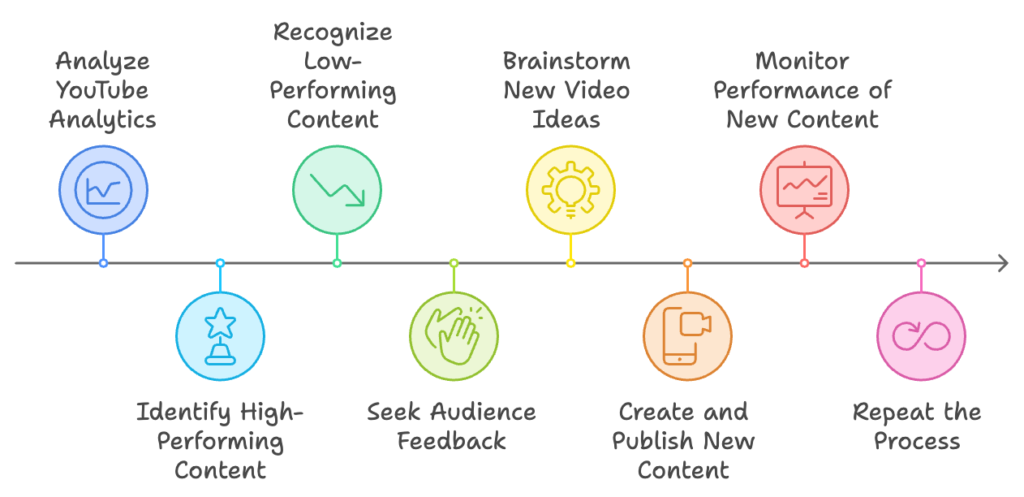
Monitoring Analytics and Refining Strategy
When you create and upload videos on YouTube, it’s like sharing something with a big group of people. Just like you’d want to know how many people liked what you shared, on YouTube, you can find out how many people watched your videos, what parts they liked the most, and other interesting things.
Interpreting YouTube Analytics Data
Imagine you made a video about your pet dog doing cool tricks. YouTube Analytics is like a tool that helps you understand how your video is doing. It can tell you how many people watched your video, where they are from, and even how long they watched it. It’s like having a magical way to peek into what people are doing when they watch your video.
Iterating and Improving Your SEO Strategy Based on Insights
Let’s say you notice that many people stopped watching your dog tricks video after just a short time. This could mean they didn’t find what they expected or maybe your video wasn’t interesting enough from the start. So, you might decide to make your videos more exciting right from the beginning to keep people watching.
Similarly, if you see that a lot of people are finding your video when they search for “funny dog tricks,” you might think about making more videos about funny things dogs do. You’re basically using the information from YouTube Analytics to figure out what’s working well and what needs to be better.
So, “Monitoring Analytics and Refining Strategy” just means keeping an eye on the YouTube numbers to understand how your videos are doing, and then using that information to make your videos even better and more interesting for the people who watch them.
Staying Up-to-Date with Algorithm Changes
Imagine YouTube is like a big puzzle that decides which videos to show to people when they search. This puzzle is called an algorithm. Now, just like puzzles change and get updated, the YouTube puzzle also changes over time. This can affect how your videos are seen by others.
For example, think of the algorithm as a recipe for making a cake. If the recipe changes a bit, you might need to adjust how you bake your cake so that it still tastes great. Similarly, when the YouTube algorithm changes, you need to make small changes to how you do things, so your videos keep getting seen by many viewers.
Adapting to YouTube Algorithm Updates
When YouTube updates its algorithm, it’s like adding new rules to the game. To keep winning (in this case, getting more views on your videos), you need to adjust your strategies.
Maintaining a Long-Term SEO Approach
Think of your YouTube channel like a garden. To keep it looking beautiful, you don’t just water it once and forget about it. You water it regularly and take care of it over time. SEO (Search Engine Optimization) is like taking care of your garden.
If you only focus on your garden for a short time and then stop, it might not look nice anymore. But if you keep taking care of it over the months and years, it will stay beautiful. Similarly, for your YouTube channel to do well, you need to keep doing the right things for a long time, like using good keywords, making great videos, and adjusting to changes in the YouTube algorithm.
Case Studies: Successful YouTube SEO Strategies
We’ll look at some real examples of YouTube channels that have done a great job using YouTube SEO to make their videos more popular and easy to find. Think of it like learning from successful students who have aced their exams and finding out how they did it.
Example 1: Cooking Channel Magic Imagine there’s a YouTube channel called “TastyKitchen” that shares delicious recipes and cooking tips. They’re really good at picking the right words people might use when looking for recipes. For instance, instead of just titling a video “Chocolate Cake,” they might use “Easy Homemade Chocolate Cake Recipe” as their title. This helps their videos show up when someone searches for chocolate cake recipes on YouTube.
Example 2: Fitness Channel FitFusion Let’s say there’s a fitness channel called “FitFusion” that uploads workout videos. They’re masters at making their videos appealing even before you click on them. They create eye-catching pictures for their videos, called thumbnails.
Example 3: Travel Channel ExploreMore Think about a travel channel called “ExploreMore” that shares videos of amazing travel destinations. They’re really good at describing their videos. Instead of just saying “Paris Trip,” they might write “Exploring the Charm of Paris: Eiffel Tower, Louvre, and More.” This not only tells you they’re showing cool places in Paris.
It’s like learning the secret recipes to their success!
Conclusion
Recap of Key Takeaways:
Keywords are King: Just like when you search for something on Google, people type specific words on YouTube. Using the right words (keywords) in your video titles, descriptions, and tags helps your videos show up when someone searches for those words. Example: If you’re making a video about baking cookies, using keywords like “best cookie recipe” can help your video get seen by people looking for cookie recipes.
Looks Matter: Your video thumbnail is like the cover of a book. If it’s interesting and related to your video, more people will want to watch it. Example: Imagine you have a video about cute puppies. A thumbnail showing a fluffy puppy with big eyes will make people curious to watch.
Keep Viewers Engaged: YouTube likes videos that keep people watching for a while. If your video is interesting and holds people’s attention, it can help your video show up more often. Example: If you’re teaching a dance move, making the tutorial fun and easy to follow can keep viewers watching until the end.
Encouragement to Implement Effective YouTube SEO Practices:
Now that you know these tricks, it’s time to use them! By following these simple steps, you can help more people discover your videos and enjoy what you create.