Tag: Personalization

  • Ultimate Guide to Personalization in Marketing

    Ultimate Guide to Personalization in Marketing

    The Ultimate Guide to Personalization in Marketing: Tailoring Messages and Offers to Individual Preferences and Behaviors

    In today’s fast-paced digital landscape, the key to capturing consumer attention lies in the power of personalization. Tailoring marketing messages and offers to individual user preferences and behaviors is no longer just an innovative approach; it’s a necessity. This comprehensive guide will explore the intricate details of personalized marketing strategies, their benefits, and how to implement them effectively.

    Introduction

    The digital era has transformed how businesses interact with consumers. The generic one-size-fits-all marketing strategy is quickly becoming obsolete. Consumers now expect personalized experiences that cater to their unique preferences and behaviors. Personalization in marketing is about understanding your audience on a granular level and delivering tailored messages and offers that resonate with each individual. This approach not only enhances customer engagement but also drives higher conversion rates and fosters brand loyalty.

    image 9

    Understanding Personalization in Marketing

    What is Personalization in Marketing?

    Personalization in marketing involves customizing messages, offers, and experiences based on individual user data. This data can include browsing behavior, purchase history, demographic information, and more. The goal is to make each interaction with the consumer feel relevant and personal.

    Why is Personalization Important?

    Personalization is crucial because it addresses the growing demand for relevant content. Consumers are inundated with marketing messages daily, and personalized content helps cut through the noise, making the communication more effective. It enhances user experience, increases engagement, and builds stronger customer relationships.

    The Benefits of Personalization

    Enhanced Customer Experience

    Personalized marketing creates a seamless and enjoyable customer experience. When consumers receive content and offers that are relevant to their interests and needs, they are more likely to engage with the brand.

    Increased Engagement

    Tailored messages capture the attention of consumers more effectively than generic ones. This increased engagement can lead to higher click-through rates, longer time spent on your site, and more social media interactions.

    Higher Conversion Rates

    Personalized marketing strategies can significantly boost conversion rates. By delivering the right message to the right person at the right time, you increase the likelihood of turning prospects into customers.

    Improved Customer Retention

    Customers who feel understood and valued are more likely to stay loyal to a brand. Personalization fosters a sense of connection and trust, encouraging repeat purchases and long-term loyalty.

    Key Elements of Personalized Marketing

    Data Collection

    Effective personalization starts with data collection. This involves gathering information on user behavior, preferences, and demographics through various channels such as website analytics, social media, and customer surveys.

    Segmentation

    Once you have collected data, the next step is segmentation. This involves dividing your audience into smaller groups based on shared characteristics or behaviors. This allows you to create targeted campaigns for each segment.

    Customized Content

    Creating customized content is at the heart of personalization. This can include personalized emails, product recommendations, targeted ads, and tailored landing pages. The content should be relevant and resonate with the specific needs and interests of each segment.

    Automation

    Automation tools are essential for implementing personalized marketing strategies at scale. These tools can help you deliver personalized messages in real-time, track user interactions, and adjust campaigns based on performance.

    Implementing Personalized Marketing Strategies

    Email Personalization

    Email marketing remains one of the most effective channels for personalization. Use data to segment your email list and send personalized content based on user preferences and behaviors. Personalized subject lines and tailored content can significantly increase open and click-through rates.

    Website Personalization

    Website personalization involves creating a unique experience for each visitor based on their behavior and preferences. This can include personalized product recommendations, dynamic content, and targeted offers. Tools like AI and machine learning can enhance the effectiveness of website personalization.

    Social Media Personalization

    Social media platforms offer robust targeting options that allow you to deliver personalized content to specific audience segments. Use social media analytics to understand your audience and create tailored posts, ads, and engagement strategies.

    Product Recommendations

    Product recommendations are a powerful personalization tool, especially for e-commerce businesses. Use data on past purchases and browsing behavior to suggest products that are relevant to each individual customer. This can increase sales and improve the customer experience.

    Challenges of Personalization

    Data Privacy Concerns

    Collecting and using personal data for marketing purposes comes with privacy concerns. It’s essential to be transparent about data usage and comply with regulations such as GDPR and CCPA. Building trust with your audience by protecting their data is crucial for the success of personalized marketing.

    Data Management

    Effective personalization requires managing large volumes of data. This can be challenging, especially for small businesses with limited resources. Investing in robust data management tools and platforms is essential to ensure accurate and efficient data handling.

    Integration

    Integrating personalization across multiple channels can be complex. It’s important to have a cohesive strategy and the right tools to ensure a seamless and consistent experience for the customer across all touchpoints.

    Future Trends in Personalized Marketing

    1. Hyper-Personalization

    Overview:
    Hyper-personalization goes beyond traditional personalization by leveraging real-time data and advanced technologies such as artificial intelligence (AI) and machine learning to deliver highly customized experiences at an individual level.

    Key Elements:

    • Real-Time Data Analysis: Utilizing data from various touchpoints (social media, browsing history, purchase behavior) to offer immediate and relevant recommendations.
    • Advanced AI and ML Algorithms: Implementing sophisticated algorithms to predict customer needs and preferences with high accuracy.
    • Dynamic Content: Creating content that changes in real-time based on user interactions and context, such as location and time of day.

    Impact:

    • Enhanced customer satisfaction through highly relevant interactions.
    • Increased engagement and conversion rates due to more precise targeting.

    2. Personalized Video Marketing

    Overview:
    Video content is a powerful tool for engagement, and its personalization can significantly boost its effectiveness. Personalized video marketing involves creating videos tailored to individual users’ preferences and behaviors.

    Key Elements:

    • Data-Driven Video Content: Using customer data to create personalized video messages and product recommendations.
    • Interactive Videos: Allowing users to interact with video content to choose their own paths or outcomes, enhancing engagement.
    • Automated Video Creation: Leveraging AI to automatically generate personalized video content at scale.

    Impact:

    • Improved customer engagement and retention through relevant and engaging video content.
    • Higher conversion rates from personalized product demonstrations and testimonials.

    3. Voice and Conversational AI Personalization

    Overview:
    With the rise of voice assistants and chatbots, personalized marketing is extending to voice and conversational interfaces. This involves delivering personalized experiences through voice commands and conversations.

    Key Elements:

    • Voice Search Optimization: Ensuring that content and products are optimized for voice search to provide relevant results.
    • Conversational AI: Utilizing chatbots and virtual assistants to offer personalized recommendations and customer support in real-time.
    • Natural Language Processing (NLP): Enhancing the ability of AI to understand and respond to individual user queries accurately.

    Impact:

    • More natural and engaging customer interactions.
    • Increased adoption of voice-based technologies for shopping and customer service.

    4. Predictive Personalization

    Overview:
    Predictive personalization uses AI and machine learning to anticipate customer needs and deliver personalized experiences before the customer explicitly states their preferences.

    Key Elements:

    • Predictive Analytics: Analyzing historical data to predict future behaviors and preferences.
    • Proactive Recommendations: Offering suggestions and solutions based on predicted needs, such as replenishing frequently bought items.
    • Behavioral Analysis: Monitoring user behavior to refine and improve predictive models continuously.

    Impact:

    • Enhanced customer satisfaction through proactive service and recommendations.
    • Increased sales and loyalty by addressing needs before they arise.

    5. Omnichannel Personalization

    Overview:
    Omnichannel personalization ensures a seamless and consistent personalized experience across all channels and touchpoints, whether online or offline.

    Key Elements:

    • Unified Customer Profiles: Integrating data from various sources to create a comprehensive view of each customer.
    • Consistent Messaging: Ensuring personalized messages are consistent across email, social media, websites, mobile apps, and in-store experiences.
    • Cross-Channel Tracking: Monitoring customer interactions across channels to refine and optimize personalization efforts.

    Impact:

    • Improved customer experience through seamless transitions between channels.
    • Higher engagement and conversion rates by delivering consistent and relevant messaging.
    image 10

    6. Ethical and Transparent Personalization

    Overview:
    As consumers become more concerned about data privacy, ethical and transparent personalization will be crucial. This involves using data responsibly and being transparent about how customer data is collected and used.

    Key Elements:

    • Data Privacy Compliance: Adhering to regulations such as GDPR and CCPA to ensure customer data is protected.
    • Transparent Practices: Clearly communicating how data is used and offering customers control over their data.
    • Ethical AI: Ensuring AI algorithms are fair and unbiased in personalization efforts.

    Impact:

    • Increased trust and loyalty from customers who feel their data is handled responsibly.
    • Reduced risk of legal issues and reputational damage from data privacy concerns.

    7. Augmented Reality (AR) and Virtual Reality (VR) Personalization

    Overview:
    AR and VR technologies are creating new opportunities for personalized marketing by offering immersive and interactive experiences.

    Key Elements:

    • AR Product Try-Ons: Allowing customers to virtually try on products such as clothing, makeup, or furniture to see how they fit or look.
    • VR Experiences: Creating personalized virtual environments or tours to showcase products and services.
    • Interactive AR Ads: Developing AR ads that change based on user interactions and preferences.

    Impact:

    • Enhanced customer engagement through immersive experiences.
    • Higher conversion rates from interactive and personalized product demonstrations.

    Personalization in Action: Success Stories

    1. Netflix: Tailored Content Recommendations

    Overview:
    Netflix is renowned for its personalized content recommendations, which have significantly contributed to its success. By leveraging advanced algorithms and user data, Netflix delivers a customized viewing experience for each subscriber.

    How It Works:

    • Data Collection: Netflix gathers data on users’ viewing habits, including what they watch, how much of it they watch, and their interactions with the platform (e.g., likes, searches, and pauses).
    • Machine Learning Algorithms: These algorithms analyze the collected data to identify patterns and preferences. Netflix uses this information to recommend shows and movies that align with each user’s tastes.
    • Dynamic User Interface: The platform’s UI adapts to show personalized rows and categories, making it easier for users to discover new content they are likely to enjoy.

    Success Metrics:

    • Increased Engagement: Personalized recommendations have led to higher user engagement and longer viewing times.
    • Customer Retention: By constantly offering content that matches users’ preferences, Netflix has achieved higher retention rates.
    • New Subscriptions: Positive word-of-mouth about the tailored viewing experience attracts new subscribers.

    2. Amazon: Customized Shopping Experience

    Overview:
    Amazon’s personalization strategies have set a benchmark in the e-commerce industry. The company uses extensive customer data to provide a personalized shopping experience that boosts sales and customer satisfaction.

    How It Works:

    • Personalized Product Recommendations: Amazon uses browsing history, purchase history, and search queries to recommend products. The “Customers who bought this also bought” feature is a prime example.
    • Customized Email Campaigns: Amazon sends personalized emails with product recommendations based on users’ previous interactions and purchase history.
    • Dynamic Pricing and Promotions: Amazon adjusts prices and promotions in real-time based on user behavior and market trends.

    Success Metrics:

    • Increased Sales: Personalized recommendations contribute to a significant portion of Amazon’s sales, with customers often purchasing suggested products.
    • Enhanced Customer Loyalty: By offering a tailored shopping experience, Amazon has built strong customer loyalty and repeat purchases.
    • Market Dominance: Personalization has played a crucial role in Amazon’s dominance in the e-commerce market, setting it apart from competitors.

    3. Spotify: Personalized Playlists and Music Discovery

    Overview:
    Spotify uses personalization to enhance user experience and drive engagement. Its personalized playlists and music discovery features keep users hooked to the platform.

    How It Works:

    • Discover Weekly: This feature creates a personalized playlist for each user every week, based on their listening history and preferences.
    • Daily Mixes: Spotify curates multiple playlists combining users’ favorite tracks with new recommendations.
    • Release Radar: This feature keeps users updated with new releases from their favorite artists and similar genres.

    Success Metrics:

    • User Engagement: Personalized playlists have led to higher user engagement and daily active users.
    • Subscriber Growth: The tailored music discovery experience attracts new subscribers and retains existing ones.
    • Increased Streaming Hours: Personalized content encourages users to spend more time on the platform, increasing overall streaming hours.

    4. Sephora: Personalized Beauty Recommendations

    Overview:
    Sephora leverages personalization to offer tailored beauty recommendations and enhance customer experience both online and in-store.

    How It Works:

    • Sephora Virtual Artist: This AR tool allows users to try on products virtually and receive personalized recommendations based on their preferences and skin tone.
    • Personalized Emails: Sephora sends customized emails with product recommendations, special offers, and beauty tips based on users’ purchase history and preferences.
    • Beauty Insider Program: This loyalty program offers personalized rewards and recommendations, enhancing customer loyalty and satisfaction.

    Success Metrics:

    • Increased Sales: Personalized recommendations drive higher conversion rates and sales.
    • Customer Loyalty: The Beauty Insider Program has built strong customer loyalty and repeat purchases.
    • Enhanced Customer Experience: Personalized beauty solutions improve overall customer satisfaction and brand perception.

    5. Nike: Personalized Marketing and Product Customization

    Overview:
    Nike uses personalization to deliver targeted marketing campaigns and offer customized products, enhancing customer experience and driving brand loyalty.

    How It Works:

    • Nike By You: This service allows customers to design and personalize their own Nike products, from shoes to apparel.
    • Targeted Marketing: Nike uses data analytics to deliver personalized marketing messages and product recommendations through emails, social media, and the Nike app.
    • Nike Training Club: This app offers personalized workout plans and fitness recommendations based on users’ goals and activity levels.

    Success Metrics:

    • Increased Sales: Personalized products and marketing campaigns have driven higher sales and conversions.
    • Customer Loyalty: Offering customized products and tailored fitness solutions has built strong customer loyalty.
    • Brand Engagement: Personalized marketing and product customization enhance customer engagement and brand affinity.

    Conclusion

    Personalization in marketing is no longer a luxury; it’s a necessity. By tailoring messages and offers to individual user preferences and behaviors, businesses can enhance customer experiences, increase engagement, and drive higher conversion rates. While there are challenges to implementing personalized marketing strategies, the benefits far outweigh the obstacles. Embrace the power of personalization to connect with your audience on a deeper level and achieve long-term success.

    image 11

    FAQs

    How can I start personalizing my marketing messages?

    Begin by collecting data on your audience’s preferences and behaviors. Use this data to segment your audience and create tailored content for each segment.

    What tools can help with marketing personalization?

    There are many tools available, including customer relationship management (CRM) systems, email marketing platforms, and AI-powered personalization software. Choose tools that fit your business needs and budget.

    Is personalization suitable for small businesses?

    Yes, personalization can be highly effective for small businesses. Start with simple strategies, such as personalized emails and product recommendations, and gradually expand your efforts as you collect more data and resources.

    How does personalization affect customer loyalty?

    Personalization fosters a sense of connection and trust with your customers. When customers feel understood and valued, they are more likely to remain loyal to your brand and make repeat purchases.

    What are the ethical considerations of personalization?

    It’s important to be transparent about how you collect and use customer data. Ensure that you comply with data privacy regulations and build trust with your audience by protecting their data.

    Can personalization improve my marketing ROI?

    Yes, personalization can significantly improve your return on investment by increasing engagement, conversion rates, and customer retention. Tailored messages are more likely to resonate with your audience, leading to better marketing outcomes.

    Logo

    Contact Person: Kamlesh Singad

    Phone no. +91 9131341638

    Web Page: https://kamleshsingad.in/

    contact@kamleshsingad.com

    https://kamleshsingad.com

    Read More –

    How to optimize your content for voice search? – https://kamleshsingad.in/optimize-content-voice-search/

    How are chatbots used in digital marketing? – https://kamleshsingad.in/chatbots-in-digital-marketing/

    Interactive Content: Boosting User Engagement with Quizzes and Polls – https://kamleshsingad.in/interactive-content-utilizing-interactive-elements-like-quizzes-and-polls-to-engage-users/

  • Strategies for Creating and Distributing Valuable Content to Attract and Engage Audiences

    Strategies for Creating and Distributing Valuable Content to Attract and Engage Audiences

    In the realm of digital marketing, content is both king and kingdom. It’s not just about creating content; it’s about creating valuable content that resonates with your audience, meets their needs, and then ensuring it reaches them effectively. This article will explore comprehensive strategies for crafting and disseminating content that not only attracts but also deeply engages your target audience.

    Crafting Valuable Content

    Understanding Your Audience

    Before you write a single word, it’s crucial to know who you’re writing for. Develop a clear picture of your audience by creating detailed buyer personas—semi-fictional characters that represent your ideal customers, based on real data and some educated speculation about demographics, behavior patterns, motivations, and goals.

    Generating Ideas That Resonate

    Once you understand your audience, generating relevant content ideas becomes easier. Use tools like Answer the Public, Google Trends, or BuzzSumo to discover what your audience is searching for and talking about. Social listening can also provide real-time insights into current trends and pain points.

    Focusing on Quality Over Quantity

    The internet is saturated with content, making quality more critical than ever. High-quality content is:

    • Well-researched: Supports claims with data and statistics.
    • Well-written: Clear, concise, and free of grammatical errors.
    • Useful: Solves problems or answers questions.
    • Engaging: Draws the reader in and keeps their attention.
    • Original: Offers new insights or presents information in a unique way.

    Incorporating SEO Best Practices

    SEO is integral to content creation. Optimize your content for search engines by:

    • Using keywords naturally and strategically.
    • Including internal links to other relevant content on your site.
    • Optimizing meta tags and descriptions to improve click-through rates from search engine results pages (SERPs).

    To enhance your website’s search engine ranking and visibility, incorporating SEO best practices is crucial. Here’s a concise overview of effective SEO tactics:

    On-Page SEO

    • Keyword Optimization: Include relevant keywords naturally in your content, titles, and meta descriptions.
    • Content Quality: Produce high-quality, original content that adds value for readers.
    • HTML Tags: Utilize header tags (H1, H2, H3) to structure your content. Use alt text for images.

    Off-Page SEO

    • Backlinks: Focus on acquiring high-quality backlinks from reputable websites to boost your site’s authority.
    • Social Media: Leverage social platforms to increase content visibility and generate traffic.

    Technical SEO

    • Mobile Optimization: Ensure your site is mobile-friendly, as this is a significant ranking factor.
    • Site Speed: Improve load times with optimized images and streamlined coding.
    • Secure Website: Use HTTPS to secure your site and protect users’ data.

    Continuous Monitoring and Updating

    • Analytics: Use tools like Google Analytics to track your website’s performance and make data-driven adjustments.
    • SEO Audits: Regularly audit your website for SEO efficiency and compliance with the latest search engine algorithms.

    By systematically applying these SEO strategies, you can significantly improve your website’s search engine rankings, attract more traffic, and enhance user engagement.

    image 3

    Using Varied Content Formats

    Different formats can appeal to different segments of your audience. Consider diversifying your content portfolio:

    • Blog posts and articles
    • Videos
    • Infographics
    • Podcasts
    • Webinars
    • E-books and whitepapers

    Distributing Content Effectively

    In today’s digital landscape, creating stellar content is only half the battle—the other half is ensuring it reaches and resonates with your intended audience. Effective content distribution is pivotal in maximizing visibility and engagement. This comprehensive guide will explore various strategies to distribute content effectively, ensuring it achieves its maximum potential impact.

    Choose the Right Platforms for Distribution

    1. Social Media Platforms:
    Each social media platform serves a unique demographic and caters to different content formats. For example:

    • Instagram is ideal for visual content like photos and videos.
    • Twitter is great for quick updates and links to articles.
    • LinkedIn excels with professional content and articles.
    • Facebook offers versatility with the ability to post text, images, videos, and links.

    2. Your Website or Blog:
    Posting content on your own site is crucial for driving traffic back to your domain, enhancing SEO, and building a content-rich hub that supports your brand’s authority and expertise.

    3. Email Newsletters:
    Regular newsletters help keep your audience informed and engaged with your latest content. Segment your email lists to tailor content types to different audience needs and preferences.

    Tailor Content for Each Channel

    Content should be adapted to fit the style and format of each distribution channel:

    • Videos might need to be edited differently for Instagram (short and eye-catching) versus YouTube (longer and more detailed).
    • Articles should have engaging headlines and a clear call-to-action when shared on social media.
    • Graphics need to be resized or reformatted to meet the specifications of different platforms for optimal display.

    Leverage Content Scheduling Tools

    Consistency is key in content distribution. Use tools like Buffer, Hootsuite, or Sprout Social to schedule posts across multiple platforms. These tools help maintain a steady stream of content, even when you’re not actively online, and provide analytics to track engagement and optimize posting schedules.

    Utilize Content Syndication

    Syndicating your content on larger platforms can dramatically increase its reach. Platforms like:

    • Medium
    • LinkedIn Articles
    • Industry-specific forums

    These allow you to republish existing blog posts or articles, reaching new audiences who visit these high-traffic sites.

    Implement SEO Best Practices

    Ensure your content is optimized for search engines to increase its discoverability:

    • Use relevant keywords naturally throughout your content.
    • Optimize meta tags and descriptions.
    • Build internal and external links.
    • Ensure your website’s structure and navigation are search engine friendly.

    Engage and Interact with Your Audience

    Engagement doesn’t stop at content posting. Actively respond to comments, questions, and feedback:

    • Use social media platforms to have real-time interactions.
    • Encourage discussions by asking questions and prompting responses.
    • Show appreciation for shares and mentions by thanking your audience.

    Analyze and Refine Your Strategy

    Use analytics to track the performance of your content across different channels. Tools like Google Analytics and platform-specific insights provide valuable data on:

    • Which types of content perform best.
    • What times of day yield the highest engagement.
    • How different audience segments interact with your content.

    This data should inform your future content creation and distribution strategies, helping you to continuously improve and tailor your efforts to meet audience needs.

    Effective content distribution is a dynamic process that requires attention to where, how, and when your content is shared. By diversifying your distribution channels, tailoring content to fit those channels, and continuously engaging with your audience, you can enhance your content’s reach and impact. Remember, the goal is not just to distribute content, but to do so in a way that maximizes engagement and fosters meaningful connections with your audience.

    image 4

    Advanced Strategies

    Personalization

    Use data-driven insights to personalize content experiences. This can range from personalized email greetings to content recommendations based on past behavior.

    Storytelling

    Incorporate storytelling into your content to make it more relatable and memorable. Stories can evoke emotional responses that help your content resonate more deeply with your audience.

    Interactive Content

    Interactive content such as quizzes, surveys, and interactive infographics can increase user engagement by encouraging active participation instead of passive consumption.

    Conclusion

    Creating and distributing valuable content is a dynamic and multifaceted endeavor that demands both creativity and strategic planning. By understanding your audience, producing high-quality and diversified content, and effectively leveraging distribution channels, you can significantly enhance your digital marketing efforts. Remember, the key to successful content marketing lies not just in attracting an audience, but in engaging and retaining that audience over time.

    image 5
    Logo

    Contact Person: Kamlesh Singad

    Phone no. +91 9131341638

    Web Page: https://kamleshsingad.in/

    contact@kamleshsingad.com

    https://kamleshsingad.com/

    Read More –

    How can i improve my SEO Ranking? – https://kamleshsingad.in/how-can-i-improve-my-seo-ranking/

    What is Marketing? Definition, Strategies & Best Practices – https://kamleshsingad.in/what-is-marketing/

    Techniques to improve website ranking on search engines – https://kamleshsingad.in/techniques-to-improve-website-ranking-on-search-engines/

  • The Psychology of Consumer Behaviour: How to Influence Purchasing Decisions

    The Psychology of Consumer Behaviour: How to Influence Purchasing Decisions

    Learn about Consumer Behaviour and how understanding customer preferences, decision-making patterns, and buying psychology can help businesses create effective marketing strategies and boost sales.

    Have you ever wondered why you can’t resist buying that new gadget, even when you know you don’t really need it? Or why you prefer one brand of soda over another, even though they both taste similar? The answer lies in the fascinating world of consumer psychology. Understanding the psychology behind consumer behavior can help businesses tailor their marketing strategies to influence purchasing decisions effectively. In this blog, we’ll explore the key principles of consumer psychology using simple language and real-life examples.

    The Psychology of Consumer Behaviour

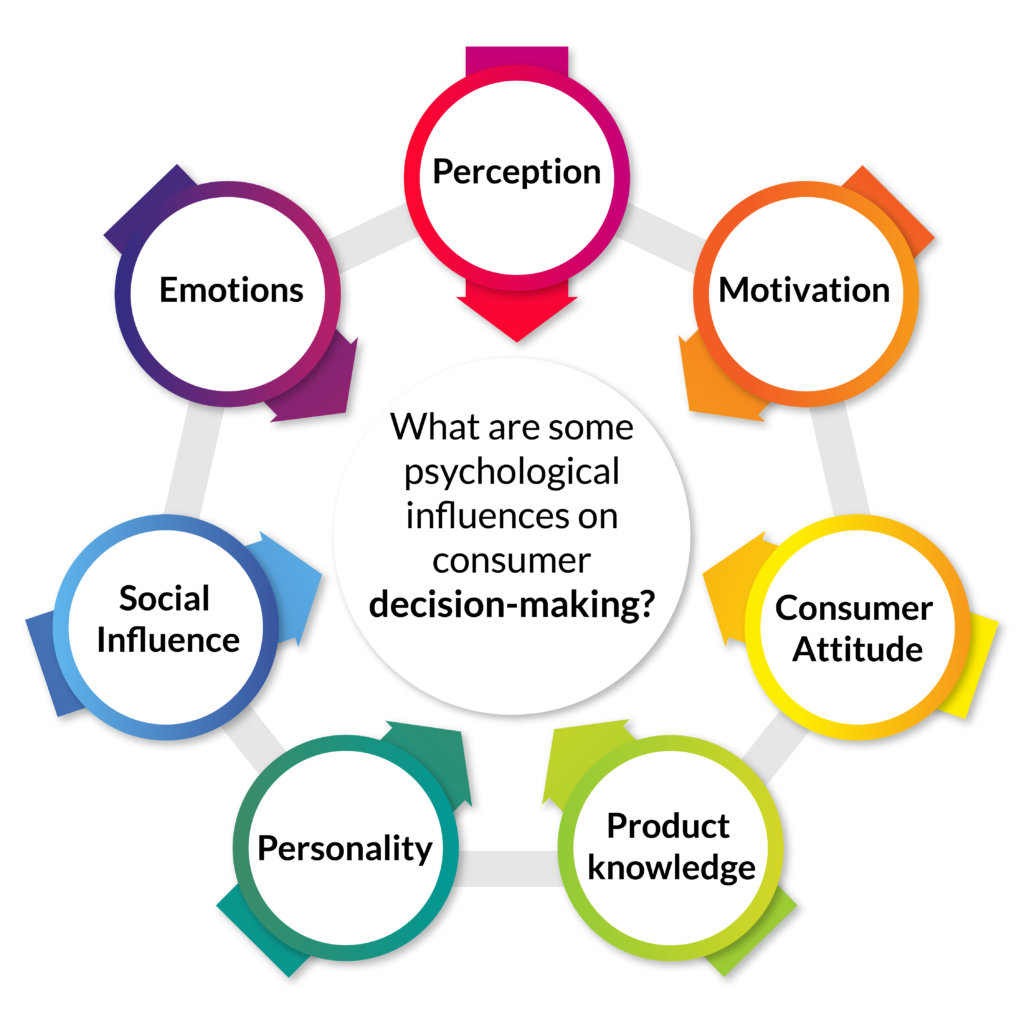
    Perception

    Perception plays a vital role in consumer behavior. People tend to perceive products and brands based on their sensory experiences. This includes how a product looks, smells, sounds, and feels.

    Example: Imagine you’re in a grocery store, and you see two bottles of wine side by side. One has an elegant label, while the other has a plain, unattractive one. You’re more likely to choose the wine with the appealing label, even though you have no idea about the taste.

    Takeaway: Businesses can influence consumer perception by investing in product packaging, aesthetics, and overall presentation.

    Emotions

    Emotions have a powerful impact on purchasing decisions. People often buy products or services that make them feel a certain way. Marketers use emotional appeal to connect with consumers on a personal level.

    Example: Think about a heartwarming commercial for a charity organization featuring children and animals. This evokes empathy and a desire to contribute to the cause.

    Takeaway: Businesses can use emotional marketing to create a connection with their target audience and drive purchases.

    Social Influence

    Humans are inherently social creatures, and our purchasing decisions are often influenced by what others are doing. This phenomenon is known as social proof.

    Example: You’re more likely to try a new restaurant that’s always packed with customers than one that’s empty, assuming that many people can’t be wrong.

    Takeaway: Businesses can leverage social proof through customer reviews, testimonials, and showcasing popularity to attract more customers.

    Consumer Behaviour

    Cognitive Biases

    Cognitive biases are mental shortcuts that our brains take to make quick decisions. These biases can lead us to make irrational purchasing choices.

    Example: You might see a “limited-time offer” and feel a sense of urgency to buy a product, even if you didn’t plan to. This is known as the scarcity bias.

    Takeaway: Businesses can use cognitive biases like scarcity or anchoring (setting a high initial price to make a discount seem more appealing) to influence consumer behavior.

    Consumer Trust

    Trust is a critical factor in consumer behavior. People are more likely to buy from brands they trust. Trust can be built through consistent quality, transparency, and ethical business practices.

    Example: Consider a tech company known for its reliable products and excellent customer service. Consumers are more likely to buy their products because they trust the brand.

    Takeaway: Building and maintaining trust should be a priority for businesses aiming to influence purchasing decisions positively.

    Personalization

    Personalization tailors marketing messages and product recommendations to individual customers.

    Example: Online retailers like Amazon use algorithms to suggest products based on your past purchases and browsing history.

    Takeaway: Businesses can increase sales by offering personalized experiences that cater to individual customer preferences.

    Conclusion

    Understanding the psychology of consumer behavior is essential for businesses looking to influence purchasing decisions effectively. By leveraging principles such as perception, emotions, social influence, cognitive biases, trust, and personalization, companies can connect with their target audience on a deeper level. The key is to create positive experiences that resonate with consumers and make them more likely to choose your product or service over others.

  • Email Marketing Best Practices: Building a High-Converting Email Campaign

    Email Marketing Best Practices: Building a High-Converting Email Campaign

    Email marketing remains one of the most effective digital marketing channels for businesses to reach and engage with their audience. When done right, it can drive high conversion rates and ROI. In this blog, we will explore email marketing best practices in simple language and provide examples to help you create high-converting email campaigns.

    Understand Your Audience

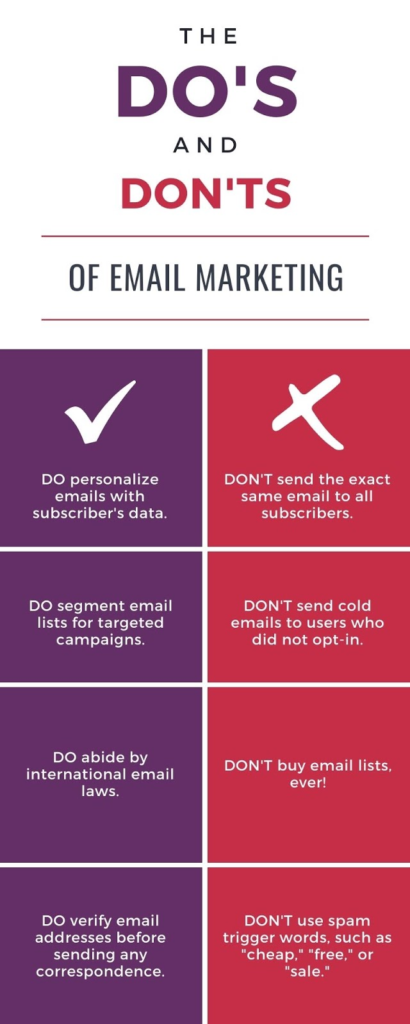
    Before sending any emails, it’s crucial to understand your audience’s preferences, interests, and needs. Collect data and segment your email list to create targeted campaigns. For instance, if you’re a fashion retailer, segment your list based on demographics, purchase history, and preferences.

    Example: If you know that a segment of your subscribers frequently buys women’s shoes, send them personalized emails about new arrivals in the women’s shoe section.

    Craft Attention-Grabbing Subject Lines

    Your email’s subject line is the first thing recipients see, so it must be compelling. Create subject lines that pique curiosity, offer value, or address a pain point.

    Example: “Exclusive 24-Hour Sale: 50% Off Your Favorite Products!” This subject line creates a sense of urgency and highlights a significant discount.

     Email Marketing

    Personalization

    Personalization goes beyond addressing recipients by their first name. Tailor your content and recommendations based on the recipient’s preferences and behavior.

    Example: “Hi [Name], We Noticed You Love Running – Check Out Our Latest Running Shoe Collection!” This email is personalized based on the recipient’s interest in running.

    Create Engaging Content

    The body of your email should be visually appealing and easy to read. Use a responsive design and include compelling images and well-structured text.

    Example: Include high-quality images of your products with concise and persuasive descriptions. Add clear CTA (Call to Action) buttons like “Shop Now” or “Learn More.”

    Mobile Optimization

    Many people check emails on their mobile devices, so ensure your emails are mobile-responsive. Test how your email looks on different devices and email clients.

    Example: Use a single-column layout with larger fonts and buttons for better mobile readability and navigation.

    A/B Testing

    Experiment with different elements of your emails, such as subject lines, email copy, images, and CTAs. A/B testing helps you identify what resonates best with your audience.

    Example: Send two versions of the same email to a small sample of your list, with one variation (e.g., subject line). Analyze which version generates higher open rates or conversions, and use the winning version for your main campaign.

    Build Trust

    Include trust-building elements in your emails, such as clear contact information, an unsubscribe option, and privacy policy links. This fosters trust and complies with email marketing regulations.

    Example: At the bottom of your email, add a link to your privacy policy and a sentence like “You can unsubscribe at any time by clicking here.”

    Timing and Frequency

    Send your emails at the right time to increase open rates. Consider the time zone of your audience and the nature of your content. Also, avoid bombarding subscribers with too many emails.

    Example: If you run a restaurant, sending a lunch special email at 9 AM might be more effective than sending it late in the afternoon when people have already made lunch plans.

    Measure and Analyze

    Track key email marketing metrics such as open rates, click-through rates, conversion rates, and unsubscribe rates. Use these insights to refine your email campaigns continually.

    Example: If you notice a drop in open rates for a specific type of email, like newsletters, consider tweaking the subject line or content to make it more engaging.

    Automation

    Use email marketing automation to send triggered emails based on user actions, such as welcome emails, abandoned cart reminders, or post-purchase follow-ups.

    Example: If a customer abandons their shopping cart, send an automated email reminding them of the items in their cart and offering an incentive to complete the purchase.

    Conclusion

    Email marketing is a powerful tool for building relationships and driving conversions. By understanding your audience, crafting engaging content, and following these best practices, you can create high-converting email campaigns that deliver results. Remember that email marketing is an ongoing process of testing, learning, and optimizing, so stay open to adapting your strategies based on your audience’s response.

    Email Marketing
  • Top Emerging Digital Marketing Trends You Must Know as a Marketer

    Top Emerging Digital Marketing Trends You Must Know as a Marketer

    In the fast-paced world of digital marketing, staying ahead of the curve is crucial for success. What worked yesterday may not work today, and as a marketer, you need to adapt to the ever-evolving landscape. In this blog, we’ll explore the top emerging digital marketing trends you must know as Digital Marketer, and we’ll break them down into simple language with real-world examples of Digital Marketer.

    Video Marketing Continues to Soar

    Video marketing is not new, but its significance is growing exponentially. People love watching videos, and platforms like YouTube, TikTok, and Instagram Reels are perfect examples of this trend.

    Example: Let’s say you run a small bakery. Instead of just posting pictures of your delicious treats, you could create short videos showcasing the baking process, customer reviews, or even behind-the-scenes footage. This engages your audience and gives them a more immersive experience.

    Conversational Marketing with Chatbots

    Chatbots are becoming smarter and more personalized. They can provide instant answers to customer queries, making user interactions smoother and more efficient.

    Example: If you have an e-commerce website, you can implement a chatbot that asks visitors what they are looking for and guides them to the right products. It can also handle frequently asked questions, reducing the workload on your customer support team.

    Also Read: 10 Powerful Reasons Why You Should Outsource Your Digital Marketing

    Digital Marketing Trends

    AI-Powered Personalization

    Artificial Intelligence (AI) is changing the game in digital marketing. AI algorithms can analyze user data to offer highly personalized content and product recommendations.

    Example: Think about Netflix. It uses AI to suggest movies and shows based on your viewing history. As a marketer, you can employ AI to send personalized email campaigns, tailored product recommendations, and even website content.

    Voice Search Optimization

    Voice assistants like Siri, Alexa, and Google Assistant are becoming increasingly popular. Optimizing your content for voice search is a must.

    Example: If you’re a local pizza restaurant, optimizing for voice search means focusing on long-tail keywords and answering questions like, “Where’s the nearest pizza place?” in your website content. This can help you rank higher when someone asks their voice assistant for pizza recommendations.

    Digital Marketing Trends

    Influencer Marketing Evolution

    Influencer marketing is not just about celebrities anymore. Micro-influencers (those with smaller but highly engaged followings) are gaining traction.

    Example: Instead of paying a celebrity chef to promote your kitchen gadgets, you could collaborate with a food blogger who has a dedicated audience of home cooks. Their recommendations are often perceived as more authentic and trustworthy.

    Augmented Reality (AR) and Virtual Reality (VR)

    AR and VR technologies are making their way into digital marketing. They allow consumers to interact with products and experiences in immersive ways.

    Example: Imagine you’re in the fashion industry. You could develop an AR app that lets customers “try on” clothes virtually before making a purchase. This enhances the online shopping experience and reduces return rates.

    User-Generated Content

    User-generated content (UGC) involves customers creating content related to your brand. It’s a powerful way to build trust and authenticity.

    Example: If you run a fitness brand, encourage your customers to share their workout videos or before-and-after photos on social media using a specific hashtag. You can then showcase this UGC on your website or social channels, demonstrating real people achieving real results with your products.

    Also Read: Advanced Digital Marketing Course in Indore | Learn with Code With Kamlesh Agency

    Data Privacy and Transparency

    With increasing concerns about data privacy, marketers need to be transparent about how they collect and use customer data.

    Example: Make sure your website clearly outlines your data collection practices and gives users the option to opt out. Being transparent builds trust, and customers are more likely to share their information if they know it’s handled responsibly.

    Conclusion

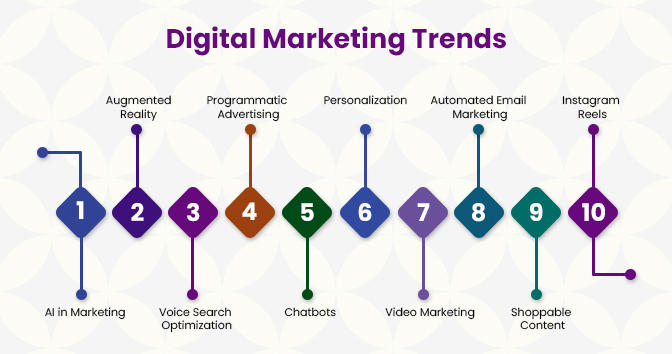
    The digital marketing landscape is dynamic, and staying updated on emerging trends is vital for success. From video marketing and chatbots to AI-powered personalization and AR/VR experiences, these trends offer exciting opportunities for Digital Marketer to connect with their audience in innovative ways. Embracing these trends and adapting your strategies accordingly can help you stay at the forefront of digital marketing and drive better results for your brand or business.

    Also Read: Advanced AI Digital Marketing Course in Indore by Code With Kamlesh

    Digital Marketing Trends