In today’s digital era, visibility is power. Whether you’re a freelancer, a brand, a startup, or a student learning digital marketing, mastering Google Ads is a must. Google Ads is the leading platform for Search Engine Marketing (SEM), a paid method of placing your business directly in front of users actively searching for your services or products.
In this module of the digital marketing course led by Kamlesh Singad of CWK Agency, we will break down Google Ads and its working model step-by-step, and more importantly—how YOU can start implementing it from day one.
What Is Google Ads?
Google Ads (formerly Google AdWords) is Google’s online advertising platform that allows you to create ads that appear on Google Search, YouTube, and millions of partner websites in the Google Display Network.
You pay Google when someone clicks on your ad—hence, the term PPC (Pay Per Click).
Benefits of Google Ads:
Instant visibility on the top of Google
Highly targeted ad placements
Real-time performance tracking
Scalable and measurable
Works for all budgets
Kamlesh Tip: If SEO is a marathon, then Google Ads is a sprint. Combine both for optimal performance.
Use Exact Match and Phrase Match keywords to control who sees your ads.
Write multiple ad variations and let Google test which performs best.
Use negative keywords to avoid irrelevant clicks.
Optimize landing pages – match headline, speed, mobile-responsiveness.
Track conversions using Google Tag Manager and Analytics.
Case Study by Kamlesh Singad: “One of our clients selling digital teaching tools saw a 250% increase in sales with optimized Google Search Campaigns using CWK Agency’s proven framework.”
Google Ads vs. SEO: What’s the Difference?
Feature
Google Ads (SEM)
SEO
Cost
Pay-per-click
Free (organic)
Time
Instant
Long-term
Control
High
Limited
Scalability
Easy
Gradual
Combine Google Ads for quick leads and SEO for long-term growth.
FAQs
Q1: How much does it cost to advertise on Google Ads?
A: It depends on your bid, competition, and industry. You can start with ₹100/day.
Q2: Do I need a website to run Google Ads?
A: Yes, especially for Search and Display campaigns. YouTube campaigns can work with just a video.
Q3: How long does it take to see results?
A: Usually within 1–3 days, depending on your budget and targeting.
Q4: Can I run Google Ads for a local business?
A: Absolutely. You can geo-target your ads to specific pin codes or cities.
Learn with CWK Agency: Practical Google Ads Projects
At CWK Agency, led by Kamlesh Singad, students are assigned real-world projects like:
Running ads for small local businesses
Managing ₹1,000/day campaigns
Tracking conversions using Google Analytics
A/B testing headlines and descriptions
Certificate of Completion + Portfolio Project You will complete a live campaign during the course. Add it to your resume or share it with freelance clients.
Final Thoughts
Google Ads is one of the most powerful tools in digital marketing, but it must be used wisely. You now understand how it works—from auction to ad creation to performance tracking.
Whether you’re an aspiring digital marketer, freelancer, or small business owner, you can start your Google Ads journey today.
At CWK Agency, we believe in action-driven learning. So don’t just read this blog—go create your first campaign now!
In the competitive landscape of digital advertising, effectively scaling your Google Ads campaigns is crucial for maximizing profitability. Implementing strategic optimizations can lead to significant improvements in performance and return on investment (ROI). Here are seven powerful Google Ads hacks to help you scale your campaigns profitably:
Table of Contents
1. Develop In-Depth Remarketing Audiences
Remarketing targets users who have previously interacted with your website, offering a higher likelihood of conversion. By creating detailed remarketing audiences, you can tailor your ads to users based on their specific behaviors and interests. This approach not only enhances click-through rates (CTR) but also reduces cost-per-click (CPC), providing a better return on your advertising spend.
2. Focus on Long-Tail Keywords
Long-tail keywords are more specific phrases that typically have lower search volumes but higher intent. Targeting these keywords can lead to higher conversion rates and lower CPCs, as they are less competitive. By focusing on long-tail keywords, you attract users who are further along in the purchasing process, thereby increasing the likelihood of conversion.
Implementing exclusions allows you to refine your audience by excluding demographics or interests that are less likely to convert. This precision targeting ensures that your ads are shown to users who are more likely to be interested in your products or services, thereby improving conversion rates and optimizing your ad spend.
4. Test Different Geographic Locations
Geographic performance can vary significantly, making it essential to test different locations to identify areas with higher conversion rates. By creating location-based campaigns or ad groups, you can allocate your budget more effectively and tailor your messaging to resonate with specific regional audiences.
5. Leverage Ad Extensions
Ad extensions enhance your ads by providing additional information and increasing visibility. Utilizing extensions such as sitelinks, callouts, and structured snippets can improve your ad’s CTR and overall performance. These extensions make your ads more informative and engaging, encouraging users to click through to your website.
UTM tracking involves adding unique parameters to your URLs to monitor the performance of your campaigns in detail. This tracking enables you to identify which ads, keywords, or campaigns are driving the most traffic and conversions, allowing for data-driven optimization decisions.
7. Target Competitor Keywords
Bidding on competitor keywords can capture the attention of users searching for similar products or services. This strategy can increase your market share and attract customers who are considering alternatives. Ensure that your ad copy clearly communicates your unique value proposition to persuade users to choose your offering over competitors.
By incorporating these Google Ads hacks into your advertising strategy, you can effectively scale your campaigns and achieve more profitable results. Continuous testing and optimization are key to maintaining and improving performance in the dynamic landscape of digital advertising.
What are long-tail keywords, and why are they important?
Long-tail keywords are specific, longer phrases that users search for, often indicating higher intent. They are important because they typically have lower competition and higher conversion rates, making them cost-effective targets in advertising campaigns.
How do ad extensions improve my Google Ads performance?
Ad extensions provide additional information and increase the visibility of your ads, leading to higher click-through rates. They make your ads more informative and engaging, which can improve overall performance and ROI.
Why should I implement UTM tracking in my campaigns?
UTM tracking allows you to monitor the effectiveness of your campaigns by providing detailed data on traffic sources and user behavior. This information is crucial for making informed optimization decisions and improving campaign performance.
Is targeting competitor keywords a good strategy?
Targeting competitor keywords can be effective in capturing the attention of users considering alternative products or services. It can increase your market share and attract potential customers, but it’s important to ensure your ads clearly communicate your unique value proposition.
How can exclusions help in optimizing my ad campaigns?
Implementing exclusions helps refine your audience by removing demographics or interests less likely to convert. This precision targeting ensures your ads reach users more likely to be interested in your offerings, improving conversion rates and optimizing ad spend.
What is the benefit of testing different geographic locations in my campaigns?
Testing different geographic locations allows you to identify regions with higher conversion rates. By focusing your budget on these areas, you can improve overall campaign performance and achieve a better return on investment.
Conclusion
Scaling your Google Ads campaigns profitably requires strategic planning and continuous optimization. By implementing these seven powerful hacks—developing in-depth remarketing audiences, focusing on long-tail keywords, utilizing exclusions, testing different geographic locations, leveraging ad extensions, implementing UTM tracking, and targeting competitor keywords—you can enhance your campaign performance and achieve sustainable growth.
Imagine you have a shop and you want to attract more customers to your website. One way to do this is through something called “Pay Per Click” or PPC.
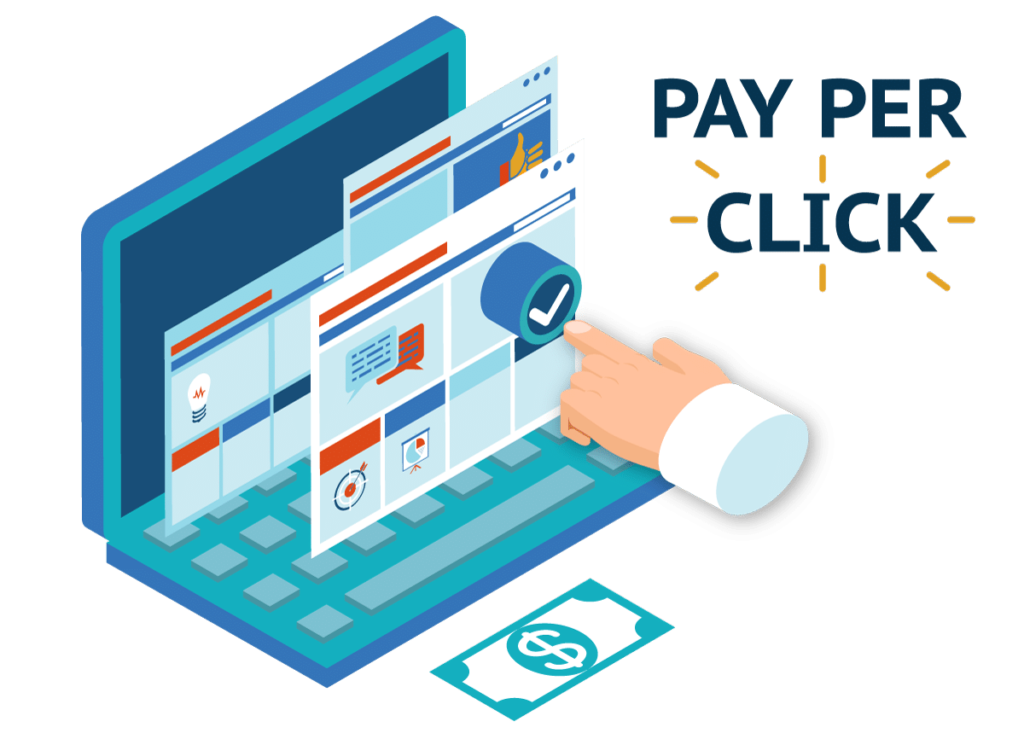
Think of PPC as a kind of online advertising where you only pay when someone clicks on your ad. It’s like putting up a billboard on a busy street, but you only pay the billboard company when someone actually stops and takes a closer look at your billboard.
In the online world, PPC works similarly. You create a little ad that shows up when people search for something related to what you offer. These ads usually appear on search engines like Google or on websites. When someone clicks on your ad, they get directed to your website, and you pay a small amount for that click.
The cool thing about PPC is that you can choose exactly who sees your ad. For instance, if you’re selling sneakers, you can make sure your ad shows up when someone types in “cool sneakers” in a search engine. This means your ad reaches people who are already interested in what you’re selling.
PPC can be a great way to bring potential customers to your website and hopefully turn them into actual buyers. It’s like paying a small fee for each visitor who walks into your virtual store after being attracted by your online ad. Just remember, it’s important to make sure your ad and website are interesting and relevant to what people are looking for, so they’re more likely to stick around and make a purchase.
1. What is PPC?
Definition of PPC: Pay Per Click (PPC) is an online advertising model where advertisers pay a fee each time their ad is clicked. It’s a way to buy visits to your website rather than trying to earn those visits organically.
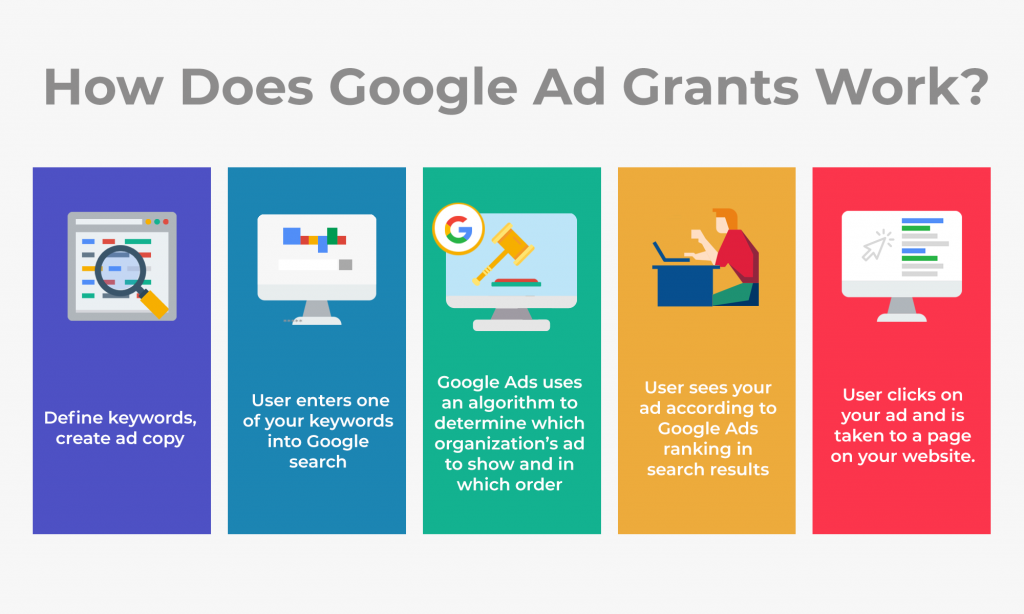
How PPC works: Advertisers bid on specific keywords related to their products or services. When someone searches for those keywords, the ads are shown at the top of the search results. If the user clicks on the ad, the advertiser pays the search engine (like Google) for that click.
Benefits of PPC advertising: It offers immediate visibility in search results, targets specific audiences, provides measurable results, and allows for precise budget control.
2. Components of PPC Campaigns:
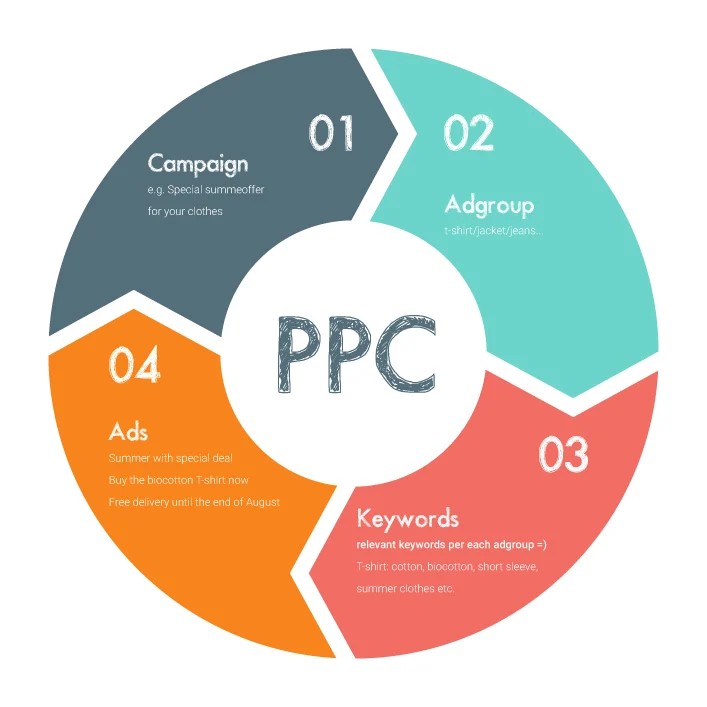
Keywords: Keywords are the words or phrases that trigger your ads to appear. For instance, if you sell running shoes, “best running shoes” could be a keyword.
Ad Copy: This is the text of your advertisement. It should be catchy, relevant to the keyword, and include a call-to-action (CTA). For example, “Shop the latest running shoe collection now!”
Landing Pages: The page where users are directed after clicking your ad. It should match the ad’s promise and provide a seamless user experience.
Ad Extensions: These are extra pieces of information added to your ad, like your phone number, location, or links to specific pages on your website.
Budget and Bidding: You set a daily or monthly budget, and you bid on keywords. The bid amount affects how often your ad appears and where it’s placed on the page.
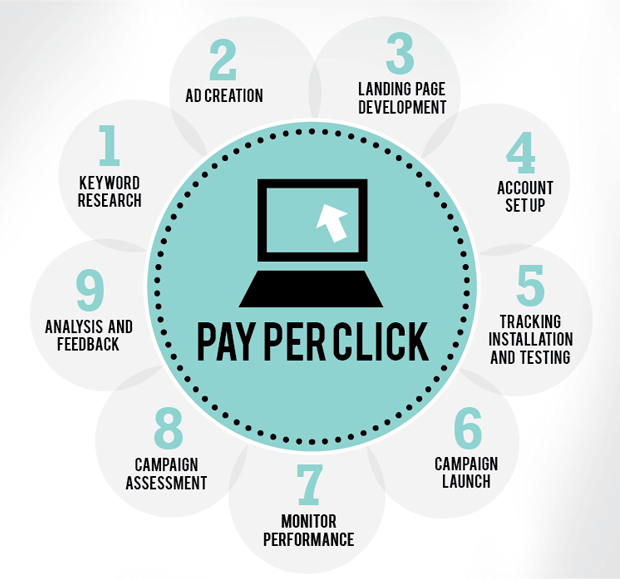
3. Setting Up Your PPC Campaign:
Researching Keywords: Use tools like Google Keyword Planner to find relevant keywords for your business. Focus on keywords with high search volume and relevance to your offerings.
Campaign Structure: Divide your campaigns into smaller ad groups, each with a specific theme. This helps you tailor your ads and track performance more effectively.
Ad Platforms: Popular platforms include Google Ads (for search and display ads), Bing Ads (Microsoft’s search engine), and social media platforms like Facebook Ads.
Targeting Options: Define your target audience by factors like location, demographics, interests, and device types.
4. Creating Effective Ad Campaigns:
Writing Compelling Ad Copy: Use action-oriented language, highlight benefits, and create a sense of urgency. For example, “Limited-time offer: 50% off running shoes!”
Ad Formats: Experiment with different formats, such as text ads, display ads with images, and video ads.
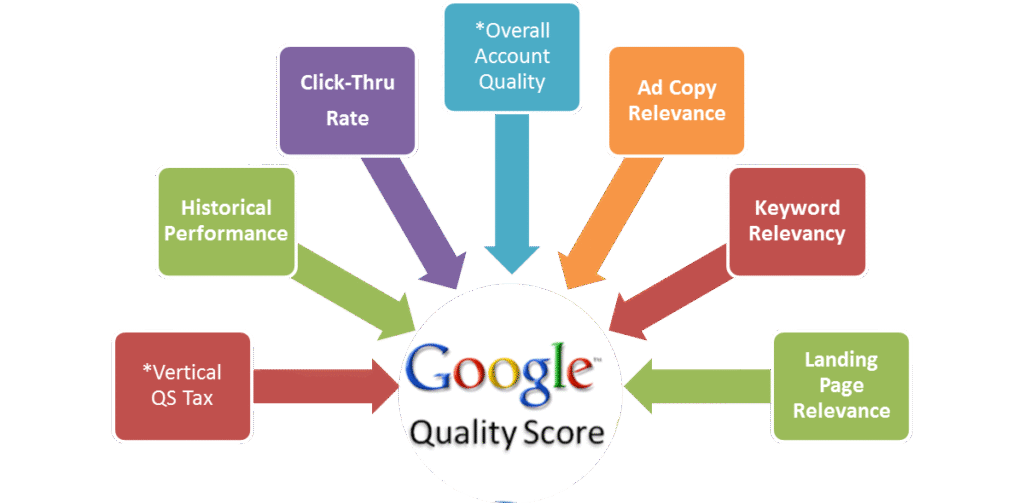
Ad Quality Score: This is a rating given by platforms like Google to your ads and landing pages. It affects your ad’s position and cost. To improve it, focus on relevance and user experience.
A/B Testing: Create multiple versions of your ads and test different elements like headlines, descriptions, and images to see what resonates best with your audience.
5. Keyword Research and Selection:
Types: Broad match (wide keyword variations), exact match (precise keywords), phrase match (specific phrases), and negative keywords (words you don’t want your ad to appear for).
Tools: Besides Google Keyword Planner, tools like SEMrush, Ahrefs, and Moz can help you find valuable keywords.
Long-Tail Keywords: These are longer, more specific phrases. For example, “affordable lightweight running shoes for beginners.”
6. Managing Bids and Budgets:
Bid Strategies: Manual Bidding, Automated Bidding, and Bid Adjustments:
Manual Bidding: With manual bidding, you set the maximum amount you’re willing to pay for a click. It gives you precise control over your bids but requires constant monitoring and adjustments.
Automated Bidding: Automated bidding uses algorithms to adjust bids based on various factors, such as user behavior and conversion likelihood. It can save time and optimize bids for better results.
Bid Adjustments: These allow you to modify bids for specific criteria like device type, location, or time of day. For example, you can increase bids for mobile users if your website is mobile-friendly.
Budget Allocation: Determining How Much to Spend on Each Campaign:
Start Small: Begin with a modest budget to test different keywords and ads. As you gather data and optimize your campaigns, you can gradually increase your budget.
Allocate by Campaign Goals: Allocate more budget to campaigns that are driving better results or have higher potential for conversions.
Consider Seasonality: Adjust your budget based on peak seasons for your business. For instance, if you sell winter clothing, allocate more budget during the colder months.
Cost-Per-Click (CPC): Understanding the Cost of Each Click:
Auction-Based Pricing: In PPC, you participate in an auction for ad placement. You’re competing with other advertisers, and the amount you’re willing to pay (your bid) determines your ad’s position.
Ad Rank: Your ad’s position is determined by your bid, ad quality score, and other factors. A higher ad quality score can lead to a better position at a lower cost.
Calculating CPC: Your CPC is the actual amount you pay when someone clicks your ad. It’s often lower than your maximum bid because you pay just enough to beat the ad rank of the competitor below you.
Budget Considerations: Keep an eye on your CPC to ensure it aligns with your budget. If CPC is too high, you might need to adjust your bids or target more specific keywords.
Click-Through Rate (CTR): CTR measures the percentage of people who click on your ad after seeing it. A higher CTR indicates that your ad is relevant and engaging to users.
Conversion Rate: Conversion rate shows the percentage of users who take a desired action, like making a purchase or filling out a form, after clicking your ad. It’s a crucial metric for measuring campaign effectiveness.
Quality Score: This score rates the quality and relevance of your ads, keywords, and landing pages. Higher quality scores can lead to better ad positions and lower CPC.
Impressions: The number of times your ad is displayed to users. High impressions coupled with low clicks might suggest that your ad needs improvement.
Conversion Tracking: Monitoring User Actions and Goals:
Setting Up Goals: Define what actions you want users to take on your website, such as making a purchase or signing up for a newsletter.
Tracking Codes: Use tracking codes (e.g., Google Analytics) to monitor user behavior. These codes help you see which ads and keywords are driving conversions.
Attribution: Understand which interactions contributed to conversions. Attribution models (first click, last click, etc.) help you attribute value to different touchpoints.
Optimizing for Conversions: Analyze data to identify patterns and trends. Focus on campaigns, keywords, and ads that generate the highest conversion rates.
Analytics Tools: Utilizing Tools like Google Analytics for Deeper Insights:
Google Analytics: This powerful tool provides detailed insights into user behavior on your website. You can track traffic sources, user demographics, bounce rates, and more.
Conversion Tracking Platforms: Besides Google Analytics, platform-specific conversion tracking tools like Google Ads Conversion Tracking provide direct insights into campaign performance.
Data Analysis: Regularly review data to identify trends and anomalies. Adjust your campaigns based on the insights you gain from these tools.
Continuous Optimization: Use data to make informed decisions about which aspects of your campaigns need improvement. A/B testing different elements can lead to higher conversion rates over time.
By focusing on these metrics and tools, you can measure the effectiveness of your PPC campaigns and make informed decisions to improve their performance.
8. Optimizing Your PPC Campaigns:
Ad Performance Review: Analysing What’s Working and What Isn’t:
Regularly assess your campaign’s performance metrics, like CTR, conversion rate, and cost per conversion. Identify which ads and keywords are generating the best results and which ones are underperforming. Pause or adjust ads that aren’t delivering desired results and focus more on successful elements.
Ad Copy Refinement: Making Improvements Based on Data:
Experiment with different ad copy variations to see what resonates best with your audience. Analyze the performance of each ad by comparing CTR and conversion rates. Incorporate successful phrases, keywords, and calls-to-action into your ad copy.
Keyword Adjustments: Adding, Pausing, or Modifying Keywords as Needed:
Review the performance of your keywords regularly to identify high-performing and low-performing ones.
Add new keywords based on emerging trends or user search behaviors.
Pause or remove keywords that are driving irrelevant traffic or not converting.
Landing Page Optimization: Enhancing User Experience and Conversion Rates:
Ensure your landing page matches the promise of your ad and provides relevant information. Use clear and compelling headlines, along with engaging visuals. Place your CTA prominently and make the conversion process intuitive and simple.
Page Load Speed: A slow-loading page can lead to high bounce rates. Optimize images and code to improve loading times.
Mobile Responsiveness: As many users access sites on mobile devices, make sure your landing page is mobile-friendly.
A/B Testing: Experiment with different layouts, content, and designs to find the most effective landing page variations.
Continuous Optimization:
Optimization is an ongoing process. Regularly review your campaigns, analyze data, and make adjustments. Keep a close eye on industry trends, seasonal changes, and user behavour shifts. Don’t be afraid to try new strategies and learn from both successes and failures.
9. Advanced PPC Strategies:
Remarketing: Reaching Out to Previous Website Visitors:
Remarketing targets users who have previously visited your website. You can show them tailored ads as they browse other sites.
It’s a powerful way to re-engage potential customers who might not have converted during their initial visit.
Display ads are graphical ads that appear on websites, often in the form of banners or sidebars.
Use eye-catching visuals, compelling copy, and a clear call-to-action to entice users to click.
Video Advertising: Engaging Users with Video Content:
Video ads can be shown on platforms like YouTube and social media.
Create engaging and concise videos that quickly capture viewers’ attention and communicate your message.
Geographic Targeting: Focusing on Specific Locations for Local Businesses:
Specify where your ads should be shown based on geographical criteria like city, state, or even radius around a location.
Ideal for local businesses looking to attract nearby customers.
Local Keywords: Use location-specific keywords to connect with users searching for products or services in your area.
Location-Specific Messaging: Tailor your ad copy to include references to the local area you’re targeting.
Local Landing Pages: If you have multiple business locations, create landing pages specific to each location for a personalized user experience.
Remember, Advanced Strategies Require Testing and Monitoring:
When implementing advanced strategies like remarketing or video ads, closely monitor their performance.
A/B test different variations to find the most effective approach.
Continuously refine and adjust these strategies based on real-time data.
Utilizing these advanced strategies can take your PPC campaigns to the next level, helping you reach and engage your target audience more effectively.
10. Avoiding Click Fraud and Irrelevant Clicks:
Click Fraud: This occurs when someone clicks on your ads with malicious intent, like trying to deplete your budget or harm your campaign. To prevent click fraud, regularly monitor your campaigns for unusual activity, such as sudden spikes in clicks from the same IP address.
Invalid Clicks: These are clicks that are unintentional or accidental, often due to user errors. While they may not be malicious, they can still waste your budget. Utilize click tracking and analytics tools to identify patterns of invalid clicks.
Ad Policy Compliance: Following Platform Guidelines:
Each PPC platform, such as Google Ads or Facebook Ads, has specific guidelines for ad content, language, images, and landing pages. Failure to comply can result in disapproval or even suspension of your ads or account.
Budget Management: Preventing Overspending:
Set a clear budget for each campaign and regularly review your spending. Keep an eye on your daily or monthly expenditure to prevent overspending.
Ad Copy Tips: Writing Engaging and Relevant Ads:
Captivating Headlines: Start with attention-grabbing headlines that entice users to read further.
Unique Selling Proposition (USP): Highlight what sets your product or service apart from the competition.
Clear Call-to-Action (CTA): Prompt users to take the desired action, whether it’s making a purchase, signing up, or learning more.
Relevance: Ensure your ad copy directly relates to the user’s search query and the content of your landing page.
Keywords: Incorporate relevant keywords strategically while maintaining natural-sounding copy.
Benefits Over Features: Focus on how your product or service benefits the user, rather than just listing features.
11. future trends in PPC advertising:
Automation and AI in PPC:
Automation and AI technologies are becoming more integral in managing PPC campaigns efficiently. Machine learning algorithms can optimize bidding strategies, adjusting bids in real-time based on factors like user behavior and conversion likelihood.
AI can analyze vast amounts of data to identify trends, patterns, and opportunities that humans might miss.
Voice Search and PPC:
As voice assistants like Siri, Google Assistant, and Alexa become increasingly popular, voice search is changing the way people search for information. PPC campaigns need to adapt to voice search queries, which are often longer and more conversational. Long-tail keywords and natural language targeting become crucial for reaching users using voice commands.
Mobile-Friendly PPC Strategies:
Mobile devices continue to dominate online activities, including searches and purchases. PPC strategies should prioritize mobile optimization, ensuring landing pages are responsive and load quickly on mobile devices.
Cross-Channel Integration:
PPC campaigns are increasingly being integrated with other digital marketing channels like social media, email marketing, and content marketing.
Privacy and Data Protection:
Increasing concerns about privacy and data protection are leading to changes in how data is collected and used for advertising.
Visual and Video Ads:
Visual and video content is gaining prominence, especially on platforms like Instagram, YouTube, and TikTok.
Video ads, in particular, are becoming more popular due to their engaging nature and ability to convey information effectively.
Interactive and Immersive Ads:
Interactive ads, such as quizzes, polls, and playable ads, are becoming more prevalent, allowing users to engage directly with the ad content.
Augmented reality (AR) and virtual reality (VR) ads are also emerging as ways to provide immersive experiences to users.
12. Conclusion :
PPC Advertising: Pay Per Click (PPC) is an online advertising model where advertisers pay only when users click on their ads, directing them to their websites.
Components of PPC Campaigns: PPC campaigns involve keywords, ad copy, landing pages, ad extensions, and budget management.
Measuring Performance: Key metrics include CTR, conversion rate, quality score, and impressions. Conversion tracking and analytics tools like Google Analytics provide insights.
Advanced Strategies: Remarketing, display and video ads, geographic targeting, and continuous optimization enhance campaign effectiveness.
Final Thoughts on the Power of PPC Advertising:
PPC advertising is a dynamic and impactful tool for businesses:
Targeted Reach: PPC allows precise targeting of specific audiences, ensuring your ads reach those most likely to be interested in your offerings.
Quick Results: Unlike some other marketing efforts, PPC delivers fast results, making it ideal for short-term promotions or new product launches.
Measurable and Trackable: Every aspect of a PPC campaign is measurable, allowing you to track your performance and adjust strategies accordingly.
Scalability: PPC campaigns can be scaled up or down easily based on your business goals and budget.
Flexibility: Ad campaigns can be tailored to suit various goals, whether it’s driving sales, increasing brand awareness, or promoting specific events.
Continuous Learning: PPC advertising encourages ongoing learning and adaptation, helping you stay ahead in the ever-changing digital landscape.
By understanding and harnessing the power of PPC advertising, businesses can effectively connect with their target audience, drive conversions, and achieve their marketing objectives.
If you have more inquiries or need further guidance, feel free to ask!