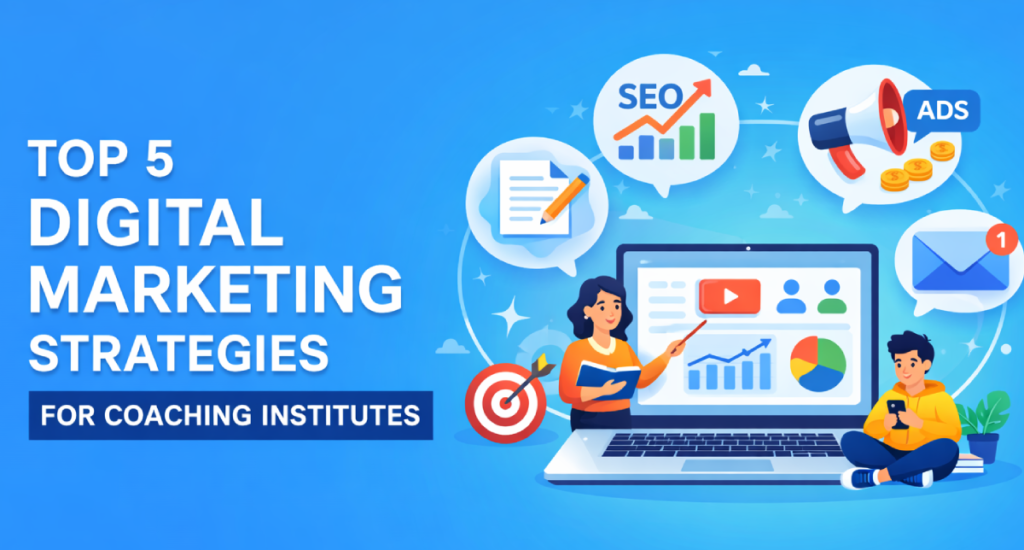
Think about how we usually find information or learn new things today. We often use the internet to search for stuff, watch videos, or read articles. Just like companies use the internet to show people their products, schools and educational places can also use it to share information about what they offer. This is where digital marketing comes in.
Discover how Digital Marketing for Education sector helps schools, coaching institutes, and edtech platforms attract more students, build brand authority, and boost admissions through SEO, social media, and paid advertising strategies.
Understanding the Importance of Digital Marketing:
Imagine you’re looking for a good school for your child, and you start searching online. You might see websites, social media pages, and videos from schools telling you about their programs and teachers. This is digital marketing. It helps schools and educational places get noticed by people like you who are interested in learning more.
Benefits of Digital Marketing for Educational Institutions:
Let’s say you’re a student who loves painting. With digital marketing, schools can show you their art classes on the internet. They can even let you know about special events or workshops related to painting. For schools, digital marketing helps them reach students who are excited about what they teach. It’s like telling the right people about the cool things they do, so more students can join and enjoy their learning experiences.
Defining Your Digital Marketing Strategy
Think of your digital marketing strategy like planning a trip. Just like you decide where to go, how to get there, and what to do, a digital marketing strategy is like a plan for your online activities. It helps you figure out how to reach people and make your school or educational program known.
Setting Clear Goals and Objectives:
Imagine you’re playing a game. Before you start, you usually have a goal, right? Maybe your goal is to score a certain number of points or finish a level. In digital marketing, you set goals too, but they’re about things like getting more students to enroll in your classes or making more parents aware of your school.
Identifying Target Audience (Students, Parents, Educators):
Think about when you want to show a cool toy to someone. You choose who to show it to based on what they like, right? In digital marketing, your “target audience” is like the people you want to show your educational stuff to. It could be students who want to learn new things, parents who want the best education for their kids, or teachers who want helpful resources.
Analyzing Competitors in the Education Industry:
Imagine you’re in a race. Before you run, you might want to know who you’re racing against. You look at other runners to see how fast they are. In the education world, there are other schools and programs trying to attract students too. So, you look at what they’re doing to see if there are things you can do even better.
Also Read: Digital Marketing Agency in Uttarakhand

Building a Strong Online Presence
Think of building a strong online presence like setting up a welcoming shop on the internet. It’s about making sure people can find you easily and have a great experience when they visit your online “shop.”
Creating a Professional and User-Friendly Website:
Imagine you’re opening a store in a busy street. You’d want the store to look nice and organized, right? Well, a website is like your online store. You want it to look professional, with all the information neatly arranged. Just like customers like to see clean shelves and signs in a physical store, visitors to your website should be able to find what they need without confusion.
Developing Engaging Landing Pages:
Landing pages are like the special sections or displays you create in your store to catch people’s attention. For example, if you’re selling toys, you might set up a fun display of new toys right at the entrance. Similarly, on your website, a landing page is a page designed to grab visitors’ interest, usually showcasing something important like a new course or event.
Optimizing for Mobile and Responsive Design:
Nowadays, people use different devices to browse the internet – like phones, tablets, and computers. Imagine if your store looked amazing on a big window but messy and hard to navigate through a small window. To make sure your online shop looks great no matter how someone visits it, you need responsive design. It’s like having your store rearrange itself to look perfect, whether people are looking through the big shop window or a small one.
Content Marketing for Education
Imagine you’re trying to teach people about something interesting or helpful. You create materials like stories, articles, and videos that explain things in a way that’s easy to understand. You’re not just throwing random things out there – you’re making content that’s useful to others.
Creating Relevant and Valuable Content (Blogs, Articles, Videos):
Think of this like making helpful guides or interesting stories. Let’s say you’re an expert in math, and you make short videos explaining how to solve tricky math problems. People who struggle with those problems find your videos super helpful. That’s because you’ve made content that’s relevant (related to math problems) and valuable (helps them understand and solve the problems).
Showcasing Expertise through Educational Resources:
Imagine you’re really good at playing the guitar. You decide to create a series of short lessons and tips for beginners who want to learn to play the guitar. By sharing your knowledge in those lessons, you’re showing that you’re an expert in guitar playing. People will trust your guidance because you’re sharing educational stuff.
Utilizing SEO to Improve Visibility in Search Engines:
Think of the internet like a huge library. When you want to find a specific book, you use keywords like the book’s title or author. In the same way, people use keywords to find things on the internet. If you write a helpful article about cooking pasta and use the right words people might search for (like “easy pasta recipes”), your article shows up at the top of search results. This is called SEO (Search Engine Optimization), and it helps more people find your content.
Social Media Marketing
Imagine you have a really cool idea or something interesting to share with a lot of people. Social media marketing is like using platforms on the internet to tell everyone about your idea or share your cool thing.
Choosing the Right Social Media Platforms:
Think of social media platforms like different playgrounds. Some people like to play basketball, some like to play soccer, and some like to ride bikes. In the same way, there are different websites where people hang out online. For example, Facebook is like a basketball court, Instagram is like a bike track, and Twitter is like a soccer field. You need to pick the right place to share your idea, depending on the type of people you want to reach. If you’re telling students about a new course, you might choose Instagram because that’s where many students spend time.
Engaging with the Education Community Online:
Imagine you’re at a big party where everyone is talking about different things. Engaging with the education community online is like joining conversations about learning and schools in those playgrounds (social media platforms). It’s like joining a group of people who like the same things you do. You can share your thoughts, answer questions, and learn from others. For example, you might join a group of teachers on Facebook where they discuss new teaching methods.
Running Effective Social Media Campaigns:
A social media campaign is like throwing a big party online. Imagine you want to invite everyone to a special event. It’s all about getting people excited and interested in what you’re offering. Just like how a bakery might post pictures of delicious cakes to make people want to visit their shop.
Also Read: Answer Engine Optimization (AEO): The Future of Digital Marketing in the Age of AI

Email Marketing for Education
Email marketing is like sending messages to people’s email addresses, but it’s not just random messages. It’s a smart way for schools or educational places to share important and interesting things with students, parents, and teachers using emails.
Building an Opt-in Email List:
Imagine you have a cool club that shares exciting news about a topic you really like. People who are interested can join the club voluntarily. Building an opt-in email list is like creating that club. It’s about asking people if they want to receive emails from your school or educational organization. For example, when students or parents say, “Yes, I want to know what’s happening at school,” you add their email addresses to your special list.
Crafting Compelling Email Campaigns:
Think of an email campaign as a series of stories. Just like how your favorite TV show has episodes that keep you excited, an email campaign has a bunch of emails that tell interesting stories about your school. These stories could be about upcoming events, fun activities, or important updates. Crafting compelling email campaigns means creating emails that are interesting and make people want to read them. It’s like writing a really good story that everyone wants to hear.
Sending Personalized Updates and Newsletters:
Imagine getting a birthday card with your name on it. It feels special, right? Sending personalized updates is a bit like that. Instead of sending the same email to everyone, you can send emails that are made just for each person. For example, if someone is really into sports, you can send them updates about the school’s sports events. And newsletters are like big update emails that have a bunch of cool things all in one place. It’s like a collection of exciting news and fun stuff.
Paid Advertising Strategies
Think of paid advertising strategies as a way to make your school or educational services more noticeable to people who might be interested. It’s a bit like putting up a big poster or billboard to get attention.
Using Google Ads for Education Keywords:
Imagine you’re searching for a recipe online, and you type “easy chocolate cake recipe” into Google. You’ll notice that some of the search results are labeled as “Ad.” These are like mini ads that people have paid for, so their recipe website shows up at the top. Similarly, schools and education providers can pay to have their websites show up at the top when someone searches for keywords related to education, like “best online courses.”
Implementing Social Media Advertising (Facebook, Instagram):
You know those sponsored posts that show up in your Facebook or Instagram feeds? These are like little ads that show up in between your friends’ posts. Schools can use these ads to tell people about their courses or programs. It’s like when a friend tells you about a cool new restaurant they tried, but in this case, it’s the school telling you about their education offerings.
Display Advertising on Relevant Websites:
Have you ever noticed ads on websites you visit? Sometimes, when you’re reading an article about a new movie, you might see an ad for tickets to that movie. Schools can place these types of ads on websites that are related to education or learning. For example, if you’re reading an article about studying tips, you might see an ad for an online learning platform.
So, paid advertising strategies are all about using different methods to get the word out about education, just like how businesses use advertising to tell you about their products or services.
Also Read: Best Digital Marketing Agency in Indore | Code With Kamlesh
Search Engine Optimization (SEO)
Imagine you have a bakery and you want people to find it easily when they search for “delicious cakes” on the internet. SEO is like making your bakery more visible so that when someone searches for cakes, your bakery’s name pops up at the top of the list.
On-Page and Off-Page SEO Techniques
- On-Page SEO: This is like baking your cakes with the best ingredients. On-page SEO is about making your website as tasty and appealing as possible to visitors and search engines. You use good titles, descriptions, and relevant keywords that people might use to find your bakery. It’s like having a nice menu with all your delicious cakes listed.
- Off-Page SEO: Imagine your bakery getting popular because people talk about it. Off-page SEO is about getting other websites to talk about your bakery. This could be through social media, reviews, or even other websites linking to your bakery’s website. It’s like having people recommend your cakes to their friends.
Local SEO for Targeted Location-based Searches
Suppose you want people nearby to find your bakery. Local SEO is like putting a sign outside your bakery with your location. It’s making sure that when someone nearby searches for “cakes near me,” your bakery shows up on their map. It helps people find you easily when they’re looking for cakes in your area.
Monitoring and Improving Search Engine Rankings
Think of it like checking how well your bakery is doing. Monitoring your search engine rankings is like seeing where your bakery shows up when people search for cakes. If you’re not showing up high enough, you might need to make your cakes even more delicious (improve your website) or tell more people about your bakery (off-page SEO). It’s like keeping track of how many customers are coming to your bakery.

Video Marketing in Education
Think about how you watch videos on YouTube to learn how to cook a new recipe or fix something around the house. In a similar way, educational institutions and teachers can use videos to teach students new things and share useful information. This is what we mean by “Video Marketing in Education.”
Creating Engaging Educational Videos:
Imagine your teacher making short videos where they explain math problems using fun animations or tell stories that help you understand history better. These videos make learning more interesting because you can see and hear the explanations, almost like having your teacher right there with you.
Using YouTube as a Platform for Sharing Knowledge:
You know how people upload videos of cute animals or funny sketches on YouTube? Well, teachers and schools can use YouTube too, but instead of funny videos, they share educational videos. This way, students from all over the world can watch and learn from these videos, just like how you watch your favorite videos on YouTube.
Live Streaming and Webinars for Interactive Learning:
Imagine tuning in to a live show on TV, where you can send messages to the host and they reply to you in real-time. Live streaming and webinars in education work a bit like that. Teachers can teach lessons live on the internet, and you can ask questions or take part in discussions as the lesson happens. It’s like being in a virtual classroom where you can interact with your teacher and classmates, even if you’re not in the same place. It is Digital Marketing in the Education Sector.
Thank You!