Tag: On-Page SEO Techniques

  • On-Page SEO and Off-Page SEO Services – Kamlesh Singad

    On-Page SEO and Off-Page SEO Services – Kamlesh Singad

    If you’re wondering how to make your website rank higher on Google and attract more customers — the answer lies in powerful On-Page SEO and Off-Page SEO. At Kamlesh Singad Digital Marketing Agency, we specialize in complete SEO optimization that helps you improve visibility, generate leads, and increase online credibility.

    Whether you’re a small business, an eCommerce store, or a personal brand — our tailored SEO strategies ensure long-term results.

    What is On-Page SEO Optimization?

    On-Page SEO (also called on-site SEO) refers to all the techniques you apply within your website to help search engines understand your content better. It ensures that your website is user-friendly, keyword-optimized, and structured properly for Google’s algorithms.

    Key Elements of On-Page SEO

    • Optimized title tags and meta descriptions
    • Keyword placement in content and headings
    • SEO-friendly URLs
    • Internal linking between pages
    • Image optimization with alt text
    • Mobile responsiveness and fast loading speed
    • Schema markup for rich snippets
    • Content readability and structure

    These factors help Google crawl your website effectively and rank it higher for relevant keywords.
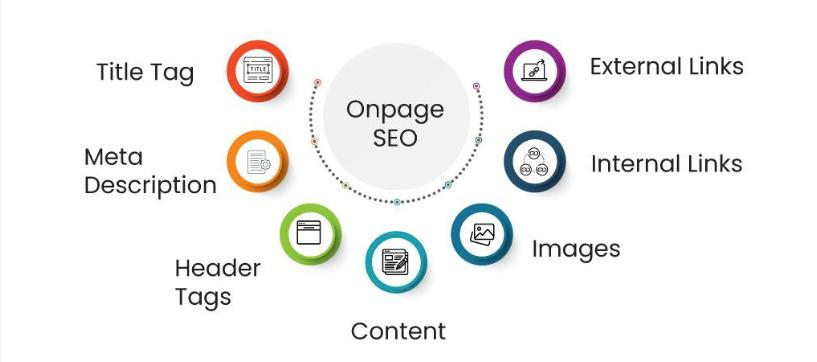
    On-Page SEO

    What is Off-Page SEO?

    While On-Page SEO happens on your website, Off-Page SEO refers to the actions taken outside your site to improve its authority and trustworthiness.
    It focuses on building your website’s reputation through high-quality backlinks, brand mentions, and external engagement.

    Off-Page SEO Includes:

    • Link building (guest posts, outreach, directory submissions)
    • Social media sharing
    • Google My Business optimization
    • Brand mentions and citations
    • Influencer collaborations
    • Forum posting & Q&A sites (Quora, Reddit)

    Both On-Page SEO and Off-Page SEO work together to build your site’s overall strength and ranking potential.

    Why Both On-Page and Off-Page SEO Matter

    If On-Page SEO is the foundation of your digital house, Off-Page SEO is the reputation you build for it in the neighborhood.
    Without proper On-Page SEO, your content won’t be visible — and without Off-Page SEO, it won’t be trusted.
    That’s why Kamlesh Singad’s SEO team implements a balanced strategy that boosts both visibility and credibility.

    On-Page SEO Checklist (For 2025)

    Here’s a quick checklist for On-Page SEO to see if your website is optimized for Google:

    1. Keyword research done for each page
    2. Title tag within 60 characters
    3. Meta description under 160 characters
    4. Focus keyword in first 100 words
    5. Header tags (H1, H2, H3) structured properly
    6. SEO-friendly URL structure
    7. Internal and external links added
    8. Image names & alt tags optimized
    9. Mobile-friendly & responsive design
    10. Page speed score above 85
    11. Schema markup implemented
    12. No broken links or duplicate content

    What Kamlesh Singad’s Agency Offers

    We don’t just provide services — we deliver measurable growth.

    Our SEO Service Includes:

    • Full On-Page SEO Optimization
    • Strategic Off-Page SEO Campaigns
    • Keyword & competitor analysis
    • Technical SEO fixes
    • Monthly performance reporting
    • Local SEO (Google My Business)

    Benefits of Doing SEO with Kamlesh Singad

    • Rank higher on Google
    • Get more website traffic
    • Build brand trust & authority
    • Generate qualified leads
    • Save on ad costs through organic visibility

    With years of digital marketing experience, Kamlesh Singad has helped businesses across India — from startups to established brands — achieve top positions on Google.

    Why Choose Us for On-Page & Off-Page SEO

    • Expert SEO team using advanced tools
    • Customized strategies for every business
    • 100% ethical (white-hat) techniques
    • Transparent reporting & results tracking
    • Dedicated support and monthly updates

    FAQ

    1. What is On-Page SEO and Off-Page SEO?
    On-Page SEO optimizes your website internally (content, tags, URLs), while Off-Page SEO builds your authority externally (backlinks, mentions, social sharing).

    2. What is On-Page SEO Optimization?
    It’s the process of improving individual web pages to rank higher on search engines using titles, keywords, content, and internal linking.

    3. What is included in the On-Page SEO Checklist?
    Title tags, meta descriptions, keyword usage, internal links, image optimization, mobile speed, and content structure.

    4. Do I need both On-Page and Off-Page SEO?
    Yes! It helps Google understand your website, and Off-Page SEO helps Google trust it.

    5. How can I get On-Page SEO done for my website?
    You can contact Kamlesh Singad Digital Marketing Agency for a free SEO audit and get a custom optimization plan.

    Contact Kamlesh Singad for Complete SEO Solutions

    Locations: All over India
    Website: www.kamleshsingad.com
    Email: info@kamleshsingad.com
    Book Your Free SEO Consultation Today!

  • Get 4 Million Visits/Month with One Keyword Hack

    Get 4 Million Visits/Month with One Keyword Hack

    Are you tired of chasing new keyword opportunities with little to no success? What if I told you there’s a simple keyword hack that could skyrocket your website traffic to 4 million visits per month—and you don’t even have to be an SEO expert to pull it off? Sounds too good to be true, right? But it’s not.

    I’m about to let you in on a little secret. I get the majority of my traffic from one simple keyword hack that hardly anyone is using. This isn’t some complex strategy; in fact, it’s incredibly easy to implement. So, buckle up because I’m about to show you exactly how to replicate this strategy and boost your traffic in no time.

    The Secret Behind the Keyword Hack

    Let’s get one thing straight—you don’t need to constantly hunt for new keywords to rank for. Instead, focus on the keywords you’re already ranking for, even if they’re small. The real trick lies in finding long-tail variations of those existing keywords. By targeting these, you can effortlessly generate more traffic without reinventing the wheel.

    What Are Long-Tail Keywords?

    Long-tail keywords are longer, more specific phrases that people search for. They tend to have less competition and are easier to rank for compared to broad, generic terms (also known as head terms). For example, if you rank for the term dog food, Google will find it much easier to rank your site for related searches like:

    • Best organic dog food for small breeds
    • Affordable dog food for puppies
    • How to choose the right dog food

    Because you’ve already proven authority for the main term, Google trusts your content and pushes you up the ranks for these variations.

    Also Read: Are Blog Posts the Best SEO Strategy Today?

    image

    Why This Keyword Hack Works

    Ranking for a head term like “dog food” is challenging because of the high competition. But once you’ve established authority with that term, Google starts recognizing your relevance in the niche. This makes it easier to rank for related long-tail variations.

    Even if most of your traffic comes from a long-tail term like how to become rich, there are countless other variations:

    • How to become rich online
    • How to become rich using social media
    • How to become rich with passive income

    When you target these additional phrases, you expand your reach significantly, tapping into search queries you might have overlooked.

    Step-by-Step Guide to Implementing This Keyword Hack

    Ready to put this strategy into action? Here’s a step-by-step breakdown to help you start generating millions of visits per month.

    Step 1: Identify Your Top Performing Pages

    First things first, head over to Ubersuggest and type in your domain. Navigate to the Top Pages section to see which pages are driving the most traffic. This will also show you the keywords that are bringing in the rankings.

    These pages are goldmines. They’re already ranking well, and with a few tweaks, they can bring in even more traffic.

    Step 2: Analyze Your Current Rankings

    Next, log into Google Search Console. Here, you’ll find a list of all the search terms you’re currently ranking for, including those hidden gems you might not even realize are bringing in traffic.

    Look for patterns. Are there any recurring themes or topics? This will give you an idea of which keywords to target with long-tail variations.

    Step 3: Find Long-Tail Variations

    Now, head back to Ubersuggest and type in the exact phrases you’re already ranking for. Use the Keyword Ideas report to discover a list of long-tail variations for those terms.

    For example, if your site ranks for healthy recipes, Ubersuggest might suggest:

    • Easy healthy recipes for beginners
    • Quick healthy recipes for busy weeknights
    • Healthy recipes with chicken

    Each of these variations represents a new opportunity to drive traffic.

    Also Read: Why a Digital Marketing Agency in Indore is Essential for Your Business

    Step 4: Optimize Your Existing Content

    Here’s where the magic happens. Take the long-tail keywords you’ve found and incorporate them into your existing content. Update the pages that are already ranking for the head term by adding sections that address the new long-tail variations.

    Keyword Hack

    Make sure to:

    • Re-write and expand your content to cover these new angles
    • Add subheadings and bullet points for better readability
    • Ensure you’re providing real value—the more helpful and comprehensive your content, the better

    The goal is to create a page so comprehensive and detailed that readers won’t need to look elsewhere.

    Step 5: Monitor and Adjust

    After making your updates, give it some time—usually around 30 days. You’ll start to see your pages rank higher, not just for the head term but also for the new long-tail keywords.

    Keep an eye on your analytics and adjust as needed. If you see certain variations performing well, consider creating dedicated blog posts around those topics to capture even more traffic.

    Why This Strategy Can Get You 4 Million Visits/Month

    This keyword hack isn’t just theory—it’s a proven strategy I’ve applied to every single one of my 2,000+ blog posts. By focusing on long-tail variations of keywords I already ranked for, I’ve been able to consistently grow my traffic.

    Here’s the kicker: over 4 million visits a month—with 2 million of those being unique visitors—come from this exact approach. And you can achieve similar results by simply following these steps.

    Key Takeaways from the Keyword Hack

    • Leverage existing rankings: Don’t waste time chasing new keywords when you can maximize the ones you already rank for.
    • Focus on long-tail variations: They’re easier to rank for and can generate significant traffic when combined.
    • Update existing content: Optimize your high-performing pages with new keyword variations to expand your reach.
    • Consistency is key: Apply this strategy across all your content to see exponential growth in traffic.

    Also Read: How to Make Your Podcast More Popular: 12 Proven Strategies for Growth

    Keyword Hack

    Frequently Asked Questions

    What is a keyword hack?
    A keyword hack is a strategic approach to SEO where you optimize existing content with long-tail keyword variations of terms you already rank for, leading to increased traffic with minimal effort.

    Why are long-tail keywords important?
    Long-tail keywords are less competitive and more specific, making them easier to rank for. They also attract highly targeted traffic, increasing your chances of conversion.

    How long does it take to see results from this keyword hack?
    Typically, you’ll start noticing improvements in your rankings and traffic within 30 days of implementing the strategy.

    Do I need to be an SEO expert to use this keyword hack?
    Not at all! This strategy is simple and doesn’t require any advanced SEO knowledge. If you can use tools like Ubersuggest and Google Search Console, you’re good to go.

    Can this keyword hack work for any niche?
    Yes! Whether you’re in tech, health, finance, or lifestyle, this strategy can be applied to any niche to boost traffic.

    What tools do I need for this keyword hack?
    You’ll need Ubersuggest to find keyword variations and Google Search Console to analyze your current rankings.


    Final Thoughts

    If you’re looking to grow your website traffic without constantly hunting for new keywords, this simple keyword hack is your ticket to success. By optimizing your existing content with long-tail variations, you’ll not only rank higher but also drive millions of visits per month.

    It’s a strategy that’s worked wonders for me, and I’m confident it will do the same for you. So, what are you waiting for? Start applying this hack today and watch your traffic soar!

  • How can i improve my SEO Ranking?

    How can i improve my SEO Ranking?

    Climbing the SEO Ladder: Effective Strategies to Skyrocket Your Website’s Ranking

    Achieving a top spot in search engine rankings is akin to striking gold in the digital marketing world. This comprehensive guide dives into actionable strategies that can significantly improve your SEO ranking, ensuring your website not only reaches but maintains its position at the pinnacle of search results.

    Here’s an overview of the tips:

    1. Publish quality content for SEO
    2. Improve your site’s load speed
    3. Optimize your images
    4. Add keywords in strategic places
    5. Streamline your site structure and navigation
    6. Optimize your site for mobile
    7. Update your site on a regular basis
    8. Update older content
    9. Optimize meta information
    10. Earn backlinks
    11. Link internally
    12. Use Alt Tags
    13. Target low-competition keywords
    14. Make your website mobile-friendly
    15. Develop your local SEO strategy
    16. Optimize content for featured snippets
    17. Improve user experience (UX)
    18. Find and fix broken links
    19. Fill content gaps
    20. Monitor SEO performance through Google Analytics
    image 41
    Publish Quality Content for SEO: Creating high-quality, engaging content is foundational to SEO success. Content that addresses the needs and interests of your audience can improve your site’s relevance and authority, encouraging visitors to stay longer and interact more with your site, which in turn can positively affect your search rankings.
    Improve Your Site’s Load Speed: Website speed is a critical factor in user experience and SEO. Faster loading times reduce bounce rates and encourage users to visit more pages, signaling to search engines that your site is valuable and should be ranked higher. Tools like Google’s PageSpeed Insights can help identify areas for improvement.
    Optimize Your Images: Image optimization involves compressing images to reduce file size without sacrificing quality and adding descriptive filenames and alt attributes. This not only speeds up page loading times but also helps search engines understand the images, improving your site’s SEO.
    Add Keywords in Strategic Places: Incorporating keywords into strategic places like titles, headings, meta descriptions, and the first paragraph of content can enhance your site’s visibility. However, it’s important to use keywords naturally and avoid overstuffing, as search engines penalize spammy practices.
    Streamline Your Site Structure and Navigation: A well-organized site structure and intuitive navigation facilitate easier browsing for users and enable search engines to better index your site. Clear hierarchies and simple navigation can significantly enhance the user experience and SEO.
    Optimize Your Site for Mobile: With mobile searches increasingly dominating, having a mobile-friendly site is crucial. Mobile optimization ensures your site looks and performs well on mobile devices, improving user experience and satisfying mobile usability criteria for search engines.
    Update Your Site on a Regular Basis: Regularly updating your site with fresh content can signal to search engines that your site is active and relevant, potentially improving your rankings. This includes posting new articles, updating existing pages, or adding new products or services.
    Update Older Content: Refreshing older content to keep it current and relevant can help maintain or improve its search rankings. Updating statistics, adding recent information, or improving readability can rejuvenate older pages and boost their visibility in search results.
    Optimize Meta Information: Meta titles and descriptions play a significant role in search rankings and click-through rates. Writing clear, concise, and keyword-rich meta titles and descriptions can improve your visibility in search results and entice users to click on your link.
    Earn Backlinks: Backlinks, or links from other sites to yours, are a crucial SEO ranking factor. Earning high-quality backlinks from reputable sites can significantly boost your site’s authority and rankings. This can be achieved through creating valuable content, guest posting, or partnerships.
    Link Internally: Internal linking helps spread link equity throughout your site, making it easier for search engines to crawl and index your pages. It also improves the user experience by providing more reading options, keeping visitors engaged longer.
    Use Alt Tags: Alt tags (alternative text) describe the content of images for search engines and visually impaired users. Using descriptive, keyword-rich alt tags can improve your image search visibility and overall site accessibility.
    Target Low-Competition Keywords: Focusing on low-competition keywords can be a smart strategy for new or niche sites. These keywords might have lower search volumes but can be easier to rank for, driving targeted traffic to your site.
    Make Your Website Mobile-Friendly: Ensuring your website is mobile-friendly is essential, not just for user experience but also for search engine rankings, especially since Google’s mobile-first indexing. A mobile-friendly website adjusts seamlessly to different screen sizes, providing an optimal browsing experience for all users.
    Develop Your Local SEO Strategy: Local SEO involves optimizing your site to appear in local search results. This includes claiming your Google My Business listing, optimizing for local keywords, and ensuring your name, address, and phone number (NAP) consistency across the web.
    Optimize Content for Featured Snippets: Featured snippets appear at the top of Google’s search results and provide quick answers to users’ questions. Optimizing your content to answer specific questions concisely and clearly can increase your chances of landing in this coveted spot.
    Improve User Experience (UX): A positive user experience is crucial for keeping visitors on your site longer and reducing bounce rates, which can positively affect your SEO rankings. Factors like site speed, mobile responsiveness, and intuitive navigation all contribute to a good UX.
    Find and Fix Broken Links: Broken links can harm your site’s credibility and SEO. Regularly auditing your site to find and fix broken links ensures a smooth user experience and helps search engines crawl your site more effectively.
    Fill Content Gaps: Identifying and filling content gaps—topics or questions your competitors cover but you don’t—can attract a wider audience and improve your site’s SEO. This involves thorough research to understand your audience’s needs and interests.
    Monitor SEO Performance through Google Analytics: Google Analytics offers invaluable insights into your website’s performance, including traffic sources, user behavior, and conversion rates. Regularly monitoring these metrics can help you understand the effectiveness of your SEO efforts and where there’s room for improvement.
    image 42

    Improve SEO Ranking

    At the heart of any successful online presence lies a solid understanding of SEO and its countless nuances. Let’s unfold the layers of SEO ranking improvement, focusing on practical, impactful strategies.

    Keyword Optimization: The Cornerstone of SEO

    Identifying and strategically incorporating the right keywords into your content is fundamental. We’ll explore tools and techniques for keyword research, including long-tail keywords that can drive targeted traffic to your site.

    Mastering On-Page SEO for Maximum Impact

    On-page SEO encompasses all optimization strategies you apply directly on your website to improve its ranking. From optimizing meta tags and headers to improving content quality and structure, this section will guide you through enhancing each element for better visibility.

    Building a Strong Backlink Profile

    Backlinks are the backbone of off-page SEO, signaling to search engines that other websites vouch for your content’s quality. We’ll discuss how to earn high-quality backlinks through guest blogging, collaborations, and producing share-worthy content.

    Speed and Mobile Optimization: A Necessity, Not a Choice

    In today’s fast-paced digital landscape, website speed and mobile-friendliness aren’t optional. This part will offer insights into optimizing your website’s loading time and ensuring it’s responsive across all devices.

    User Experience (UX): The Silent SEO Booster

    Enhancing the user experience on your website can indirectly improve your SEO ranking by increasing dwell time and reducing bounce rates. Tips on creating a user-friendly website layout, improving navigation, and ensuring content relevance will be covered here.

    Content Is King: Crafting Valuable and Relevant Content

    The adage “Content is King” holds true in the realm of SEO. We’ll delve into how producing high-quality, engaging, and informative content can captivate your audience and boost your search engine ranking.

    Leveraging Social Media to Enhance SEO Efforts

    While social media doesn’t directly influence SEO rankings, its power to increase brand visibility and drive traffic is undeniable. Strategies for using social media to complement your SEO efforts will be highlighted in this section.

    Regular Website Audits: Keeping Your SEO Strategy on Track

    Conducting regular SEO audits allows you to identify and rectify issues that could be hindering your website’s performance. This part will guide you through the auditing process, including checking for broken links, analyzing your backlink profile, and assessing content quality.

    Local SEO: Dominating Local Search Results

    For businesses targeting local customers, mastering local SEO is crucial. From optimizing your Google My Business listing to incorporating local keywords into your content, we’ll explore strategies to dominate local search results.

    Voice Search Optimization: Preparing for the Future

    With the rise of voice search, optimizing your content for voice queries has become essential. Tips for making your content more voice search-friendly, including using natural language and question-based keywords, will be discussed.

    The Role of AI and Machine Learning in SEO

    Understanding the impact of artificial intelligence and machine learning on search algorithms can give you a competitive edge. This section will touch upon how these technologies are shaping SEO and how you can adapt your strategy accordingly.

    image 43

    How to increase ranking on google Search for my website

    To increase your website’s ranking on Google Search, focus on these key strategies:

    1. Keyword Optimization: Conduct thorough keyword research to identify relevant terms your audience is searching for, and strategically incorporate them into your website’s content, including titles, headers, and meta descriptions.
    2. High-Quality Content: Regularly publish original, informative, and engaging content that addresses your audience’s needs and questions. High-quality content is more likely to earn backlinks and keep visitors on your site longer.
    3. On-Page SEO: Ensure your website’s pages are optimized for SEO. This includes using proper HTML tags, optimizing meta tags (title and description), and improving URL structure.
    4. Mobile Optimization: With the majority of searches conducted on mobile devices, ensure your website is mobile-friendly with responsive design.
    5. Page Speed: Work on reducing your website’s loading times as slow-loading pages can negatively impact your rankings. Use tools like Google’s PageSpeed Insights for recommendations.
    6. Backlinks: Aim to get high-quality backlinks from reputable sites. Backlinks signal to Google that other websites consider your content valuable.
    7. Local SEO: If you have a local business, optimize for local search by claiming your Google My Business listing, getting listed in local directories, and including local keywords in your content.
    8. User Experience (UX): Improve the overall user experience on your website by ensuring it’s easy to navigate, has a clean design, and provides value to visitors.
    9. Content Freshness: Regularly update your existing content to keep it relevant and fresh, which can help maintain or improve its search rankings.
    10. Use of Social Media: Promote your content through social media platforms to increase visibility and drive traffic to your website.
    11. Monitor Your SEO Performance: Use tools like Google Analytics and Google Search Console to track your website’s performance, understand your audience, and identify areas for improvement.

    Focusing on these strategies can help improve your website’s visibility on Google Search, driving more organic traffic and boosting your online presence.

    Benefits of a High SEO Ranking

    Securing a high SEO ranking brings manifold benefits, from increased website traffic and higher conversion rates to improved brand credibility and visibility. This section will underscore the importance of a top SEO ranking in achieving your business objectives.

    • Increased Visibility and Brand Awareness: High SEO rankings mean your website appears at the top of search engine results pages (SERPs), increasing your brand’s visibility and recognition.
    • Higher Quality Traffic: Being ranked higher in search results typically leads to more targeted traffic. Users are more likely to click on the top results for their search queries, bringing more relevant visitors to your site.
    • Improved User Trust and Credibility: Websites that rank higher in search results are often perceived as more trustworthy and credible by users. This perception can enhance your brand’s reputation and authority in your industry.
    • Cost-Effectiveness: SEO is a cost-effective marketing strategy. Once you rank high in search results, you receive continuous traffic without the need for paid advertising, providing a higher return on investment (ROI).
    • Competitive Advantage: Outranking your competitors in search results can give you a significant competitive edge, making it easier for potential customers to find and choose your business over others.
    • Higher Conversion Rates: High-ranking websites typically enjoy higher conversion rates. As your site attracts more relevant visitors, you’re more likely to convert these visitors into customers.
    • Better User Experience: SEO Ranking involves optimizing your website’s user experience (UX), which can lead to more engaged visitors and lower bounce rates. A great UX can also contribute to higher conversion rates.
    • Increased Social Sharing: Content from high-ranking websites is more likely to be shared on social media platforms, further increasing your online visibility and traffic.
    • Sustainable Growth: A high SEO ranking contributes to the long-term growth of your business. It helps in building a solid online presence that can sustain business growth over time.
    • Access to Customer Data: High rankings increase your website traffic, providing more data about your audience. This information can be invaluable in refining your marketing strategies and product offerings.
    • Global Reach: For businesses looking to expand globally, high SEO rankings can make your website easily discoverable by international audiences, opening up new markets and opportunities.

    FAQs

    What are the first steps to improve my SEO ranking?

    How often should I update my SEO strategy?

    Can social media directly impact my SEO ranking?

    How long does it take to see improvements in SEO rankings?

    What are common mistakes to avoid when working on improving SEO?

    Conclusion

    Elevating your SEO ranking is a dynamic, ongoing process that requires patience, persistence, and a keen eye for evolving trends and algorithms. By implementing the strategies outlined in this guide, you’re setting the stage for significant improvements in your website’s search visibility and overall digital presence. Remember, the world of SEO is ever-changing, and staying informed, adaptable, and proactive is key to navigating this complex landscape successfully.

    How can i improve my SEO Ranking?

    Logo

    Contact Person: Kamlesh Singad

    Phone no. +91 9131341638

    Web Page: https://kamleshsingad.in/

    contact@kamleshsingad.com

    https://kamleshsingad.com/

    Read More –

    AI and Content Generation: The Future of Digital Storytelling – https://kamleshsingad.in/ai-and-content-generation-the-future-of-digital-storytelling/

    How to Scale Your Customer Service with Chatbots – https://kamleshsingad.in/how-to-scale-your-customer-service-with-chatbots/

    What is Live Streaming Technology, and How Does it Work? – https://kamleshsingad.in/what-is-live-streaming-technology-and-how-does-it-work/