The rapid evolution of technology has brought data privacy to the forefront of corporate responsibility. With stringent regulations like GDPR, CCPA, and others coming into play, businesses are focusing on data privacy and compliance more than ever. Staying ahead of these changes is not just a legal necessity—it’s also a key component in building and maintaining consumer trust.
This article delves into the significance of data privacy and compliance, the latest regulations, and strategies businesses can adopt to ensure ethical marketing practices that align with legal standards.
Why Data Privacy and Compliance Matter in Today’s World
The surge in data breaches and misuse of personal information has made consumers increasingly cautious. As a result, governments worldwide have enacted stricter laws to safeguard personal data. For companies, this means that data privacy and compliance are no longer optional—they’re critical.
Businesses that fail to comply with regulations not only face hefty fines but also risk losing the trust of their customers. By prioritizing compliance, companies can:
General Data Protection Regulation (GDPR): The GDPR, enforced in the European Union, sets a high standard for data protection. It mandates companies to gain explicit consent from users before collecting or processing their data.
California Consumer Privacy Act (CCPA): The CCPA gives California residents more control over their personal information. Businesses must disclose what data they collect and provide users the ability to opt out of data sales.
Other Emerging Regulations: Countries worldwide, including Brazil (LGPD) and Canada (PIPEDA), are introducing stringent laws, making global compliance a challenge for multinational organizations.
Keeping up with these evolving standards is vital for ensuring data privacy and compliance across borders.
How Marketing Practices Are Adapting to Data Privacy and Compliance
Marketing has always relied heavily on consumer data. However, as regulations tighten, marketers must rethink their strategies to align with privacy requirements. Here’s how:
1. Transparent Data Collection Practices: Marketers should clearly communicate how consumer data will be used. Transparency fosters trust and ensures compliance with legal standards.
2. Consent-Driven Campaigns: Regulations like GDPR require businesses to obtain explicit consent for email campaigns, targeted ads, and other data-driven strategies. Adopting consent-first practices not only ensures compliance but also improves engagement rates.
3. Implementing Privacy-First Technology: Using tools that prioritize privacy, such as cookie-less tracking and first-party data platforms, helps businesses maintain data privacy and compliance while still delivering personalized experiences.
The Role of Technology in Enhancing Data Privacy and Compliance
Modern technology offers robust solutions for managing data privacy effectively. These include:
1. Data Encryption Tools: Encrypting sensitive information ensures that even if data is intercepted, it remains unreadable to unauthorized parties.
2. Consent Management Platforms (CMPs): CMPs streamline the process of collecting and managing user consent, ensuring businesses stay compliant with global regulations.
3. Regular Audits and Risk Assessments: Technology can automate audits, identifying potential vulnerabilities and ensuring that marketing practices adhere to data privacy and compliance standards.
Best Practices for Achieving Data Privacy and Compliance in Marketing
To ensure seamless compliance with data protection regulations, businesses should adopt these best practices:
1. Educate Employees: Regular training ensures that teams understand the importance of data privacy and compliance and stay updated on new regulations.
2. Partner with Compliance Experts: Collaborating with legal and compliance specialists can help businesses navigate the complexities of global regulations.
3. Monitor Changes in Legislation: As laws continue to evolve, staying informed is crucial. Businesses should establish mechanisms to track regulatory changes and adapt accordingly.
4. Prioritize Consumer Trust: By making privacy a cornerstone of their operations, companies can build lasting relationships with their audience.
Challenges in Maintaining Data Privacy and Compliance
Despite the best efforts, achieving full compliance can be challenging. Some common hurdles include:
Adapting to varying regulations across different regions.
Balancing personalization with privacy in marketing strategies.
Managing legacy systems that may not meet modern privacy standards.
Addressing these challenges requires a proactive approach and a commitment to ethical practices.
FAQs
What is the significance of data privacy and compliance in marketing? Data privacy ensures that consumer information is handled ethically, fostering trust. Compliance with regulations helps businesses avoid fines and reputational damage.
How can businesses stay updated on evolving data privacy regulations? Regular training, subscribing to legal updates, and consulting with compliance experts are effective ways to stay informed.
What is GDPR, and why is it important? The GDPR is a European regulation that protects user data by requiring explicit consent for its use. It has set a global benchmark for privacy standards.
How can small businesses ensure data privacy compliance? Small businesses can invest in affordable compliance tools, educate their teams, and adopt transparent data collection practices.
What role does technology play in compliance? Technology facilitates compliance by automating processes such as consent management, data encryption, and risk assessments.
Why is consumer trust essential for compliance? Trust is a key driver of customer loyalty. Prioritizing privacy demonstrates a commitment to consumer well-being, enhancing brand reputation.
In today’s digital landscape, data privacy and compliance are indispensable for businesses aiming to build trust and achieve long-term success. As regulations evolve, companies must adopt proactive measures to protect consumer data and align their marketing practices with legal standards.
By prioritizing transparency, leveraging technology, and staying informed about regulatory changes, businesses can navigate the complexities of compliance and foster stronger connections with their audience.
Guardians of the Digital Realm: Navigating the Intricacies of Privacy and Data Management
In the era of digital transformation, the concepts of privacy and data management have evolved from mere compliance requirements to fundamental aspects of organizational integrity and trust. As individuals and businesses navigate through vast digital landscapes, the management of personal and organizational data becomes a pivotal concern, balancing between accessibility and confidentiality. This detailed exploration delves into the essence of privacy and data management, offering insights and strategies to navigate these complex waters effectively.
Privacy: A Fundamental Right in the Digital Age
Privacy, once considered a straightforward concept, has morphed into a multifaceted issue in the digital age. It encompasses the right to individual autonomy, the control over personal information, and the freedom from unauthorized surveillance. This evolution reflects the increasing digital footprint of individuals, necessitating robust frameworks to protect personal data from misuse and exploitation.
Data Management: The Backbone of Digital Security
Data management involves the systematic control of information flow within an organization, from acquisition to storage and disposal. Effective data management practices ensure data integrity, availability, and confidentiality, serving as the backbone of digital security and regulatory compliance.
What is Data Privacy Management?
Data Privacy Management refers to the processes and strategies implemented by organizations to ensure that the collection, processing, storage, and sharing of personal data comply with legal requirements, ethical standards, and best practices. It involves establishing policies and technologies to protect sensitive information from unauthorized access, misuse, or breaches, while also respecting individuals’ rights to control their own data. The goal is to balance the need for organizations to use data for legitimate purposes with the necessity to protect individuals’ privacy rights.
The Intersection of Privacy and Data Management
The intertwining of privacy and data management reveals a landscape where personal data is both a valuable asset and a potential liability. Navigating this landscape requires a nuanced understanding of regulatory frameworks, ethical considerations, and technological solutions.
Understanding Data Privacy Laws and Regulations
In the digital era, where personal information is constantly being collected, shared, and utilized by businesses and governments alike, understanding data privacy laws and regulations has become crucial. These laws are designed to protect individuals’ personal information from misuse and to give individuals rights over their data. Here’s a breakdown of key aspects and global perspectives on data privacy laws and regulations:
Fundamental Principles
Data privacy laws across the globe share common principles, including:
Consent: Individuals must give their consent for their data to be collected and processed.
Purpose Limitation: Data can only be used for the purpose stated at the time of collection.
Data Minimization: Only the data necessary for the specified purpose should be collected.
Security: Collected data must be protected from breaches and unauthorized access.
Accountability: Entities that handle personal data must be accountable for managing it in compliance with the law.
Global Landscape of Data Privacy Laws
The global landscape of data privacy laws varies, with different regions implementing their frameworks:
General Data Protection Regulation (GDPR) (European Union): Considered the gold standard of data protection laws, the GDPR imposes strict rules on data processing and grants individuals a wide range of rights over their data, including access, rectification, deletion, and the right to object to data processing.
California Consumer Privacy Act (CCPA) (United States): The CCPA provides California residents with rights similar to the GDPR, including the right to know what personal data is being collected and the right to opt-out of the sale of their personal data.
Personal Information Protection and Electronic Documents Act (PIPEDA) (Canada): PIPEDA governs how private sector organizations collect, use, and disclose personal information in the course of commercial business.
Data Protection Act (DPA) (United Kingdom): Post-Brexit, the UK has its own version of the GDPR, ensuring that it maintains high standards of protection for personal data.
Compliance Challenges
Compliance with data privacy laws presents challenges, particularly for multinational corporations that must navigate a patchwork of regulations. Key challenges include:
Jurisdictional Variations: Laws differ not just in content but also in scope and applicability, requiring businesses to adapt their practices in each market.
Technology Pace: The rapid evolution of technology often outpaces legislation, creating gray areas in compliance.
Resource Intensity: Implementing robust data protection measures can be resource-intensive, particularly for small and medium-sized enterprises.
The Importance of Compliance
Non-compliance with data privacy laws can result in hefty fines, legal battles, and significant damage to a company’s reputation. Beyond compliance, there is a growing recognition that good data privacy practices can provide a competitive advantage, enhancing customer trust and loyalty.
As digital technologies continue to advance and integrate into every aspect of daily life, the importance of data privacy laws will only increase. Individuals, businesses, and lawmakers must engage in continuous dialogue to ensure that data privacy regulations evolve to meet new challenges, protect individuals, and enable innovation in a balanced and effective manner.
Understanding data privacy laws and regulations is not just about legal compliance; it’s about fostering a culture of respect for individual rights and contributing to the creation of a safer, more trustworthy digital environment.
Regulatory Frameworks: Navigating Compliance and Beyond
The introduction of stringent regulatory frameworks, such as the General Data Protection Regulation (GDPR) in Europe and the California Consumer Privacy Act (CCPA) in the United States, underscores the global emphasis on privacy and data management. Compliance with these regulations is not merely a legal obligation but a commitment to ethical practices and customer trust.
Ethical Considerations: The Moral Compass of Data Management
Beyond legal compliance, ethical considerations play a crucial role in shaping privacy and data management practices. Organizations must navigate the delicate balance between data utilization and individual rights, fostering a culture of respect and integrity towards personal information.
Technological Solutions: Harnessing Innovation for Privacy
Advancements in technology offer promising solutions to enhance privacy and data management. Encryption, anonymization, and blockchain are examples of technologies that can secure data transactions and storage, minimizing the risk of breaches and unauthorized access.
Building a Culture of Cybersecurity
Cultivating a culture of cybersecurity involves raising awareness, providing training, and fostering an environment where privacy and data security are ingrained values. It’s about empowering individuals and organizations to take proactive steps in protecting their digital assets.
Challenges and Opportunities
The dynamic nature of digital threats and the evolving legal landscape present ongoing challenges to privacy and data management. However, these challenges also offer opportunities for innovation, collaboration, and the development of best practices that can set new standards for digital privacy and security.
Data Privacy vs. Data Security: What’s the Difference?
Aspect
Data Privacy
Data Security
Definition
Data privacy involves the proper handling, processing, and consent related to personal information.
Data security refers to the protective measures implemented to prevent unauthorized access to data.
Focus
Privacy focuses on the use and governance of personal data.
Security focuses on protecting data from breaches and cyber-attacks, regardless of the data’s nature.
Objective
To ensure that personal data is used in compliance with laws and regulations, and respects individual rights.
To protect data from unauthorized access, corruption, or theft.
Concerns
Consent, notice, and regulatory compliance regarding personal information.
Protecting data integrity, confidentiality, and access controls.
Measures
Privacy policies, data protection impact assessments, consent management.
Governed by laws such as GDPR, CCPA, and more, depending on the jurisdiction.
Often guided by standards and frameworks like ISO 27001, NIST, and cybersecurity policies.
Impact
Affects how organizations collect, use, and share personal information.
Ensures that all types of data, whether personal or not, are securely stored and transmitted.
Legal Compliance
Requires adherence to specific laws governing personal data protection.
While also regulated, it focuses more on the technical and administrative aspects of keeping data secure.
End Goal
To protect individuals’ rights and freedoms concerning their personal data.
To safeguard data against unauthorized or accidental modification, disclosure, or destruction.
5 Key Concepts for Data Privacy Management
Data privacy management is an essential aspect of modern business, encompassing strategies and practices designed to ensure the responsible handling, processing, and storage of personal information. Here are five key concepts that form the backbone of effective data privacy management:
1. Consent Management
Consent management involves obtaining and documenting explicit permission from individuals before collecting, using, or sharing their personal data. This principle is fundamental in respecting user autonomy and is a cornerstone of regulations like the GDPR. Effective consent management ensures that individuals are informed about the purpose of data collection and have the ability to easily withdraw their consent at any time.
2. Data Minimization
Data minimization refers to the practice of collecting only the data that is directly necessary for the specified purpose. This concept encourages businesses to evaluate the data they collect critically and to retain only what is essential, reducing the risk of unnecessary exposure and complying with privacy regulations that promote minimal data collection practices.
3. Transparency and Accountability
Transparency requires organizations to be open about their data collection and processing activities, ensuring that individuals understand how their data is used. Accountability extends beyond transparency, requiring organizations to take responsibility for managing personal data in accordance with legal and ethical standards. This includes implementing data protection measures, conducting privacy impact assessments, and documenting compliance efforts.
4. Privacy by Design
Privacy by design is an approach that integrates data protection into the development and operation of products, services, and business practices, from the outset. This proactive stance involves considering privacy at every stage of the design process, ensuring that privacy is an integral part of the product or service lifecycle, rather than an afterthought. This concept is increasingly being adopted as a regulatory requirement.
5. Security Measures
Implementing robust security measures is crucial for protecting personal data from unauthorized access, disclosure, alteration, and destruction. This involves a combination of physical, technical, and administrative controls, including encryption, access controls, secure data storage solutions, and regular security training for employees. Effective data security not only protects privacy but also helps to build trust with customers and stakeholders.
Together, these five key concepts provide a comprehensive framework for managing data privacy effectively. By prioritizing these principles, organizations can ensure they meet regulatory requirements, protect individual rights, and maintain high standards of privacy and data protection in their operations.
Automation With Data Privacy Management Software
In the rapidly evolving digital landscape, the management of data privacy has become increasingly complex. With the proliferation of data breaches and stringent regulatory requirements, organizations are turning to automation as a solution to efficiently manage and protect personal data. Automation with data privacy management software offers a robust framework for ensuring compliance, enhancing security, and fostering trust. Here’s how automation is revolutionizing the field of data privacy management:
Streamlined Compliance Processes
Data privacy management software automates the compliance process, making it easier for organizations to adhere to various regulations such as GDPR, CCPA, and more. These tools can automatically map out personal data flows, assess privacy risks, and generate compliance reports, reducing the manual effort and minimizing the risk of human error.
Efficient Consent Management
Automated systems streamline the consent management process by tracking user consents and preferences across different platforms in real-time. This ensures that personal data is collected, processed, and shared in accordance with the individual’s consent, thereby maintaining compliance and enhancing user trust.
Enhanced Data Discovery and Classification
One of the foundational steps in protecting personal data is knowing where it resides. Automation tools can scan through vast amounts of data across an organization’s systems to identify and classify personal data. This not only aids in compliance but also helps in applying appropriate security measures to sensitive data.
Proactive Data Privacy Impact Assessments
Data privacy management software can automate the process of conducting Privacy Impact Assessments (PIAs). By identifying potential privacy risks and issues at the early stages of project development, organizations can proactively address them, ensuring that new projects are designed with privacy in mind from the outset.
Automated Data Subject Access Requests (DSARs) Handling
Responding to DSARs can be a time-consuming process. Automation simplifies this by providing a standardized workflow for receiving, processing, and fulfilling requests from individuals seeking to access, correct, or delete their personal data, in compliance with privacy laws.
Real-time Privacy Monitoring and Alerts
Automated monitoring systems offer continuous surveillance of an organization’s data processing activities, ensuring that any deviations from privacy policies or potential breaches are detected in real time. This enables quick response and remediation, reducing the impact of any data privacy issues.
Benefits of Automation in Data Privacy Management
Efficiency: Automation significantly reduces the time and resources required to manage data privacy, allowing staff to focus on more strategic tasks.
Accuracy: Automated tools minimize the risk of human error, ensuring that data is handled accurately and consistently.
Scalability: As organizations grow, automated systems can easily scale to manage increased data volumes and complexity.
Compliance: Automated documentation and reporting simplify the process of demonstrating compliance with data privacy regulations.
Conclusion
The realm of privacy and data management is complex and ever-evolving, reflecting the broader shifts in our digital society. By embracing a holistic approach that combines regulatory compliance, ethical considerations, and technological innovation, individuals and organizations can navigate these waters with confidence. The path forward requires vigilance, adaptability, and a commitment to upholding the principles of privacy and data integrity in our increasingly digital world.
FAQs
How can individuals protect their privacy online? Individuals can protect their privacy online by using strong, unique passwords, enabling two-factor authentication, being cautious about the information they share on social media, and using privacy-focused browsers and search engines.
What are the key components of effective data management? Effective data management includes data governance, quality control, data security, lifecycle management, and compliance with regulatory requirements.
How do regulatory frameworks impact data management practices? Regulatory frameworks establish legal obligations for data protection, influence the development of data management policies, and encourage transparency and accountability in handling personal data.
What role does technology play in enhancing data privacy? Technology plays a crucial role in enhancing data privacy through encryption, secure data storage solutions, and tools that enable individuals to control their personal information online.
Can small businesses afford to implement robust data management and privacy practices? Yes, small businesses can afford to implement robust data management and privacy practices by leveraging cost-effective technologies, adopting best practices, and focusing on the most critical areas of data protection relevant to their operations.
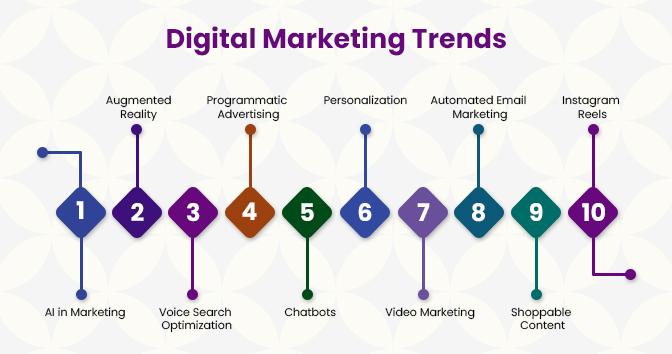
In the fast-paced world of digital marketing, staying ahead of the curve is crucial for success. What worked yesterday may not work today, and as a marketer, you need to adapt to the ever-evolving landscape. In this blog, we’ll explore the top emerging digital marketing trends you must know as Digital Marketer, and we’ll break them down into simple language with real-world examples of Digital Marketer.
Video Marketing Continues to Soar
Video marketing is not new, but its significance is growing exponentially. People love watching videos, and platforms like YouTube, TikTok, and Instagram Reels are perfect examples of this trend.
Example: Let’s say you run a small bakery. Instead of just posting pictures of your delicious treats, you could create short videos showcasing the baking process, customer reviews, or even behind-the-scenes footage. This engages your audience and gives them a more immersive experience.
Conversational Marketing with Chatbots
Chatbots are becoming smarter and more personalized. They can provide instant answers to customer queries, making user interactions smoother and more efficient.
Example: If you have an e-commerce website, you can implement a chatbot that asks visitors what they are looking for and guides them to the right products. It can also handle frequently asked questions, reducing the workload on your customer support team.
Artificial Intelligence (AI) is changing the game in digital marketing. AI algorithms can analyze user data to offer highly personalized content and product recommendations.
Example: Think about Netflix. It uses AI to suggest movies and shows based on your viewing history. As a marketer, you can employ AI to send personalized email campaigns, tailored product recommendations, and even website content.
Voice Search Optimization
Voice assistants like Siri, Alexa, and Google Assistant are becoming increasingly popular. Optimizing your content for voice search is a must.
Example: If you’re a local pizza restaurant, optimizing for voice search means focusing on long-tail keywords and answering questions like, “Where’s the nearest pizza place?” in your website content. This can help you rank higher when someone asks their voice assistant for pizza recommendations.
Influencer Marketing Evolution
Influencer marketing is not just about celebrities anymore. Micro-influencers (those with smaller but highly engaged followings) are gaining traction.
Example: Instead of paying a celebrity chef to promote your kitchen gadgets, you could collaborate with a food blogger who has a dedicated audience of home cooks. Their recommendations are often perceived as more authentic and trustworthy.
Augmented Reality (AR) and Virtual Reality (VR)
AR and VR technologies are making their way into digital marketing. They allow consumers to interact with products and experiences in immersive ways.
Example: Imagine you’re in the fashion industry. You could develop an AR app that lets customers “try on” clothes virtually before making a purchase. This enhances the online shopping experience and reduces return rates.
User-Generated Content
User-generated content (UGC) involves customers creating content related to your brand. It’s a powerful way to build trust and authenticity.
Example: If you run a fitness brand, encourage your customers to share their workout videos or before-and-after photos on social media using a specific hashtag. You can then showcase this UGC on your website or social channels, demonstrating real people achieving real results with your products.
With increasing concerns about data privacy, marketers need to be transparent about how they collect and use customer data.
Example: Make sure your website clearly outlines your data collection practices and gives users the option to opt out. Being transparent builds trust, and customers are more likely to share their information if they know it’s handled responsibly.
Conclusion
The digital marketing landscape is dynamic, and staying updated on emerging trends is vital for success. From video marketing and chatbots to AI-powered personalization and AR/VR experiences, these trends offer exciting opportunities for Digital Marketer to connect with their audience in innovative ways. Embracing these trends and adapting your strategies accordingly can help you stay at the forefront of digital marketing and drive better results for your brand or business.
In today’s fast-paced digital age, businesses in India are continually evolving to meet the demands of the online consumer. Digital marketing has emerged as a powerful tool for companies to connect with their target audience, promote their products or services, and drive growth. In this comprehensive guide, we will explore the world of digital marketing services in India, breaking down the key components, strategies, and trends that are shaping the landscape.
Chapter 1: Understanding Digital Marketing
Digital marketing is a multifaceted approach to promoting products, services, or brands through digital channels. In India, it has witnessed explosive growth in recent years due to increased internet penetration and smartphone usage. Let’s delve into the fundamental aspects of digital marketing:
1.1. Channels of Digital Marketing
Search Engine Optimization (SEO)
Social Media Marketing (SMM)
Email Marketing
Content Marketing
Pay-Per-Click (PPC) Advertising
Affiliate Marketing
Influencer Marketing
1.2. Importance of Digital Marketing
Cost-Effective
Targeted Reach
Measurable Results
Real-Time Engagement
Global Reach
Chapter 2: The Role of SEO
Search Engine Optimization (SEO) plays a pivotal role in digital marketing. It involves optimizing a website’s content and structure to rank higher in search engine results pages (SERPs). In India, SEO is an essential component of any digital marketing strategy:
2.1. On-Page SEO
Keyword Research
Content Optimization
Meta Tags
URL Structure
2.2. Off-Page SEO
Backlink Building
Social Signals
Guest Blogging
2.3. Local SEO
Google My Business
Local Citations
Reviews and Ratings
Chapter 3: The Power of Social Media Marketing
Social Media Marketing (SMM) is an integral part of digital marketing services in India. With millions of active social media users, businesses can’t afford to ignore this channel:
3.1. Popular Social Media Platforms in India
Facebook
Instagram
Twitter
LinkedIn
YouTube
3.2. Strategies for Effective SMM
Content Planning and Creation
Audience Segmentation
Paid Advertising
Engagement and Interaction
Analytics and Measurement
Chapter 4: The Impact of Email Marketing
Email marketing remains a potent tool for reaching and engaging with your audience. In India, email marketing is used for various purposes, including customer acquisition and retention:
4.1. Building an Email List
Opt-In Forms
Lead Magnets
4.2. Creating Compelling Email Campaigns
Personalization
A/B Testing
Automation
4.3. Legal Considerations
GDPR Compliance
CAN-SPAM Act Compliance
Chapter 5: The Art of Content Marketing
Content is king in the digital marketing world. High-quality content can drive traffic, engage audiences, and establish authority. In India, content marketing is an indispensable strategy:
5.1. Types of Content
Blog Posts
Infographics
Videos
Ebooks
Podcasts
5.2. Content Creation and Distribution
Content Calendar
SEO-Optimized Content
Social Media Sharing
Email Newsletters
Chapter 6: The World of Pay-Per-Click Advertising
Pay-Per-Click (PPC) advertising is a way to buy visits to your website rather than earning them organically. In India, PPC is a competitive arena:
6.1. Google Ads
Keyword Research
Ad Campaigns
Quality Score
6.2. Facebook Ads
Targeting Options
Ad Formats
Budgeting
6.3. Measuring PPC Success
Click-Through Rate (CTR)
Conversion Rate
Return on Investment (ROI)
Chapter 7: Affiliate and Influencer Marketing
Affiliate marketing and influencer marketing are innovative approaches to expand your reach and generate sales:
7.1. Affiliate Marketing
Affiliate Programs
Commission Structure
Tracking Sales
7.2. Influencer Marketing
Finding the Right Influencers
Collaboration Strategies
Measuring Influencer ROI
Chapter 8: Digital Marketing Trends in India
The digital marketing landscape in India is constantly evolving. Stay ahead of the curve by keeping an eye on the latest trends:
8.1. Voice Search Optimization
Siri, Google Assistant, Alexa
Long-tail Keyword Usage
8.2. Video Marketing
Short-Form Videos (TikTok, Reels)
Live Streaming
8.3. Chatbots and AI
Customer Service Automation
Personalized Recommendations
8.4. Data Privacy and Compliance
GDPR and India
Data Security Measures
Chapter 9: Challenges and Opportunities
While digital marketing in India presents immense opportunities, it also comes with challenges:
9.1. Competition
Saturated Markets
Rising Advertising Costs
9.2. Changing Algorithms
SEO and Social Media Algorithm Updates
9.3. Talent Shortage
Demand for Skilled Digital Marketers
9.4. Navigating Cultural Diversity
Tailoring Marketing Messages
Chapter 10: Hiring Digital Marketing Services in India
If you’re a business owner in India, you might be considering outsourcing your digital marketing efforts. Here’s how to choose the right agency or freelancer:
10.1. Evaluating Your Needs
Define Your Goals
Budget Considerations
10.2. Researching Agencies or Freelancers
Portfolio
Client Reviews
Case Studies
10.3. Communication and Collaboration
Clear Expectations
Regular Reporting
Conclusion
In the ever-evolving landscape of digital marketing services in India, staying informed and adapting to trends and changes is crucial. As the digital sphere continues to grow, businesses in India have a unique opportunity to leverage the power of digital marketing to expand their reach, engage with their audience, and drive growth. Whether you choose to handle your digital marketing in-house or work with a professional agency, the key is to remain agile and responsive to the dynamic digital world.
Remember, digital marketing is not just a trend; it’s an essential component of success in the modern business landscape in India. Embrace it, harness its power, and watch your business flourish in the digital era.