Tag: Content Marketing

  • What is Marketing? Definition, Strategies & Best Practices

    What is Marketing? Definition, Strategies & Best Practices

    What is Marketing?

    In the bustling world of business, where competition looms at every corner and the consumer’s attention span grows ever so fickle, marketing stands out as the beacon that guides potential customers to a brand’s doorstep. But what exactly is marketing? It’s a term that encompasses a vast realm of activities, strategies, and philosophies all aimed at promoting and selling products or services. Let’s embark on a journey to demystify this crucial aspect of business, exploring its various facets and understanding why it’s the lifeblood of any enterprise seeking to thrive in today’s economy.

    The Essence of Marketing

    Marketing Defined
    At its core, marketing is the art and science of identifying, anticipating, and satisfying customer needs and desires profitably. It’s a multifaceted process that involves understanding your audience, creating valuable offerings, communicating those offerings effectively, and delivering satisfaction.

    Why Marketing Matters
    In a world teeming with options, marketing helps businesses stand out, convey their message, and connect with individuals who are most likely to become customers. It’s not just about selling but about creating relationships and building trust.

    image 44

    The Evolution of Marketing

    From Traditional to Digital
    The digital age has transformed marketing from a predominantly one-way conversation (think TV ads and billboards) into a dynamic dialogue between brands and consumers. Digital marketing channels, such as social media, SEO, and email marketing, offer unprecedented ways to engage directly with audiences.

    Understanding Consumer Behavior
    Today’s marketing strategies are increasingly driven by data analytics, allowing marketers to understand consumer behavior like never before. This data-driven approach enables personalized marketing, enhancing the consumer experience and increasing effectiveness.

    Marketing Strategies and Their Impact

    Content Marketing
    By offering valuable and relevant content, brands educate and engage their audience, building trust and establishing authority in their domain. Content marketing isn’t overtly promotional but seeks to inform and entertain, thereby fostering a deeper connection with potential customers.

    Social Media Marketing
    With billions of users worldwide, social media platforms offer a vast stage for brands to showcase their personality, engage with customers, and promote their offerings. Effective social media marketing leverages these platforms’ conversational nature, encouraging user interaction and brand loyalty.

    SEO: Connecting with the Digital Consumer
    Search Engine Optimization (SEO) enhances a website’s visibility in search engine results, making it easier for potential customers to find a business online. A robust SEO strategy involves optimizing content, structure, and on-page elements to improve rankings and drive organic traffic.

    The Human Touch in Marketing

    Building Brand Awareness
    At its heart, marketing is about storytelling. It’s how a brand communicates its essence, values, and personality. Creating a strong, relatable brand image can make a business memorable and foster a loyal customer base.

    Customer Engagement and Retention
    Engaging with customers on a personal level, acknowledging their feedback, and providing exceptional service are pivotal in retaining customers. Loyal customers not only contribute to sales but also become brand ambassadors, spreading the word to friends and family.

    image 45

    What Are the 4 P’s of Marketing?

    The 4 P’s of Marketing, also known as the marketing mix, are a set of four key elements that are central to any marketing strategy. They are:

    1. Product: This refers to what you are selling, including all of the features, advantages, and benefits that your customers can enjoy from buying your goods or services.
    2. Price: This pertains to how much your product costs. Pricing strategies can greatly affect how the market perceives your product and can be a determinant of success or failure.
    3. Place: This is all about distribution and where your product is made available to your target market. “Place” strategies involve making your product as accessible as possible to your intended customers.
    4. Promotion: This involves all the ways you tell your customers about your product or service and how you then market and sell to them. This includes advertising, sales tactics, promotions and direct marketing.

    These four elements work together to help create a cohesive and effective marketing strategy.

    Types of Marketing Strategies

    There are numerous types of marketing strategies used by companies to reach their target audience, promote their brand, and increase sales. Here are some key types, briefly explained:

    1. Content Marketing: Involves creating and distributing valuable, relevant, and consistent content to attract and retain a clearly-defined audience.
    2. Social Media Marketing: Utilizes social media platforms to connect with your audience to build your brand, increase sales, and drive website traffic.
    3. Search Engine Optimization (SEO): Focuses on improving your website’s visibility in search engine results pages to increase organic (non-paid) traffic.
    4. Pay-Per-Click (PPC) Advertising: A model of internet marketing in which advertisers pay a fee each time one of their ads is clicked.
    5. Email Marketing: The use of email to promote products or services while developing relationships with potential customers or clients.
    6. Influencer Marketing: Involves partnering with influential people in your industry to expose your brand to a larger audience.
    7. Affiliate Marketing: A performance-based marketing strategy where a business pays one or more affiliates for each visitor or customer brought by the affiliate’s own marketing efforts.
    8. Viral Marketing: Aims to spread information about a product or service from person to person by word of mouth or sharing via the internet or email.
    9. Public Relations (PR): Focuses on managing the public perception of a company or product through media coverage and communication strategies.
    10. Direct Marketing: Directly reaches out to potential customers on a personal level (such as via mail, email, or text) instead of through a third-party medium.
    11. Guerrilla Marketing: An unconventional strategy intended to get maximum results from minimal resources.
    12. Event Marketing: Involves promoting a brand, product, or service through in-person or virtual events.
    13. Experiential Marketing: Focuses on creating immersive experiences that engage consumers directly, making them part of the brand story.

    Each of these strategies has its own set of advantages and can be used in various combinations depending on the business goals, target audience, and budget.

    What Are the Benefits of Marketing?

    Marketing offers a wide array of benefits to businesses, large and small. Here’s a concise overview of its key advantages:

    Increases Brand Awareness: Marketing strategies help introduce and promote your brand to potential customers, making it more recognizable.

    Boosts Sales: Effective marketing directly influences buying behavior, leading to increased sales and revenue.

    Engages Customers: It allows businesses to maintain an ongoing relationship with their audience, keeping them engaged and interested in the brand.

    Builds Company Reputation: Through consistent and positive marketing messages, businesses can build and maintain a strong reputation.

    Facilitates Customer Feedback: Marketing strategies, especially digital ones, provide valuable data on customer preferences and feedback, which can guide future strategies.

    Enhances Customer Experience: By understanding customer needs through marketing research, businesses can improve their products, services, and the overall customer experience.

    Increases Competitive Edge: Marketing enables businesses to stand out in a crowded market, highlighting their unique selling proposition.

    Drives Targeted Traffic: Specific marketing tactics, like SEO and PPC, can attract highly targeted traffic to your business, increasing the chances of conversion.

    Supports Business Growth: Strategic marketing contributes to the expansion of business operations and entry into new markets.

    Improves Product Development: Insights gained from marketing efforts can inform product development, ensuring offerings meet the current demands of the market.

    Marketing is not just about selling products or services; it’s about creating a connection with your audience, understanding their needs, and providing value, which in turn, contributes to the success and growth of your business.

    image 46

    The Future of Marketing

    Emerging Technologies
    With the advent of AI, augmented reality, and other technologies, the future of marketing holds endless possibilities for creating immersive and personalized consumer experiences.

    Sustainability and Ethical Marketing
    Consumers are increasingly conscious of their impact on the planet, leading to a rise in demand for sustainable and ethically produced products. Brands that align their marketing strategies with these values are seeing a positive response from the market.

    Conclusion

    Marketing is an ever-evolving field that sits at the intersection of business and creativity. It’s about understanding people, what they need, what they value, and how they want to receive information. Effective marketing doesn’t just sell products; it builds relationships, fosters communities, and creates brand advocates. As we move forward, the brands that succeed will be those that prioritize authenticity, engage with their audience on a human level, and adapt to the changing landscape of consumer behavior and technological advancements.

    FAQs

    What makes marketing essential for businesses?
    Marketing is essential for businesses as it helps in building brand awareness, engaging customers, and driving sales. It allows businesses to communicate their value proposition effectively to their target audience.

    How has digital marketing changed the landscape?
    Digital marketing has transformed the marketing landscape by enabling direct communication with the audience, providing detailed analytics, and allowing for personalized marketing strategies, thereby increasing efficiency and effectiveness.

    What is the importance of SEO in marketing?
    SEO is crucial in marketing as it improves a website’s visibility in search engine results, making it easier for potential customers to find a business online, thus increasing organic traffic and potential sales.

    Can small businesses benefit from marketing?
    Absolutely, small businesses can benefit significantly from marketing by leveraging cost-effective digital marketing strategies to reach a wider audience, build brand awareness, and compete with larger companies.

    How do marketing strategies impact consumer behavior?
    Marketing strategies, especially those that are data-driven and customer-centric, can significantly influence consumer behavior by addressing their needs, preferences, and pain points, leading to increased customer engagement and loyalty.

    What is the future of marketing?
    The future of marketing lies in leveraging emerging technologies to create more personalized, immersive, and sustainable marketing experiences that resonate with consumers on a deeper level.

    Logo

    Contact Person: Kamlesh Singad

    Phone no. +91 9131341638

    Web Page: https://kamleshsingad.in/

    contact@kamleshsingad.com

    https://kamleshsingad.com/

    Read More –

    AI and Content Generation: The Future of Digital Storytelling – https://kamleshsingad.in/ai-and-content-generation-the-future-of-digital-storytelling/

    How to Scale Your Customer Service with Chatbots – https://kamleshsingad.in/how-to-scale-your-customer-service-with-chatbots/

    What is Live Streaming Technology, and How Does it Work? – https://kamleshsingad.in/what-is-live-streaming-technology-and-how-does-it-work/

  • The Power of Visual Storytelling in Marketing: Bringing Your Brand to Life

    The Power of Visual Storytelling in Marketing: Bringing Your Brand to Life

    In today’s digital age, where attention spans are shorter than ever, grabbing and holding your audience’s attention has become a challenging task for marketers. This is where visual storytelling comes into play. Visual storytelling is the art of using images, graphics, videos, and other visual elements to convey a compelling narrative that resonates with your target audience. In this blog, we’ll explore the immense power of visual storytelling in marketing, and we’ll back it up with some real-life examples to illustrate its effectiveness.

    1. A Picture is Worth a Thousand Words

    Visual content is processed faster by the human brain than text. When you combine visuals with a well-crafted story, you create a powerful tool for engaging your audience. Take National Geographic, for instance. They are experts at visual storytelling, using stunning photographs to tell stories about wildlife, cultures, and landscapes. These visuals draw viewers into their narratives, making them feel like they are part of the adventure.

    2. Emotionally Connect with Your Audience

    Visual storytelling is an effective way to evoke emotions in your audience. Emotions drive decisions, and when you connect with your audience on an emotional level, they are more likely to remember your brand. Dove’s “Real Beauty” campaign is an excellent example. They used real women instead of models in their advertisements, empowering women to feel beautiful just as they are. This emotional connection boosted Dove’s brand image and increased customer loyalty.

    3. Simplify Complex Information

    Visuals are excellent for simplifying complex information. Take infographics, for instance. They combine text and graphics to make data and statistics more digestible. Companies like Google often use infographics to explain their products and services in a visually appealing and easy-to-understand manner.

    4. Create Shareable Content

    Visual storytelling also makes your content more shareable. When people come across a visually engaging story, they are more likely to share it on social media, extending your brand’s reach. An excellent example of this is the ALS Ice Bucket Challenge. People all over the world shared videos of themselves dumping ice water on their heads to raise awareness for ALS. This viral campaign used visual storytelling to connect people to the cause, and it raised millions of dollars for ALS research.

    5. Build Brand Identity

    Your brand is not just a logo or a tagline; it’s a story. Visual storytelling helps you shape and communicate that story. Take Coca-Cola, for example. Their iconic holiday commercials featuring the Coca-Cola truck and the polar bears have become a part of their brand’s story. These visuals are instantly recognizable and evoke a sense of nostalgia, reinforcing Coca-Cola’s brand identity.

    6. Drive Engagement and Conversion

    Visual storytelling can significantly boost user engagement and conversion rates. Videos, in particular, have become a staple in online marketing. Think about how successful YouTube channels like Tasty have become by visually showcasing simple cooking recipes. By showing the step-by-step process with mouthwatering visuals, they engage their audience and drive people to try the recipes.

    7. Stand Out in a Crowded Market

    With the sheer volume of content available online, it’s essential to stand out. Visual storytelling helps you do just that. Airbnb’s Instagram account is a great example. They feature stunning photos of unique accommodations worldwide, capturing the essence of travel and adventure. These visuals set them apart from the competition and draw people to their platform.

    In conclusion, the power of visual storytelling in marketing cannot be overstated. It helps you grab attention, connect emotionally, simplify complex information, create shareable content, build brand identity, drive engagement, and stand out in a crowded market. So, whether you’re a small business or a global brand, harness the power of visual storytelling to bring your brand to life and connect with your audience in a memorable way. Remember, a picture is worth a thousand words, and a well-told visual story can leave a lasting impression on your customers.

    https://kamleshsingad.com/building-your-first-android-app-a-step-by-step-tutorial/

    Read More –

    The Art of Crafting Irresistible Clickbait: Dos and Don’ts – https://kamleshsingad.com/agency/the-art-of-crafting-irresistible-clickbait-dos-and-donts/

    How to Create Viral Content: A Step-by-Step Guide – https://kamleshsingad.com/agency/how-to-create-viral-content-a-step-by-step-guide/

    Influencer Marketing Secrets: How to Partner with Influencers for Maximum Impact – https://kamleshsingad.com/agency/how-to-partner-with-influencers-for-maximum-impact/

  • Digital Marketing on a Budget | Code With Kamlesh Indore

    Digital Marketing on a Budget | Code With Kamlesh Indore

    In today’s fast-paced digital world, businesses of all sizes understand the importance of a robust online presence. Digital marketing has become the go-to strategy for reaching a wider audience, building brand recognition, and increasing revenue. However, many businesses, especially smaller ones, are often deterred by the high costs associated with digital marketing services. That’s where CWK Agency by Kamlesh Singad comes into the picture. Offering top-notch Digital Marketing on a Budget in Indore at an affordable price. In this blog, we’ll explore how CWK Agency can help your business grow without breaking the bank.

    Digital Marketing on a Budget

    CWK Agency is renowned for providing cost-effective digital marketing services tailored to the specific needs of your business. They understand that every company is unique, and a one-size-fits-all approach simply doesn’t work. Kamlesh Singad Agency offers a range of services that can be customized to suit your budget and goals.

    Services Offered

    Search Engine Optimization (SEO): SEO is crucial for improving your website’s visibility on search engines like Google. CWK Agency employs proven SEO strategies to help your website rank higher, drive organic traffic, and boost your online presence.

    Social Media Marketing: Social media platforms are powerful tools for engaging with your audience. They can create and manage compelling social media campaigns on platforms like Facebook, Instagram, Twitter, and LinkedIn to enhance your brand’s reach and engagement.

    Content Marketing: Quality content is the backbone of any successful digital marketing strategy. The agency can develop captivating and informative content, including blog posts, videos, and infographics, to engage your audience and establish your authority in your niche.

    Pay-Per-Click (PPC) Advertising: CWK Agency can create and manage PPC campaigns on platforms like Google Ads to drive targeted traffic to your website. You only pay when someone clicks on your ad, making it a cost-effective advertising option.

    Email Marketing: Stay in touch with your customers and prospects through email marketing campaigns. CWK Agency can help you design and execute email marketing strategies to nurture leads and drive conversions.

    Website Design and Development: A user-friendly website is essential for converting visitors into customers. CWK Agency can design and develop a professional website that reflects your brand and converts visitors into customers.

    Analytics and Reporting: The agency provides comprehensive analytics and reporting services to track the performance of your digital marketing campaigns. This data-driven approach allows for continuous optimization and improvement.

    Digital Marketing

    Why Choose CWK Agency?

    Affordability: CWK Agency understands the budget constraints of businesses, especially startups and small enterprises. They offer competitive pricing without compromising on the quality of services.

    Experienced Team: The agency boasts a team of experienced digital marketing professionals who are well-versed in the latest industry trends and best practices.

    Customized Solutions: Your business is unique, and so are your digital marketing needs. CWK Agency creates customized strategies that align with your goals and budget.

    Proven Track Record: This Agency has a successful track record of helping businesses in Indore and beyond achieve their digital marketing objectives.

    Transparency: They believe in transparency and keep you informed about the progress of your campaigns through regular reports and updates.

    Conclusion

    In the competitive world of digital marketing, CWK Agency stands out as an affordable and reliable partner for businesses looking to boost their online presence. Whether you’re a startup or an established company, their customized solutions can help you achieve your goals without breaking the bank. Don’t let budget constraints hold you back from reaching your full potential online. Choose Kamlesh Singad Agency as your trusted digital marketing partner in Indore.

    If you’re ready to take your digital marketing game to the next level, get in touch with CWK Agency today. And experience the benefits of professional, budget-friendly digital marketing services tailored to your unique needs.

  • How to do Digital Marketing for Education sector?

    How to do Digital Marketing for Education sector?

    Think about how we usually find information or learn new things today. We often use the internet to search for stuff, watch videos, or read articles. Just like companies use the internet to show people their products, schools and educational places can also use it to share information about what they offer. This is where digital marketing comes in.

    Discover how Digital Marketing for Education sector helps schools, coaching institutes, and edtech platforms attract more students, build brand authority, and boost admissions through SEO, social media, and paid advertising strategies.

    Understanding the Importance of Digital Marketing:

    Imagine you’re looking for a good school for your child, and you start searching online. You might see websites, social media pages, and videos from schools telling you about their programs and teachers. This is digital marketing. It helps schools and educational places get noticed by people like you who are interested in learning more.

    Benefits of Digital Marketing for Educational Institutions:

    Let’s say you’re a student who loves painting. With digital marketing, schools can show you their art classes on the internet. They can even let you know about special events or workshops related to painting. For schools, digital marketing helps them reach students who are excited about what they teach. It’s like telling the right people about the cool things they do, so more students can join and enjoy their learning experiences.

    Defining Your Digital Marketing Strategy

    Think of your digital marketing strategy like planning a trip. Just like you decide where to go, how to get there, and what to do, a digital marketing strategy is like a plan for your online activities. It helps you figure out how to reach people and make your school or educational program known.

    Setting Clear Goals and Objectives:
    Imagine you’re playing a game. Before you start, you usually have a goal, right? Maybe your goal is to score a certain number of points or finish a level. In digital marketing, you set goals too, but they’re about things like getting more students to enroll in your classes or making more parents aware of your school.

    Identifying Target Audience (Students, Parents, Educators):
    Think about when you want to show a cool toy to someone. You choose who to show it to based on what they like, right? In digital marketing, your “target audience” is like the people you want to show your educational stuff to. It could be students who want to learn new things, parents who want the best education for their kids, or teachers who want helpful resources.

    Analyzing Competitors in the Education Industry:
    Imagine you’re in a race. Before you run, you might want to know who you’re racing against. You look at other runners to see how fast they are. In the education world, there are other schools and programs trying to attract students too. So, you look at what they’re doing to see if there are things you can do even better.

    Also Read: Digital Marketing Agency in Uttarakhand

    Digital Marketing for Education sector

    Building a Strong Online Presence

    Think of building a strong online presence like setting up a welcoming shop on the internet. It’s about making sure people can find you easily and have a great experience when they visit your online “shop.”

    Creating a Professional and User-Friendly Website:

    Imagine you’re opening a store in a busy street. You’d want the store to look nice and organized, right? Well, a website is like your online store. You want it to look professional, with all the information neatly arranged. Just like customers like to see clean shelves and signs in a physical store, visitors to your website should be able to find what they need without confusion.

    Developing Engaging Landing Pages:

    Landing pages are like the special sections or displays you create in your store to catch people’s attention. For example, if you’re selling toys, you might set up a fun display of new toys right at the entrance. Similarly, on your website, a landing page is a page designed to grab visitors’ interest, usually showcasing something important like a new course or event.

    Optimizing for Mobile and Responsive Design:

    Nowadays, people use different devices to browse the internet – like phones, tablets, and computers. Imagine if your store looked amazing on a big window but messy and hard to navigate through a small window. To make sure your online shop looks great no matter how someone visits it, you need responsive design. It’s like having your store rearrange itself to look perfect, whether people are looking through the big shop window or a small one.

    Content Marketing for Education

    Imagine you’re trying to teach people about something interesting or helpful. You create materials like stories, articles, and videos that explain things in a way that’s easy to understand. You’re not just throwing random things out there – you’re making content that’s useful to others.

    Creating Relevant and Valuable Content (Blogs, Articles, Videos):

    Think of this like making helpful guides or interesting stories. Let’s say you’re an expert in math, and you make short videos explaining how to solve tricky math problems. People who struggle with those problems find your videos super helpful. That’s because you’ve made content that’s relevant (related to math problems) and valuable (helps them understand and solve the problems).

    Showcasing Expertise through Educational Resources:

    Imagine you’re really good at playing the guitar. You decide to create a series of short lessons and tips for beginners who want to learn to play the guitar. By sharing your knowledge in those lessons, you’re showing that you’re an expert in guitar playing. People will trust your guidance because you’re sharing educational stuff.

    Utilizing SEO to Improve Visibility in Search Engines:

    Think of the internet like a huge library. When you want to find a specific book, you use keywords like the book’s title or author. In the same way, people use keywords to find things on the internet. If you write a helpful article about cooking pasta and use the right words people might search for (like “easy pasta recipes”), your article shows up at the top of search results. This is called SEO (Search Engine Optimization), and it helps more people find your content.

    Social Media Marketing

    Imagine you have a really cool idea or something interesting to share with a lot of people. Social media marketing is like using platforms on the internet to tell everyone about your idea or share your cool thing.

    Choosing the Right Social Media Platforms:
    Think of social media platforms like different playgrounds. Some people like to play basketball, some like to play soccer, and some like to ride bikes. In the same way, there are different websites where people hang out online. For example, Facebook is like a basketball court, Instagram is like a bike track, and Twitter is like a soccer field. You need to pick the right place to share your idea, depending on the type of people you want to reach. If you’re telling students about a new course, you might choose Instagram because that’s where many students spend time.

    Engaging with the Education Community Online:
    Imagine you’re at a big party where everyone is talking about different things. Engaging with the education community online is like joining conversations about learning and schools in those playgrounds (social media platforms). It’s like joining a group of people who like the same things you do. You can share your thoughts, answer questions, and learn from others. For example, you might join a group of teachers on Facebook where they discuss new teaching methods.

    Running Effective Social Media Campaigns:
    A social media campaign is like throwing a big party online. Imagine you want to invite everyone to a special event. It’s all about getting people excited and interested in what you’re offering. Just like how a bakery might post pictures of delicious cakes to make people want to visit their shop.

    Also Read: Answer Engine Optimization (AEO): The Future of Digital Marketing in the Age of AI

    Digital Marketing for Education sector

    Email Marketing for Education

    Email marketing is like sending messages to people’s email addresses, but it’s not just random messages. It’s a smart way for schools or educational places to share important and interesting things with students, parents, and teachers using emails.

    Building an Opt-in Email List:

    Imagine you have a cool club that shares exciting news about a topic you really like. People who are interested can join the club voluntarily. Building an opt-in email list is like creating that club. It’s about asking people if they want to receive emails from your school or educational organization. For example, when students or parents say, “Yes, I want to know what’s happening at school,” you add their email addresses to your special list.

    Crafting Compelling Email Campaigns:

    Think of an email campaign as a series of stories. Just like how your favorite TV show has episodes that keep you excited, an email campaign has a bunch of emails that tell interesting stories about your school. These stories could be about upcoming events, fun activities, or important updates. Crafting compelling email campaigns means creating emails that are interesting and make people want to read them. It’s like writing a really good story that everyone wants to hear.

    Sending Personalized Updates and Newsletters:

    Imagine getting a birthday card with your name on it. It feels special, right? Sending personalized updates is a bit like that. Instead of sending the same email to everyone, you can send emails that are made just for each person. For example, if someone is really into sports, you can send them updates about the school’s sports events. And newsletters are like big update emails that have a bunch of cool things all in one place. It’s like a collection of exciting news and fun stuff.

    Paid Advertising Strategies

    Think of paid advertising strategies as a way to make your school or educational services more noticeable to people who might be interested. It’s a bit like putting up a big poster or billboard to get attention.

    Using Google Ads for Education Keywords:

    Imagine you’re searching for a recipe online, and you type “easy chocolate cake recipe” into Google. You’ll notice that some of the search results are labeled as “Ad.” These are like mini ads that people have paid for, so their recipe website shows up at the top. Similarly, schools and education providers can pay to have their websites show up at the top when someone searches for keywords related to education, like “best online courses.”

    Implementing Social Media Advertising (Facebook, Instagram):

    You know those sponsored posts that show up in your Facebook or Instagram feeds? These are like little ads that show up in between your friends’ posts. Schools can use these ads to tell people about their courses or programs. It’s like when a friend tells you about a cool new restaurant they tried, but in this case, it’s the school telling you about their education offerings.

    Display Advertising on Relevant Websites:

    Have you ever noticed ads on websites you visit? Sometimes, when you’re reading an article about a new movie, you might see an ad for tickets to that movie. Schools can place these types of ads on websites that are related to education or learning. For example, if you’re reading an article about studying tips, you might see an ad for an online learning platform.

    So, paid advertising strategies are all about using different methods to get the word out about education, just like how businesses use advertising to tell you about their products or services.

    Also Read: Best Digital Marketing Agency in Indore | Code With Kamlesh

    Search Engine Optimization (SEO)

    Imagine you have a bakery and you want people to find it easily when they search for “delicious cakes” on the internet. SEO is like making your bakery more visible so that when someone searches for cakes, your bakery’s name pops up at the top of the list.

    On-Page and Off-Page SEO Techniques

    • On-Page SEO: This is like baking your cakes with the best ingredients. On-page SEO is about making your website as tasty and appealing as possible to visitors and search engines. You use good titles, descriptions, and relevant keywords that people might use to find your bakery. It’s like having a nice menu with all your delicious cakes listed.
    • Off-Page SEO: Imagine your bakery getting popular because people talk about it. Off-page SEO is about getting other websites to talk about your bakery. This could be through social media, reviews, or even other websites linking to your bakery’s website. It’s like having people recommend your cakes to their friends.

    Local SEO for Targeted Location-based Searches

    Suppose you want people nearby to find your bakery. Local SEO is like putting a sign outside your bakery with your location. It’s making sure that when someone nearby searches for “cakes near me,” your bakery shows up on their map. It helps people find you easily when they’re looking for cakes in your area.

    Monitoring and Improving Search Engine Rankings

    Think of it like checking how well your bakery is doing. Monitoring your search engine rankings is like seeing where your bakery shows up when people search for cakes. If you’re not showing up high enough, you might need to make your cakes even more delicious (improve your website) or tell more people about your bakery (off-page SEO). It’s like keeping track of how many customers are coming to your bakery.

    Digital Marketing for Education sector

    Video Marketing in Education

    Think about how you watch videos on YouTube to learn how to cook a new recipe or fix something around the house. In a similar way, educational institutions and teachers can use videos to teach students new things and share useful information. This is what we mean by “Video Marketing in Education.”

    Creating Engaging Educational Videos:

    Imagine your teacher making short videos where they explain math problems using fun animations or tell stories that help you understand history better. These videos make learning more interesting because you can see and hear the explanations, almost like having your teacher right there with you.

    Using YouTube as a Platform for Sharing Knowledge:

    You know how people upload videos of cute animals or funny sketches on YouTube? Well, teachers and schools can use YouTube too, but instead of funny videos, they share educational videos. This way, students from all over the world can watch and learn from these videos, just like how you watch your favorite videos on YouTube.

    Live Streaming and Webinars for Interactive Learning:

    Imagine tuning in to a live show on TV, where you can send messages to the host and they reply to you in real-time. Live streaming and webinars in education work a bit like that. Teachers can teach lessons live on the internet, and you can ask questions or take part in discussions as the lesson happens. It’s like being in a virtual classroom where you can interact with your teacher and classmates, even if you’re not in the same place. It is Digital Marketing in the Education Sector.

    Thank You!

  • Top Emerging Digital Marketing Trends You Must Know as a Marketer

    Top Emerging Digital Marketing Trends You Must Know as a Marketer

    In the fast-paced world of digital marketing, staying ahead of the curve is crucial for success. What worked yesterday may not work today, and as a marketer, you need to adapt to the ever-evolving landscape. In this blog, we’ll explore the top emerging digital marketing trends you must know as Digital Marketer, and we’ll break them down into simple language with real-world examples of Digital Marketer.

    Video Marketing Continues to Soar

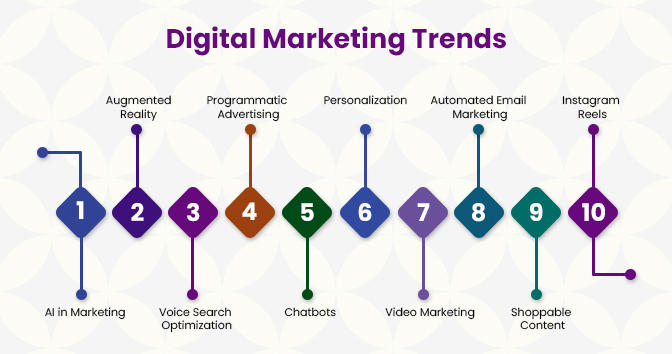
    Video marketing is not new, but its significance is growing exponentially. People love watching videos, and platforms like YouTube, TikTok, and Instagram Reels are perfect examples of this trend.

    Example: Let’s say you run a small bakery. Instead of just posting pictures of your delicious treats, you could create short videos showcasing the baking process, customer reviews, or even behind-the-scenes footage. This engages your audience and gives them a more immersive experience.

    Conversational Marketing with Chatbots

    Chatbots are becoming smarter and more personalized. They can provide instant answers to customer queries, making user interactions smoother and more efficient.

    Example: If you have an e-commerce website, you can implement a chatbot that asks visitors what they are looking for and guides them to the right products. It can also handle frequently asked questions, reducing the workload on your customer support team.

    Also Read: 10 Powerful Reasons Why You Should Outsource Your Digital Marketing

    Digital Marketing Trends

    AI-Powered Personalization

    Artificial Intelligence (AI) is changing the game in digital marketing. AI algorithms can analyze user data to offer highly personalized content and product recommendations.

    Example: Think about Netflix. It uses AI to suggest movies and shows based on your viewing history. As a marketer, you can employ AI to send personalized email campaigns, tailored product recommendations, and even website content.

    Voice Search Optimization

    Voice assistants like Siri, Alexa, and Google Assistant are becoming increasingly popular. Optimizing your content for voice search is a must.

    Example: If you’re a local pizza restaurant, optimizing for voice search means focusing on long-tail keywords and answering questions like, “Where’s the nearest pizza place?” in your website content. This can help you rank higher when someone asks their voice assistant for pizza recommendations.

    Digital Marketing Trends

    Influencer Marketing Evolution

    Influencer marketing is not just about celebrities anymore. Micro-influencers (those with smaller but highly engaged followings) are gaining traction.

    Example: Instead of paying a celebrity chef to promote your kitchen gadgets, you could collaborate with a food blogger who has a dedicated audience of home cooks. Their recommendations are often perceived as more authentic and trustworthy.

    Augmented Reality (AR) and Virtual Reality (VR)

    AR and VR technologies are making their way into digital marketing. They allow consumers to interact with products and experiences in immersive ways.

    Example: Imagine you’re in the fashion industry. You could develop an AR app that lets customers “try on” clothes virtually before making a purchase. This enhances the online shopping experience and reduces return rates.

    User-Generated Content

    User-generated content (UGC) involves customers creating content related to your brand. It’s a powerful way to build trust and authenticity.

    Example: If you run a fitness brand, encourage your customers to share their workout videos or before-and-after photos on social media using a specific hashtag. You can then showcase this UGC on your website or social channels, demonstrating real people achieving real results with your products.

    Also Read: Advanced Digital Marketing Course in Indore | Learn with Code With Kamlesh Agency

    Data Privacy and Transparency

    With increasing concerns about data privacy, marketers need to be transparent about how they collect and use customer data.

    Example: Make sure your website clearly outlines your data collection practices and gives users the option to opt out. Being transparent builds trust, and customers are more likely to share their information if they know it’s handled responsibly.

    Conclusion

    The digital marketing landscape is dynamic, and staying updated on emerging trends is vital for success. From video marketing and chatbots to AI-powered personalization and AR/VR experiences, these trends offer exciting opportunities for Digital Marketer to connect with their audience in innovative ways. Embracing these trends and adapting your strategies accordingly can help you stay at the forefront of digital marketing and drive better results for your brand or business.

    Also Read: Advanced AI Digital Marketing Course in Indore by Code With Kamlesh

    Digital Marketing Trends
  • Top 5 skills to master Digital Marketing

    Top 5 skills to master Digital Marketing

    In today’s digital age, marketing has evolved significantly. Gone are the days of traditional advertising dominating the scene; now, digital marketing is at the forefront. To succeed in this ever-changing field, mastering specific skills is crucial. In this blog, we’ll explore the top five skills you need to excel in digital marketing, providing simple explanations, real-world examples, and practical advice.

    1. Search Engine Optimization (SEO)

    What is SEO?
    Search Engine Optimization (SEO) is the practice of optimizing your online content to improve its visibility on search engines like Google. The goal is to increase organic (non-paid) traffic to your website by ranking higher in search results.

    Why is it important?
    SEO is the foundation of digital marketing because most online experiences start with a search engine. If your website doesn’t appear in relevant search results, potential customers may never find you.

    Example:
    Imagine you run a small bakery in New York City. When someone searches for “best cupcakes in NYC” on Google, you want your bakery to appear on the first page of results. This visibility can significantly boost your business.

    How to Master SEO:

    • Learn keyword research: Identify the words and phrases people use to search for your products or services.
    • Create high-quality content: Develop informative, engaging, and relevant content that incorporates these keywords.
    • Optimize on-page elements: Ensure your website’s titles, meta descriptions, headings, and images are optimized for search engines.
    • Build high-quality backlinks: Acquire links from reputable websites to improve your site’s authority.
    • Stay updated: SEO algorithms evolve, so keep learning and adapting your strategy.
    Digital Marketing

    2. Content Marketing

    What is Content Marketing?
    Content marketing involves creating and distributing valuable, relevant, and consistent content to attract and engage a target audience. This content can take various forms, including blog posts, videos, infographics, and social media updates.

    Why is it important?
    Quality content can build trust, establish your brand as an authority, and drive organic traffic. It also forms the basis for many other digital marketing strategies, like SEO and social media marketing.

    Example:
    Suppose you operate a fitness website. Publishing informative articles on topics like “Effective Home Workouts” or “Healthy Eating Tips” can attract fitness enthusiasts and establish you as a reliable source of information.

    How to Master Content Marketing:

    • Understand your audience: Research your target audience’s preferences, problems, and interests.
    • Create valuable content: Develop content that addresses your audience’s needs and provides solutions.
    • Consistency is key: Regularly update your content to keep your audience engaged and informed.
    • Use various formats: Experiment with different content formats to cater to different preferences.
    • Promote your content: Share your content on social media, email newsletters, and other channels to reach a wider audience.

    3. Social Media Marketing

    What is Social Media Marketing?
    Social media marketing involves using social platforms like Facebook, Instagram, Twitter, and LinkedIn to promote your brand, connect with your audience, and drive traffic to your website.

    Why is it important?
    Social media platforms have billions of active users, making them ideal for building brand awareness, engaging with customers, and driving conversions.

    Example:
    Suppose you own an online fashion store. Posting high-quality images of your latest clothing collections on Instagram and using relevant hashtags can attract fashion enthusiasts and drive them to your website for purchases.

    How to Master Social Media Marketing:

    • Choose the right platforms: Focus on the social media platforms that align with your target audience.
    • Develop a content strategy: Plan your posts, including the type of content, posting schedule, and goals.
    • Engage with your audience: Respond to comments, messages, and interact with your followers to build relationships.
    • Use paid advertising: Consider using paid social media ads to reach a broader audience.
    • Analyze and adapt: Monitor your social media metrics and adjust your strategy based on performance.
    Digital Marketing

    4. Email Marketing

    What is Email Marketing?
    Email marketing involves sending targeted emails to a list of subscribers or potential customers. It can be used for various purposes, such as promoting products, sharing content, or nurturing leads.

    Why is it important?
    Email marketing is a cost-effective way to reach a specific audience and drive conversions. It allows for personalized communication and relationship-building.

    Example:
    Suppose you run a software company. Sending a monthly newsletter to your subscribers with updates on new features, helpful tips, and exclusive offers can keep them engaged and interested in your products.

    How to Master Email Marketing:

    • Build a quality email list: Collect email addresses through opt-ins and ensure you have permission to contact subscribers.
    • Personalize your emails: Tailor your messages to each recipient’s preferences and behavior.
    • Craft compelling content: Write engaging subject lines and email content that encourages action.
    • Automate campaigns: Use email marketing tools to schedule and automate email sequences.
    • Analyze results: Monitor open rates, click-through rates, and conversion rates to optimize your campaigns.

    5. Data Analysis and Analytics

    What is Data Analysis and Analytics?
    Data analysis involves collecting, interpreting, and using data to make informed marketing decisions. Analytics tools provide valuable insights into user behavior, website performance, and campaign effectiveness.

    Why is it important?
    Data-driven decisions can lead to more effective marketing strategies, cost savings, and better understanding of customer behavior.

    Example:
    Suppose you run an e-commerce store. Analyzing data on your website traffic can reveal which products are most popular, where users drop off during the checkout process, and which marketing channels drive the most sales. With this information, you can optimize your product offerings and marketing efforts.

    How to Master Data Analysis and Analytics:

    • Set up tracking: Use tools like Google Analytics to track website traffic, user behavior, and conversions.
    • Define key metrics: Identify the specific metrics that matter most for your business goals.
    • Regularly review data: Analyze data to uncover trends, patterns, and areas for improvement.
    • A/B testing: Conduct split tests to compare different marketing strategies and determine which performs better.
    • Continuous learning: Stay updated on data analysis tools and techniques to make informed decisions.

    Conclusion

    In the ever-evolving landscape of digital marketing, mastering these five skills is essential for success. Whether you’re a seasoned marketer or just starting, a strong foundation in SEO, content marketing, social media marketing, email marketing, and data analysis will empower you to connect with your audience, drive traffic, and achieve your business objectives. Remember that practice and adaptation are key, as the digital marketing landscape is constantly changing. Stay curious, stay updated, and keep experimenting to refine your skills and stay ahead in the competitive world of digital marketing.

    Digital Marketing

    Thank You!

  • How Digital Marketing Help to Grow Coaching Institutes

    How Digital Marketing Help to Grow Coaching Institutes

    In today’s digital age, the success of coaching institutes heavily relies on their ability to adapt and excel in the online realm. Traditional marketing strategies alone no longer suffice. Enter digital marketing – a powerful tool that can help coaching institutes not only survive but thrive in this competitive landscape. In this comprehensive guide, we’ll explore how digital marketing can be a game-changer for coaching institutes. We’ll break down complex concepts into simple language, supported by real-world examples to help you understand how to harness the full potential of digital marketing to grow your coaching business.

    Learn how Digital Marketing helps coaching institutes grow by increasing visibility, generating student leads, and boosting enrollments. Discover proven strategies like SEO, social media, and ads to scale your coaching business effectively.

    Chapter 1: Understanding Digital Marketing

    Before we dive into how digital marketing can boost coaching institutes, let’s start with the basics.

    What is Digital Marketing?

    Digital marketing encompasses all marketing efforts that use an electronic device or the internet. It’s the umbrella term for a wide range of online strategies and tactics aimed at connecting with potential students and nurturing them into paying customers.

    Why Digital Marketing?

    Digital marketing offers numerous advantages, including:

    1. Cost-Efficiency: Compared to traditional advertising channels like print and TV, digital marketing is often more cost-effective.
    2. Precise Targeting: It allows you to target specific demographics, ensuring your message reaches the right audience.
    3. Measurable Results: Digital marketing tools provide data on performance, enabling you to make data-driven decisions and optimize your campaigns.
    4. Global Reach: With the internet, you can reach students not only locally but also globally.
    Digital Marketing

    Chapter 2: Building a Strong Online Presence

    The foundation of a successful digital marketing strategy for coaching institutes is a strong online presence. Here’s how to get started:

    1. Website Development

    Your website is your virtual campus. Make sure it’s user-friendly, informative, and visually appealing. Showcase your coaching programs, faculty, success stories, and contact information.

    Example: Khan Academy

    Khan Academy’s website is a prime example of simplicity and effectiveness. It offers free educational content, making it an excellent resource for students and parents.

    2. Search Engine Optimization (SEO)

    SEO is the process of optimizing your website to rank higher in search engine results. Implementing relevant keywords and creating valuable content can help improve your website’s visibility.

    Example: Coursera

    Coursera’s SEO strategy has allowed it to dominate the online education space. A search for “online courses” will likely lead you to Coursera.

    3. Content Marketing

    Creating and sharing valuable content such as blogs, videos, and infographics can establish your coaching institute as an authority in your niche.

    Example: Byju’s

    Byju’s, an Indian ed-tech company, publishes engaging educational content on various platforms. Their YouTube channel features lessons, making learning fun and accessible.

    Chapter 3: Social Media Marketing

    Social media platforms are fertile ground for reaching and engaging with your target audience.

    1. Choose the Right Platforms

    Identify which social media platforms your target audience frequents. For instance, if you’re coaching for competitive exams, platforms like LinkedIn and YouTube might be more effective than Instagram or TikTok.

    Example: The Princeton Review

    The Princeton Review maintains an active presence on LinkedIn, offering valuable content to professionals looking to advance their careers.

    2. Content Strategy

    Create and share content that resonates with your audience. Share success stories, tips, and informative posts related to your niche.

    Example: Udacity

    Udacity’s Twitter account is a blend of informative posts about technology trends and stories of students who have achieved career success with their courses.

    3. Paid Advertising

    Consider investing in paid advertising on social media platforms. Targeted ads can reach a broader audience and drive traffic to your website or enrollment pages.

    Example: Khan Academy

    Khan Academy often runs Facebook ads, promoting their free educational resources to a wider audience.

    Digital Marketing

    Chapter 4: Email Marketing

    Email marketing remains one of the most effective ways to nurture leads and convert them into paying students.

    1. Building an Email List

    Collect email addresses through your website, social media, and events. Offer incentives like e-books or newsletters to encourage sign-ups.

    Example: Coursera

    Coursera offers a free trial and encourages users to sign up with their email to access a wide range of courses.

    2. Personalized Email Campaigns

    Segment your email list based on user behavior and preferences. Send personalized emails with relevant content and offers.

    Example: Duolingo

    Duolingo’s emails include tailored language learning exercises and reminders to keep users engaged.

    3. Automation

    Use email marketing automation tools to send timely emails, such as welcome messages, course recommendations, and follow-ups.

    Example: edX

    edX sends automated reminders to students about upcoming course deadlines and offers course recommendations based on their interests.

    Chapter 5: Pay-Per-Click (PPC) Advertising

    PPC advertising allows you to display ads on search engines and other platforms, paying only when a user clicks on your ad.

    1. Google Ads

    Google Ads is a powerful platform for coaching institutes. You can bid on keywords related to your courses to appear at the top of search results.

    Example: Kaplan

    Kaplan uses Google Ads to appear at the top of search results for keywords like “MCAT prep courses.”

    2. Facebook and Instagram Ads

    These platforms allow you to target users based on their interests, demographics, and behavior. Create visually appealing ads to capture attention.

    Example: Udemy

    Udemy uses Facebook and Instagram ads to promote its vast selection of online courses.

    3. Remarketing

    Remarketing involves showing ads to users who have visited your website but didn’t enroll. It’s a powerful way to re-engage potential students.

    Example: Udacity

    Udacity uses remarketing to remind users about the courses they viewed but didn’t enroll in, encouraging them to return and complete their enrollment.

    Chapter 6: Influencer Marketing

    Leverage influencers in your niche to promote your coaching institute.

    1. Identify Relevant Influencers

    Find influencers whose audience aligns with your target demographic. Reach out to them for collaborations.

    Example: MasterClass

    MasterClass partners with well-known experts and celebrities to teach various courses, attracting a broad audience.

    2. Collaborate on Content

    Work with influencers to create engaging and informative content that showcases your coaching institute’s strengths.

    Example: LinkedIn Learning*

    LinkedIn Learning collaborates with industry experts and influencers to create courses that cater to professionals seeking career growth.

    3. Measure Impact

    Track the performance of influencer marketing campaigns to ensure they deliver a positive return on investment (ROI).

    Example: LinkedIn Learning*

    LinkedIn Learning likely evaluates the success of influencer partnerships by monitoring course enrollments and engagement levels.

    Chapter 7: Analytics and Data-driven Decision Making

    One of the significant advantages of digital marketing is the wealth of data it provides.

    1. Google Analytics

    Use tools like Google Analytics to monitor website traffic, user behavior, and conversion rates.

    Example: Khan Academy

    Khan Academy likely uses Google Analytics to track user engagement with their educational content.

    2. Social Media Insights

    Platforms like Facebook and Instagram offer insights into the performance of your social media posts and ads.

    Example: Byju’s

    Byju’s can analyze social media insights to determine which types of content resonate best with their audience.

    3. A/B Testing

    Experiment with different ad copies

    , images, and landing pages to determine what works best.

    Example: Coursera

    Coursera might run A/B tests to optimize its course landing pages and increase conversion rates.

    Chapter 8: Online Reputation Management

    Your coaching institute’s online reputation can significantly impact its success.

    1. Reviews and Ratings

    Encourage satisfied students to leave positive reviews and ratings on platforms like Google, Yelp, and Trustpilot.

    Example: Kaplan

    Kaplan features positive student testimonials on its website, reinforcing its credibility.

    2. Addressing Negative Feedback

    Respond professionally to negative feedback and take steps to resolve issues to demonstrate your commitment to student satisfaction.

    Example: Udemy

    Udemy actively engages with users who leave negative feedback, offering solutions and seeking to improve their experience.

    3. Showcase Achievements

    Highlight your coaching institute’s achievements, such as high exam pass rates or student success stories.

    Example: The Princeton Review

    The Princeton Review proudly displays its high average score improvements and success stories on its website.

    Chapter 9: Mobile Marketing

    With the increasing use of smartphones, optimizing your marketing for mobile is crucial.

    1. Mobile-Friendly Website

    Ensure your website is responsive and offers a seamless experience on mobile devices.

    Example: Udacity

    Udacity’s website is mobile-friendly, providing an excellent user experience on smartphones.

    2. Mobile Apps

    Consider developing a mobile app for your coaching institute. Apps can offer additional learning resources and engagement opportunities.

    Example: Duolingo*

    Duolingo’s mobile app provides convenient language learning on the go, attracting millions of users worldwide.

    3. SMS Marketing

    Send targeted SMS messages to students about course updates, events, and special offers.

    Example: Coursera

    Coursera occasionally sends SMS notifications to users about new courses and discounts.

    Chapter 10: Staying Updated

    The digital marketing landscape is constantly evolving. It’s essential to stay informed about the latest trends and technologies.

    1. Continuous Learning

    Invest in the ongoing education of your marketing team or consider outsourcing to agencies with expertise in digital marketing.

    Example: HubSpot Academy*

    HubSpot offers free courses on digital marketing, making it easy for marketing professionals to stay updated.

    2. Networking and Conferences

    Attend industry conferences and connect with experts to gain insights into emerging trends.

    Example: MozCon*

    MozCon is a well-known conference in the digital marketing industry, featuring presentations from leading experts.

    3. Monitor Competitors

    Keep an eye on your competitors’ digital marketing strategies and adapt as needed.

    Example: Udemy*

    Udemy likely monitors competitors’ course offerings and pricing to stay competitive.

    Conclusion

    In today’s digital age, digital marketing is not an option but a necessity for coaching institutes looking to grow and succeed. By building a strong online presence, leveraging social media, harnessing the power of email marketing, and utilizing paid advertising, analytics, influencer marketing, and more, coaching institutes can connect with their target audience and thrive in the competitive education industry.

    Remember, digital marketing is not a one-size-fits-all solution. Each coaching institute is unique, and your digital marketing strategy should reflect your institution’s values, strengths, and goals. With continuous learning and adaptation, you can harness the full potential of digital marketing to drive growth and success for your coaching institute in the digital age,help digital marketing to grow .

    Thank You!

    Read More –

    Top 10 niche to create youtube channels and earn passive income

    Why SEO is important for website ?

    Digital Marketing Services in India

  • Digital Marketing Services in India

    Digital Marketing Services in India

    In today’s fast-paced digital age, businesses in India are continually evolving to meet the demands of the online consumer. Digital marketing has emerged as a powerful tool for companies to connect with their target audience, promote their products or services, and drive growth. In this comprehensive guide, we will explore the world of digital marketing services in India, breaking down the key components, strategies, and trends that are shaping the landscape.

    Chapter 1: Understanding Digital Marketing

    Digital marketing is a multifaceted approach to promoting products, services, or brands through digital channels. In India, it has witnessed explosive growth in recent years due to increased internet penetration and smartphone usage. Let’s delve into the fundamental aspects of digital marketing:

    1.1. Channels of Digital Marketing

    • Search Engine Optimization (SEO)
    • Social Media Marketing (SMM)
    • Email Marketing
    • Content Marketing
    • Pay-Per-Click (PPC) Advertising
    • Affiliate Marketing
    • Influencer Marketing

    1.2. Importance of Digital Marketing

    • Cost-Effective
    • Targeted Reach
    • Measurable Results
    • Real-Time Engagement
    • Global Reach
    Digital Marketing Services in India

    Chapter 2: The Role of SEO

    Search Engine Optimization (SEO) plays a pivotal role in digital marketing. It involves optimizing a website’s content and structure to rank higher in search engine results pages (SERPs). In India, SEO is an essential component of any digital marketing strategy:

    2.1. On-Page SEO

    • Keyword Research
    • Content Optimization
    • Meta Tags
    • URL Structure

    2.2. Off-Page SEO

    • Backlink Building
    • Social Signals
    • Guest Blogging

    2.3. Local SEO

    • Google My Business
    • Local Citations
    • Reviews and Ratings

    Chapter 3: The Power of Social Media Marketing

    Social Media Marketing (SMM) is an integral part of digital marketing services in India. With millions of active social media users, businesses can’t afford to ignore this channel:

    3.1. Popular Social Media Platforms in India

    • Facebook
    • Instagram
    • Twitter
    • LinkedIn
    • YouTube

    3.2. Strategies for Effective SMM

    • Content Planning and Creation
    • Audience Segmentation
    • Paid Advertising
    • Engagement and Interaction
    • Analytics and Measurement

    Chapter 4: The Impact of Email Marketing

    Email marketing remains a potent tool for reaching and engaging with your audience. In India, email marketing is used for various purposes, including customer acquisition and retention:

    4.1. Building an Email List

    • Opt-In Forms
    • Lead Magnets

    4.2. Creating Compelling Email Campaigns

    • Personalization
    • A/B Testing
    • Automation

    4.3. Legal Considerations

    • GDPR Compliance
    • CAN-SPAM Act Compliance

    Chapter 5: The Art of Content Marketing

    Content is king in the digital marketing world. High-quality content can drive traffic, engage audiences, and establish authority. In India, content marketing is an indispensable strategy:

    5.1. Types of Content

    • Blog Posts
    • Infographics
    • Videos
    • Ebooks
    • Podcasts

    5.2. Content Creation and Distribution

    • Content Calendar
    • SEO-Optimized Content
    • Social Media Sharing
    • Email Newsletters

    Chapter 6: The World of Pay-Per-Click Advertising

    Pay-Per-Click (PPC) advertising is a way to buy visits to your website rather than earning them organically. In India, PPC is a competitive arena:

    6.1. Google Ads

    • Keyword Research
    • Ad Campaigns
    • Quality Score

    6.2. Facebook Ads

    • Targeting Options
    • Ad Formats
    • Budgeting

    6.3. Measuring PPC Success

    • Click-Through Rate (CTR)
    • Conversion Rate
    • Return on Investment (ROI)

    Chapter 7: Affiliate and Influencer Marketing

    Affiliate marketing and influencer marketing are innovative approaches to expand your reach and generate sales:

    7.1. Affiliate Marketing

    • Affiliate Programs
    • Commission Structure
    • Tracking Sales

    7.2. Influencer Marketing

    • Finding the Right Influencers
    • Collaboration Strategies
    • Measuring Influencer ROI

    Chapter 8: Digital Marketing Trends in India

    The digital marketing landscape in India is constantly evolving. Stay ahead of the curve by keeping an eye on the latest trends:

    8.1. Voice Search Optimization

    • Siri, Google Assistant, Alexa
    • Long-tail Keyword Usage

    8.2. Video Marketing

    • Short-Form Videos (TikTok, Reels)
    • Live Streaming

    8.3. Chatbots and AI

    • Customer Service Automation
    • Personalized Recommendations

    8.4. Data Privacy and Compliance

    • GDPR and India
    • Data Security Measures

    Chapter 9: Challenges and Opportunities

    While digital marketing in India presents immense opportunities, it also comes with challenges:

    9.1. Competition

    • Saturated Markets
    • Rising Advertising Costs

    9.2. Changing Algorithms

    • SEO and Social Media Algorithm Updates

    9.3. Talent Shortage

    • Demand for Skilled Digital Marketers

    9.4. Navigating Cultural Diversity

    • Tailoring Marketing Messages

    Chapter 10: Hiring Digital Marketing Services in India

    If you’re a business owner in India, you might be considering outsourcing your digital marketing efforts. Here’s how to choose the right agency or freelancer:

    10.1. Evaluating Your Needs

    • Define Your Goals
    • Budget Considerations

    10.2. Researching Agencies or Freelancers

    • Portfolio
    • Client Reviews
    • Case Studies

    10.3. Communication and Collaboration

    • Clear Expectations
    • Regular Reporting

    Conclusion

    In the ever-evolving landscape of digital marketing services in India, staying informed and adapting to trends and changes is crucial. As the digital sphere continues to grow, businesses in India have a unique opportunity to leverage the power of digital marketing to expand their reach, engage with their audience, and drive growth. Whether you choose to handle your digital marketing in-house or work with a professional agency, the key is to remain agile and responsive to the dynamic digital world.

    Remember, digital marketing is not just a trend; it’s an essential component of success in the modern business landscape in India. Embrace it, harness its power, and watch your business flourish in the digital era.

    Thank You!

    Read More –

    How to search topics or content research for Youtube videos? – https://kamleshsingad.com/agency/how-to-search-topics-or-content-research-for-youtube-videos/

    Top 10 niche to create youtube channels and earn passive income – https://kamleshsingad.com/agency/top-10-niche-to-create-youtube-channels-and-earn-passive-income/

    Why SEO is important for website ? – https://kamleshsingad.com/agency/why-seo-is-important-for-website/