Tag: A/B Testing

  • Conversion Rate Optimization in Indore | Boost ROI with CWK

    Conversion Rate Optimization in Indore | Boost ROI with CWK

    In today’s competitive digital world, getting website traffic is important. However, traffic alone does not guarantee sales. What truly matters is how many visitors take action. Therefore, businesses must focus on improving their conversion rate.

    This is exactly where Conversion Rate Optimization in Indore becomes essential.

    If you are investing in SEO, Google Ads, or social media marketing but still not getting enough leads, then clearly something needs improvement. A professional digital marketing agency indore like Code With Kamlesh can help you convert visitors into customers effectively.

    Under the guidance of kamlesh singad, the code with kamlesh (CWK) agency indore focuses on performance-driven strategies. As a result, businesses see measurable growth and better ROI.

    What is Conversion Rate Optimization?

    Conversion Rate Optimization (CRO) is the process of improving your website so that more visitors complete a desired action. In simple words, it helps you get more results without increasing traffic.

    For example:

    If 1,000 people visit your website and only 20 people fill the form, your conversion rate is 2%.
    However, if you improve your website and 50 people fill the form, your conversion rate increases to 5%.

    In other words, you did not increase traffic — you increased performance.
    That is why Conversion Rate Optimization in Indore is becoming a powerful strategy for businesses.

    Why Businesses in Indore Need CRO

    Indore’s digital market is growing rapidly. Therefore, competition is increasing every year. Many businesses are running ads and doing SEO. However, most of them are not focusing on website optimization.

    As a result:

    • Marketing budget gets wasted
    • Cost per lead increases
    • Sales remain low

    On the other hand, when you implement proper CRO strategies, results improve significantly. Moreover, you do not need to increase your ad budget.

    A smart digital marketing agency indore understands this balance between traffic and conversion.

    Conversion Rate Optimization in Indore

    Why Choose Code With Kamlesh (CWK) Agency Indore?

    Code With Kamlesh focuses on data-driven performance marketing. Unlike traditional agencies, the focus is not only on traffic but also on measurable conversions.

    Under the leadership of kamlesh singad, the code with kamlesh (CWK) agency indore follows a structured CRO framework. First, they analyze the website. Then, they study user behavior. After that, they optimize landing pages. Finally, they track and test results continuously.

    Because of this structured process, businesses experience consistent improvement.

    Read also : AI Digital Marketing Expert in Indore | CWK Code With Kamlesh

    Step-by-Step CRO Process

    1. Website Audit

    First of all, the team identifies technical and design issues. For example, slow loading speed, poor mobile layout, or confusing navigation can reduce conversions.

    Therefore, fixing these issues becomes the first priority.

    2. Understanding User Behavior

    Next, user behavior is analyzed. Where do users click? Where do they leave? Which page has the highest exit rate?

    By understanding these patterns, the team can identify problem areas.
    As a result, changes are made based on real data instead of assumptions.

    3. Landing Page Optimization

    Landing pages are critical for paid ads. However, many businesses send traffic to poorly designed pages.

    Therefore, the code with kamlesh (CWK) agency indore improves:

    • Headlines
    • Call-to-action buttons
    • Form structure
    • Testimonials
    • Trust elements

    Consequently, conversion rates increase significantly.

    4. A/B Testing

    A/B testing is another powerful method. For instance, two different headlines are tested to see which performs better.

    Similarly, button colors, images, and layouts are tested.

    As a result, only the best-performing version is used.

    5. Mobile Optimization

    Today, most users in Indore browse websites on mobile devices. Therefore, mobile optimization is essential.

    If your website is difficult to scroll or read on mobile, users leave immediately.
    On the contrary, a smooth mobile experience increases trust and conversions.

    Conversion Rate Optimization in Indore

    Read also : Top Google Business Profile Optimization Agency in Indore | CWK Digital Marketing

    Benefits of Conversion Rate Optimization in Indore

    CRO provides several long-term advantages.

    First, it increases ROI.
    Second, it reduces cost per lead.
    Third, it improves user experience.
    Furthermore, it strengthens your brand credibility.

    Because your website becomes easy to use and trustworthy, customers feel confident. As a result, they are more likely to take action.

    CRO and Paid Advertising

    Many businesses invest heavily in paid ads. However, without optimization, ad performance suffers.

    When landing pages are optimized:

    • Quality score improves
    • Cost per click reduces
    • Conversion rate increases

    Therefore, combining ads with CRO is the smartest approach.

    A professional digital marketing agency indore ensures that both traffic and conversions grow together.

    Read also : Digital Marketer Near Me Indore | Code With Kamlesh Agency Indore

    Real Example

    Consider a coaching institute in Indore.

    Before CRO:

    • 2,000 monthly visitors
    • 40 leads
    • 2% conversion rate

    After optimization:

    • Improved headline
    • Faster website
    • Better CTA placement
    • Simplified form

    As a result:

    • 120 leads
    • 6% conversion rate

    Traffic remained the same.
    However, performance tripled.

    This clearly shows the importance of Conversion Rate Optimization in Indore.

    Common Mistakes Businesses Make

    Many business owners believe traffic equals success. However, this is not true.

    Some common mistakes include:

    • Ignoring mobile users
    • No clear CTA
    • Poor landing page design
    • No tracking system

    Because of these mistakes, businesses lose potential customers daily.

    Therefore, professional CRO becomes necessary.

    Conversion Rate Optimization in Indore

    Long-Term Impact of CRO

    Conversion optimization is not a one-time activity. Instead, it is an ongoing process.

    First, analyze data.
    Then, make improvements.
    After that, test results.
    Finally, repeat the process.

    Over time, these small improvements create big results. In the long run, your marketing becomes more profitable and sustainable.

    Why Local Expertise Matters

    Every city has different customer behavior. Similarly, Indore customers prefer clarity, trust, and value.

    Therefore, local expertise matters.

    The code with kamlesh (CWK) agency indore understands local audience psychology.
    As a result, strategies are customized for better performance.

    Final Thoughts

    In today’s competitive market, traffic alone does not guarantee success. What matters is how effectively you convert visitors into customers.

    Conversion Rate Optimization in Indore helps businesses:

    • Increase sales
    • Reduce marketing waste
    • Improve ROI
    • Build stronger online presence

    If you want measurable growth, working with a performance-focused digital marketing agency indore like Code With Kamlesh is a smart decision.

    Under the leadership of kamlesh singad, the code with kamlesh (CWK) agency indore focuses on real results, not just promises.

    If your goal is simple —
    More Leads. More Sales. Better ROI.

    Then Conversion Rate Optimization is the solution your business needs.

    FAQs

    1. What is Conversion Rate Optimization in Indore?

    Conversion Rate Optimization in Indore is the process of improving a website to increase the number of visitors who take action, such as filling out a form, making a purchase, or calling a business. Instead of increasing traffic, CRO focuses on improving results from existing visitors.

    2. Why should I hire a digital marketing agency indore for CRO?

    A professional digital marketing agency indore understands local customer behavior and market competition. They use data, testing, and strategy to improve website performance. As a result, businesses get more leads, better sales, and higher ROI without increasing ad spend.

    3. How does code with kamlesh (CWK) agency indore improve conversions?

    The code with kamlesh (CWK) agency indore, led by kamlesh singad, follows a structured approach. First, they audit your website. Then, they analyze user behavior. After that, they optimize landing pages and run A/B tests. Because of this process, businesses see measurable improvements in conversion rates.

    4. How long does it take to see results from Conversion Rate Optimization in Indore?

    CRO is an ongoing process. However, most businesses start seeing noticeable improvements within 4 to 8 weeks. The exact timeline depends on website condition, traffic volume, and testing cycles.

    5. Can CRO improve my Google Ads and Facebook Ads performance?

    Yes. When your landing pages are optimized, your ad quality score improves. As a result, cost per click decreases and conversion rate increases. Therefore, combining paid ads with Conversion Rate Optimization in Indore helps maximize your marketing ROI.

  • Email Marketing Strategies for Higher Engagement and ROI

    Email Marketing Strategies for Higher Engagement and ROI

    Email marketing has proven to be one of the most effective digital marketing strategies. With the ability to reach a vast audience directly, it offers a unique opportunity to engage with customers on a personal level. However, achieving high engagement and return on investment (ROI) requires strategic planning and execution. This blog delves into comprehensive email marketing strategies designed to boost engagement and ROI, ensuring your email campaigns deliver maximum impact.

    Understanding the Basics of Email Marketing

    What is Email Marketing?

    Email marketing is a digital marketing strategy that involves sending emails to a group of people to promote products, services, or content. It’s a direct form of marketing that allows businesses to communicate with their audience, build relationships, and drive conversions.

    The Importance of Email Marketing

    Email marketing remains a crucial component of any marketing strategy due to its direct reach and cost-effectiveness. It enables businesses to deliver personalized content, engage customers, and drive sales with a measurable return on investment.

    Key Metrics in Email Marketing

    To measure the success of email marketing campaigns, certain metrics are essential. These include open rates, click-through rates, conversion rates, and bounce rates. Understanding these metrics helps in evaluating campaign performance and identifying areas for improvement.

    image

    Building a Strong Email Marketing Foundation

    Creating an Effective Email List

    A successful email marketing campaign begins with a high-quality email list. Building an email list organically ensures that your subscribers are genuinely interested in your content. Techniques include offering valuable content in exchange for email sign-ups, using sign-up forms on your website, and leveraging social media channels.

    Segmenting Your Email List

    Segmentation involves dividing your email list into smaller groups based on specific criteria such as demographics, past behavior, or engagement levels. This allows for more targeted and personalized email campaigns, which can significantly improve engagement and conversion rates.

    Crafting Compelling Subject Lines

    The subject line is the first thing recipients see, making it a critical element of your email. Crafting compelling and relevant subject lines can greatly increase open rates. Techniques include using personalization, creating a sense of urgency, and keeping it concise.


    Designing Engaging Email Content

    Personalization in Email Marketing

    Personalization goes beyond using the recipient’s name. It involves tailoring the content based on their preferences, behavior, and past interactions with your brand. Personalized emails have been shown to increase engagement and drive higher ROI.

    Creating Relevant and Valuable Content

    Content is king in email marketing. Providing relevant and valuable content that addresses the needs and interests of your audience is essential. This can include educational articles, special offers, product updates, and personalized recommendations.

    Utilizing Visual Elements

    Incorporating visual elements such as images, videos, and infographics can make your emails more engaging. Visuals help to break up text, illustrate points, and capture the reader’s attention, making your emails more visually appealing and effective.

    image 1

    Optimizing Email Campaigns for Better Performance

    A/B Testing in Email Marketing

    A/B testing involves sending two variations of an email to a small segment of your list to see which performs better. Variables to test include subject lines, email content, call-to-action buttons, and send times. The insights gained from A/B testing can help optimize future campaigns.

    Timing and Frequency of Emails

    Finding the optimal timing and frequency for sending emails is crucial. Sending emails too frequently can lead to unsubscribes, while infrequent emails may result in lower engagement. Analyzing your audience’s behavior and preferences can help determine the best times to send emails.

    Mobile Optimization

    With a significant number of users accessing emails on mobile devices, ensuring your emails are mobile-friendly is essential. This includes using responsive design, concise content, and easily clickable links and buttons.


    Enhancing Email Deliverability

    Understanding Email Deliverability

    Email deliverability refers to the ability of your emails to reach the recipient’s inbox. Factors affecting deliverability include sender reputation, email content, and the use of authenticated sending domains.

    Maintaining a Clean Email List

    Regularly cleaning your email list by removing inactive subscribers and invalid email addresses helps improve deliverability. A clean email list ensures you are sending emails to engaged recipients, which can positively impact your sender reputation.

    Avoiding Spam Filters

    To avoid spam filters, use clear and relevant subject lines, avoid spammy language, and ensure your emails comply with regulations such as CAN-SPAM and GDPR. Including an easy way for recipients to unsubscribe can also help maintain a positive sender reputation.


    Leveraging Automation in Email Marketing

    Benefits of Email Marketing Automation

    Automation allows you to send timely, relevant emails based on specific triggers or actions taken by your subscribers. This can include welcome emails, abandoned cart reminders, and personalized product recommendations.

    Setting Up Automated Email Workflows

    Automated workflows streamline your email marketing efforts and ensure consistent communication with your audience. Examples of automated workflows include welcome series, re-engagement campaigns, and post-purchase follow-ups.

    Personalizing Automated Emails

    Even with automation, personalization remains key. Using data to tailor automated emails to individual preferences and behaviors can enhance the effectiveness of your campaigns and drive higher engagement and ROI.


    Utilizing Data and Analytics

    Tracking Email Campaign Performance

    Tracking the performance of your email campaigns through analytics helps you understand what works and what doesn’t. Key metrics to monitor include open rates, click-through rates, conversion rates, and unsubscribe rates.

    Using Data to Improve Future Campaigns

    Analyzing data from past campaigns can provide valuable insights into your audience’s preferences and behaviors. This information can be used to refine your email marketing strategies and improve the performance of future campaigns.

    Predictive Analytics in Email Marketing

    Predictive analytics uses data, statistical algorithms, and machine learning techniques to identify the likelihood of future outcomes based on historical data. In email marketing, predictive analytics can help in personalizing content and predicting subscriber behavior.


    Integrating Email Marketing with Other Channels

    Email and Social Media Integration

    Integrating email marketing with social media can enhance your reach and engagement. Sharing your email content on social media platforms and encouraging social media followers to subscribe to your email list are effective strategies.

    Using Email to Support Content Marketing

    Email marketing can support your content marketing efforts by promoting your blog posts, whitepapers, webinars, and other content assets. Providing valuable content through email helps build trust and authority with your audience.

    Combining Email with Paid Advertising

    Combining email marketing with paid advertising can amplify your reach and effectiveness. Techniques include using email lists for retargeting campaigns and promoting email sign-ups through paid ads.


    Best Practices for Email Marketing

    Adhering to Legal and Ethical Standards

    Compliance with regulations such as CAN-SPAM, GDPR, and CASL is essential for maintaining trust and credibility. This includes obtaining explicit consent from subscribers, providing an easy way to unsubscribe, and protecting subscriber data.

    Fostering Subscriber Trust

    Building and maintaining trust with your subscribers is crucial for long-term success. This involves delivering on your promises, providing valuable content, and being transparent about how you use their data.

    Staying Updated with Industry Trends

    The email marketing landscape is constantly evolving. Staying updated with the latest trends and best practices helps you stay ahead of the competition and ensures your email marketing strategies remain effective.


    Conclusion

    Email marketing remains one of the most powerful tools for engaging with customers and driving sales. By implementing the strategies outlined in this blog, you can enhance your email campaigns, achieve higher engagement, and maximize your ROI. Remember, the key to successful email marketing lies in understanding your audience, delivering valuable content, and continuously optimizing your efforts based on data and insights.

    image 2

    Frequently Asked Questions

    What is the best way to build an email list?

    Building an email list organically through sign-up forms on your website, social media channels, and offering valuable content in exchange for email addresses is the most effective way.

    How can I improve the open rates of my email campaigns?

    Crafting compelling subject lines, personalizing content, and sending emails at optimal times can significantly improve open rates.

    What is the role of segmentation in email marketing?

    Segmentation allows for more targeted and personalized email campaigns by dividing your email list into smaller groups based on specific criteria.

    How does email automation benefit my marketing efforts?

    Email automation allows you to send timely and relevant emails based on specific triggers, ensuring consistent communication and higher engagement.

    Why is mobile optimization important in email marketing?

    With many users accessing emails on mobile devices, ensuring your emails are mobile-friendly enhances user experience and engagement.

    How can I ensure my emails don’t end up in spam folders?

    Using clear and relevant subject lines, avoiding spammy language, and complying with regulations such as CAN-SPAM and GDPR help ensure your emails reach the inbox.

    Logo

    Contact Person: Kamlesh Singad

    Phone no. +91 9131341638

    Web Page: https://kamleshsingad.in/

    contact@kamleshsingad.com

    https://kamleshsingad.com

    Read More –

    SEO Best Practices: How to Rank Higher on Google in 2024
    – https://kamleshsingad.in/seo-best-practices-how-to-rank-higher-on-google-in-2024/

    Power of Social Media Marketing: Building Your Brand Online
    – https://kamleshsingad.in/power-of-social-media-marketing-building-your-brand-online/

    Content Marketing: How to Create Content That Converts
    – https://kamleshsingad.in/content-marketing-how-to-create-content-that-converts/

  • What is the conversion rate from visitors to customers?

    What is the conversion rate from visitors to customers?

    What is the Conversion Rate from Visitors to Customers?

    In the digital marketplace, the conversion rate from visitors to customers is a critical metric that directly reflects the effectiveness of a website or a marketing campaign in converting incoming traffic into definitive sales or desired actions. Understanding and optimizing this conversion rate is vital for any business looking to thrive online.

    Exploring Conversion Rates: A Primer

    Defining Conversion Rate

    The conversion rate is a key metric in digital marketing that measures the effectiveness of a particular campaign or website in turning visitors into actual customers or achieving other defined goals. It is typically expressed as a percentage and calculated by dividing the number of conversions by the total number of visitors to the site, then multiplying the result by 100.

    Understanding Conversion Rates:

    • Conversions: This term can represent various actions depending on the objectives of the website or campaign. Common types of conversions include making a purchase, signing up for a newsletter, downloading a file, completing a contact form, or registering for a service.
    • Calculation: If a website receives 1,000 visitors in a month and 50 of them complete a purchase, the conversion rate would be 5% (50 conversions/1,000 visitors * 100 = 5%).

    Importance of Conversion Rates:

    Conversion rates serve as a benchmark for the success of a website and its associated marketing efforts. High conversion rates indicate successful marketing and web design, suggesting that the site effectively resonates with its target audience and compels them to take action.

    • Performance Indicator: The conversion rate is an essential indicator of how well a website is performing against its primary objectives. A higher conversion rate implies that the site is effective in persuading visitors to take the desired actions.
    • Optimization and ROI: Understanding conversion rates helps businesses optimize their sales processes and marketing strategies, ultimately improving return on investment (ROI). By analyzing what influences conversions, companies can make data-driven decisions to enhance user experience and increase efficiency.
    image 33

    Applications in Digital Marketing:

    • Campaign Assessment: Marketers use conversion rates to evaluate the success of different marketing strategies, from email campaigns to paid advertising and beyond.
    • A/B Testing: Conversion rates are crucial for A/B testing, where two versions of a page are compared to see which one performs better in terms of converting visitors.

    Overall, the conversion rate is not just a measure of traffic but of how well that traffic is being converted into actions that have real value for the business.

    Factors Influencing Conversion Rates

    Conversion rates are influenced by a myriad of factors that can either enhance or inhibit the effectiveness of a website in turning visitors into customers. These factors can be broadly categorized into website-related, user experience, content quality, and external elements. Understanding and optimizing these can lead to significant improvements in conversion rates.

    Website Design and User Experience (UX)

    The design of a website and its user experience significantly impact conversion rates. A clean, intuitive design with easy navigation and a straightforward call-to-action (CTA) can dramatically increase the likelihood of converting visitors into customers.

    Navigation and Layout: A clear, intuitive site layout helps users find what they need quickly. Complex or confusing navigation can lead to frustration and abandonment of the site.

    Call-to-Action (CTA) Buttons: The visibility and appeal of CTA buttons play a crucial role. These should stand out and be placed strategically across the website to guide users gently towards conversion points without being too forceful or obtrusive.

    Page Load Speed: Speed is a critical factor. Websites that load quickly tend to retain visitors better. According to Google, as page load time goes from one second to ten seconds, the probability of a mobile site visitor bouncing increases 123%.

    Mobile Optimization: With increasing mobile traffic, a website that is not optimized for mobile devices may alienate a large portion of potential customers. Mobile optimization includes responsive design, fast loading times, and accessible navigation on smaller screens.

    Content Relevance and Quality

    Content that speaks directly to the interests and needs of the target audience can significantly boost conversions. High-quality, relevant content not only attracts the right audience but also keeps them engaged and moves them towards making a purchase.

    Targeted Content: Content should be specifically designed to meet the needs and solve the problems of the intended audience. When visitors find the content relevant and valuable, they are more likely to convert.

    Clarity and Conciseness: Clear and concise content helps convey the value proposition effectively. Overwhelming visitors with too much information or using overly complex language can detract from the main message.

    Trust and Credibility: Content that establishes authority and trust can significantly affect conversion rates. This includes professional quality articles, accurate information, user testimonials, and case studies.

    Psychological Triggers

    Scarcity and Urgency: Incorporating elements of scarcity (limited-time offer) and urgency (only a few left in stock) can compel visitors to act swiftly, fearing they might miss out.

    Social Proof: Social proof, such as customer reviews and testimonials, leverages the influence of other consumers. Seeing that others have had positive experiences can encourage new users to convert.

    Personalization: Personalizing the user’s experience on a website can greatly enhance the likelihood of conversion. This could include personalized greetings, recommendations based on past behavior, and retargeted advertising.

    Technical Aspects

    Security Features: Online security is vital. Features like SSL certificates, trust seals, and transparent privacy policies can reassure visitors, making them more willing to complete transactions.

    Analytics and Testing: Regular testing and analysis are crucial. Tools like Google Analytics and A/B testing platforms allow for continuous monitoring and tweaking of various elements on a website to improve conversion rates.

    image 34

    External Factors

    Market Competition: The level of competition can influence conversion rates. In highly competitive markets, businesses might need to offer more compelling reasons for visitors to convert, such as better prices, superior customer service, or exclusive products.

    Economic Conditions: Broader economic conditions can also affect conversion rates. For example, in times of economic downturn, luxury goods and non-essential services might see lower conversion rates.

    Seasonal Variations: Many businesses experience seasonal fluctuations in conversion rates. For example, retail stores might see higher conversion rates during the holiday season.

    By addressing these diverse factors, businesses can create a more engaging and effective environment that encourages visitors to convert into customers, thereby maximizing their online potential and improving overall business performance.

    Speed and Performance

    Website speed and performance also play critical roles in conversion rates. Slow-loading pages can lead to high bounce rates and lost conversions, as today’s users expect quick and responsive online experiences.

    Mobile Optimization

    With an increasing number of users accessing websites from mobile devices, mobile optimization has become crucial. A mobile-friendly website is more likely to retain visitors and convert them into customers.

    Strategies to Improve Conversion Rates

    Optimizing Landing Pages

    Landing pages are often the first impression a visitor has of a website. Optimizing these pages for conversion by clarifying the value proposition and including compelling CTAs can lead to significant improvements in conversion rates.

    Optimizing landing pages is crucial for converting incoming traffic into leads, sales, or other intended outcomes. A well-designed landing page focuses on a specific audience, with content and design aligned to a singular call to action (CTA). Here’s how to ensure your landing pages are optimized effectively:

    Clear and Compelling Headlines

    The headline is often the first thing a visitor sees. It should be compelling and clear, instantly conveying the value of what’s being offered. The headline must align with the content or ads that brought the visitor to the page to maintain message consistency.

    Simplify the Design

    The design of your landing page should facilitate the conversion process, not hinder it. This means:

    • Minimalistic Approach: Keep the design simple and the layout uncluttered. Avoid excessive use of colors and graphics that can distract from the main message.
    • Visual Hierarchy: Structure the page so that the most important elements, like headlines and CTAs, stand out and draw attention first.
    • Whitespace: Use whitespace effectively to help focus attention on critical content and make the page easier to read.

    Crafting a Strong Value Proposition

    Your landing page should clearly articulate the value proposition. This is the fundamental reason a prospective customer should buy from you or take the desired action. It should be easily identifiable and ideally positioned at the top of the page.

    Persuasive and Concise Content

    • Benefits Over Features: Focus on how your product or service benefits the user, rather than just listing features. Benefits connect on an emotional level and are more effective in driving conversions.
    • Bullet Points: Use bullet points to break down information into easy-to-digest pieces, making the content quick to read and understand.

    Use High-Quality Images and Videos

    Visuals can convey more information more quickly than text alone. Use high-quality images or videos that reinforce your message and show your product or service in action. Ensure these visuals are optimized for fast loading.

    Optimize the Call-to-Action (CTA)

    • Visibility: The CTA should be one of the most prominent elements on the page.
    • Message: The wording should inspire action (e.g., “Get Started,” “Join Now,” “Get Your Free Trial”). Be clear about what visitors will get by clicking the CTA.
    • Design: Use contrasting colors to make the CTA button stand out from the rest of the page.

    Enhance Trust

    Trust elements can significantly boost conversion rates. Include:

    • Testimonials and Reviews: Social proof can help alleviate anxieties about purchasing or signing up.
    • Trust Seals and Certifications: Display security badges and certifications to reassure visitors that their data is safe.
    • Clear Contact Information: Showing that there is a real company behind the website can increase trust.

    Optimize for Mobile

    With an increasing amount of web traffic coming from mobile devices, your landing page must perform well on all screen sizes. Mobile optimization includes:

    • Responsive Design: Ensure the page adjusts to fit the screen size and resolution.
    • Touch-friendly Interfaces: Make buttons and links easy to tap.
    • Fast Loading Times: Mobile users expect quick access, so optimize images and scripts to reduce load times.

    A/B Testing

    A/B testing involves creating two versions of a webpage or a specific element on a page, such as a CTA button, to see which version performs better in terms of converting visitors into customers. This method allows marketers to fine-tune their web elements based on actual performance data.

    Personalization Techniques

    Personalizing the user experience on a website can significantly increase conversion rates. This could involve displaying content based on the user’s past behavior, location, or other personal data.

    Trust Signals

    Incorporating elements that increase trust, such as testimonials, reviews, security badges, and guarantees, can reassure visitors and improve conversion rates.

    image 35

    Measuring and Analyzing Conversion Rates

    Tools for Tracking Conversion Rates

    Several tools, such as Google Analytics, provide comprehensive insights into website traffic and conversion rates, helping businesses measure the effectiveness of different pages and campaigns.

    Tracking conversion rates is essential for understanding the effectiveness of your online marketing efforts and for making data-driven decisions to optimize your campaigns. Here’s a look at some of the most effective tools available for tracking and analyzing conversion rates:

    Google Analytics

    Google Analytics is one of the most popular and powerful tools for tracking website performance, including conversion rates. It allows you to:

    • Set Up Goals: Define what constitutes a conversion for your site, whether it’s a purchase, a sign-up, or a download.
    • Analyze Traffic: Understand where your traffic is coming from and how users behave on your site.
    • Conversion Funnels: Set up and analyze the steps your visitors take before completing a conversion, helping identify where you are losing potential customers.

    Adobe Analytics

    Adobe Analytics is a more advanced analytics platform that offers detailed insights into user behavior and conversion metrics. It is particularly useful for larger businesses or those with more complex needs. Features include:

    • Multi-channel Tracking: Integrates data from both online and offline channels to provide a comprehensive view of customer behavior.
    • Real-Time Analytics: Monitor data as it happens, allowing for immediate responses to trends or issues.
    • Advanced Segmentation: Drill down into specific customer segments to tailor marketing strategies effectively.

    Mixpanel

    Mixpanel focuses on user interaction with websites and mobile applications, offering detailed insights into every action taken by visitors. This can help you understand the user journey and optimize for conversions through:

    • Event Tracking: Instead of tracking page views, Mixpanel tracks actions people take in an app or on a website.
    • Funnel Analysis: See where users drop off on the path to conversion.
    • A/B Testing: Test different versions of your site to see which performs better in terms of user engagement and conversion.

    Hotjar

    Hotjar provides tools for visualizing how users interact with your site, including heatmaps, visitor recordings, and conversion funnels, making it a great tool for understanding user experience and behavior:

    • Heatmaps: Show where users click, move, and scroll on your site, which can help identify what catches attention and what gets ignored.
    • Visitor Recordings: Record browsing sessions to observe directly how users navigate your site.
    • Conversion Funnels: Identify at which point visitors are dropping off.

    Optimizely

    Optimizely is focused on experimentation and personalization, which includes extensive A/B testing capabilities along with tools for tracking conversions:

    • A/B Testing: Easily test different versions of webpages to find out which elements convert best.
    • Personalization: Tailor experiences to different audiences based on their behavior and traits.
    • Integration: Seamlessly integrates with other data analytics tools and marketing platforms.

    Crazy Egg

    Crazy Egg helps you track where your visitors are clicking through heatmaps, scroll maps, and other visual tools. It’s particularly good for optimizing landing pages and other key conversion points on your site:

    • Heatmaps: Understand what users want, care about, and interact with on your site by visually representing their clicks, taps, and scrolling behavior.
    • A/B Testing: Test out changes to see if they improve your conversion rates.
    • User Recordings: Watch recordings of user sessions to observe what might be causing confusion or abandonment.

    Kissmetrics

    Kissmetrics provides analytics that focus on individuals throughout their entire customer journey. It helps businesses understand how behaviors correlate with conversions:

    • Behavioral Analytics: Track the entire customer journey from initial contact to final conversion.
    • Segmentation: Analyze how specific behaviors are linked to different segments of your audience.
    • Email Campaign Automation: Engage with potential customers based on their behavior on your site.

    Choosing the right tools depends largely on your specific needs, the size of your business, the complexity of your conversion goals, and your budget. Most of these tools offer free trials, so you can experiment with them to see which one best suits your requirements for tracking and improving your conversion rates.

    The Role of Data in Optimizing Conversions

    Continuous analysis of conversion data allows businesses to understand what works and what doesn’t, enabling them to make informed decisions that can lead to better conversion rates.


    FAQs on Conversion Rates

    How is the conversion rate calculated?

    What is a good conversion rate for online retailers?

    How can A/B testing be used to improve conversion rates?

    What role does content play in conversion rate optimization?

    How does website speed influence conversion rates?

    Can mobile optimization affect my website’s conversion rate?


    Conclusion

    Understanding and improving the conversion rate from visitors to customers is crucial for any online business aiming to maximize its digital presence and profitability. By focusing on optimizing various aspects such as website design, user experience, content quality, and trust signals, businesses can enhance their engagement with potential customers and boost their overall conversion rates. In the evolving digital landscape, staying abreast of these metrics and continually refining your approach is key to online success.

    Logo

    Contact Person: Kamlesh Singad

    Phone no. +91 9131341638

    Web Page: https://kamleshsingad.in/

    contact@kamleshsingad.com

    https://kamleshsingad.com

    Read More –

    Social Media Marketing on Facebook, Instagram & Twitter – https://kamleshsingad.in/social-media-marketing-facebook-instagram-twitter/

    10 Email Marketing Best Practices – https://kamleshsingad.in/10-email-marketing-best-practices/

    Boost ROI with Google AdWords & Facebook Ads – https://kamleshsingad.in/digital-advertising-strategies/

  • How to Create a High-Converting Landing Page

    How to Create a High-Converting Landing Page

    In the world of digital marketing, landing pages are the unsung heroes. They are the secret sauce that can turn your website visitors into customers, subscribers, or leads. A well-crafted landing page can make all the difference in your conversion rates, helping you achieve your business goals. In this comprehensive guide, we’ll delve into the best practices for creating compelling landing pages that drive conversions. We’ll break down complex concepts into simple language and provide real-world examples to help you grasp the principles of effective landing page design.

    What Is a Landing Page?

    Before we dive into the best practices, let’s start with the basics. What exactly is a landing page?

    A landing page is a standalone web page designed for a specific marketing or advertising campaign. It’s where a visitor “lands” after clicking on a link in an email, social media ad, search engine result, or any other digital marketing channel. The primary purpose of a landing page is to convert visitors into leads or customers by encouraging them to take a specific action, such as filling out a form, making a purchase, or signing up for a newsletter.

    In this guide, we’ll explore the key elements that make up an effective landing page and the best practices for optimizing these elements to maximize your conversion rates.

    Understanding the Elements of a Landing Page

    A well-designed landing page consists of several essential elements, each playing a crucial role in guiding the visitor towards the desired action. Let’s break down these elements one by one:

    1. Headline

    The headline is the first thing visitors see when they land on your page. It should grab their attention and convey the main message or value proposition of your offer. The headline needs to be clear, concise, and relevant to the visitor’s expectations.

    Best Practice: Use a benefit-oriented headline that directly addresses the visitor’s problem or need. For example, if you’re promoting a weight loss product, a compelling headline could be “Lose 10 Pounds in 30 Days – Guaranteed!”

    2. Subheadline

    The subheadline provides additional context and reinforces the message of the headline. It should support the main value proposition and encourage visitors to keep reading.

    Best Practice: Make your subheadline informative and persuasive. For instance, “Join Our Fitness Program and Transform Your Body Today” provides more details about the offer mentioned in the headline.

    3. Hero Image or Video

    Visual content, such as images or videos, can captivate visitors and make your landing page more engaging. Your hero image or video should be directly related to your offer and help visitors visualize the benefits.

    Best Practice: Choose high-quality, relevant visuals that align with your message. For example, if you’re advertising a travel package, a stunning image of the destination can create an emotional connection.

    4. Call to Action (CTA)

    The call to action is the most critical element of your landing page. It’s the button or link that tells visitors what action to take. Whether it’s “Buy Now,” “Sign Up,” or “Download,” your CTA should be prominent and compelling.

    Best Practice: Use action-oriented language that conveys the value of clicking the button. For instance, “Get Started” is more enticing than a generic “Submit” button.

    5. Benefits and Features

    This section should provide visitors with a clear understanding of the benefits and features of your product or service. Highlight how your offer can solve their problems or fulfill their needs.

    Best Practice: Use bullet points or short paragraphs to list the key benefits and features. Focus on what sets your offer apart from the competition.

    6. Social Proof

    People tend to trust recommendations from others. Including social proof, such as customer testimonials, reviews, or logos of well-known clients, can boost your credibility.

    Best Practice: Use authentic testimonials with names and photos whenever possible. Highlight specific results or experiences that showcase the value of your offer.

    7. Trust Signals

    Trust signals are elements that build trust with your visitors. This can include security badges, privacy statements, money-back guarantees, or certifications.

    Best Practice: Place trust signals strategically near the CTA to reassure visitors about the safety and reliability of taking the desired action.

    8. Contact Information

    Provide visitors with a way to get in touch with you if they have questions or concerns. This can be a phone number, email address, or a contact form.

    Best Practice: Make your contact information easily accessible but not overly intrusive. A discreet “Contact Us” link in the footer is usually sufficient.

    9. Scannable Content

    Many visitors skim through a landing page rather than reading every word. Make your content scannable by using headings, subheadings, bullet points, and short paragraphs.

    Best Practice: Break up long blocks of text and use formatting to emphasize key points. Use compelling subheadings like “Why Choose Us?” to draw attention to important sections.

    10. Mobile Responsiveness

    With the increasing use of mobile devices, it’s crucial to ensure that your landing page looks and functions well on smartphones and tablets.

    Best Practice: Test your landing page on various devices and screen sizes to ensure a seamless user experience. Responsive design ensures that your page adapts to different screens.

    Landing Page

    Crafting a Compelling Landing Page: Step-by-Step

    Now that we’ve covered the key elements of a landing page, let’s walk through the process of creating one step-by-step. We’ll use an example to illustrate each step.

    Example Scenario: You run a small e-commerce store selling handmade jewelry, and you want to create a landing page to promote a new collection of necklaces.

    Step 1: Define Your Goal

    Before you start building your landing page, clearly define your goal. In this case, your goal is to increase sales of the new necklace collection.

    Step 2: Know Your Audience

    Understand your target audience’s preferences, pain points, and motivations. Are they looking for unique, artisanal jewelry? What benefits are they seeking?

    Step 3: Craft a Compelling Headline

    Create a headline that grabs attention and conveys the main selling point of your necklace collection. For example, “Elevate Your Style with Handcrafted Necklaces.”

    Step 4: Write a Persuasive Subheadline

    The subheadline should provide additional context and create a sense of urgency. For instance, “Limited Time Offer: Save 20% on Our Exclusive Necklace Collection.”

    Step 5: Select an Eye-Catching Hero Image

    Choose a high-quality image of your necklace collection, showcasing its unique features. An image of a model wearing one of the necklaces can help customers visualize how it looks when worn.

    Step 6: Create a Compelling Call to Action

    Your CTA should be crystal clear. For an e-commerce landing page, “Shop Now” is a straightforward and effective CTA.

    Step 7: Highlight Benefits and Features

    List the key benefits of your necklace collection. Mention features like high-quality materials, unique designs, and free shipping. Use bullet points for easy reading.

    Step 8: Showcase Social Proof

    Include customer reviews or testimonials from buyers who love your jewelry. For example, “See What Our Customers Are Saying” with a link to the reviews section.

    Step 9: Add Trust Signals

    Display trust badges, such as “Secure Checkout” and “30-Day Money-Back Guarantee,” near the CTA button to instill confidence.

    Step 10: Make Contact Information Accessible

    Include a “Contact Us” link in the footer for customers who may have questions or need assistance.

    Step 11: Create Scannable Content

    Break up long paragraphs and use headings and subheadings to guide readers. Use bold or italics to emphasize key points.

    Step 12: Ensure Mobile Responsiveness

    Test your landing page on various devices to ensure it looks and works well on mobile phones and tablets.

    By following these steps and incorporating the best practices we discussed earlier, Creating Compelling Landing Pages that effectively promotes your necklace collection and drives conversions.

    A/B Testing and Optimization

    Creating a landing page is not a one-and-done task. To achieve the best results, you need to continuously optimize your page based on visitor behavior and feedback. A/B testing is a valuable technique for improving landing page performance.

    What Is A/B Testing?

    A/B testing, also known as split testing, involves creating two versions of your landing page (A and B) with slight variations. Half of your visitors see version A, and the other half see version B. You then analyze the data to determine which version performs better in terms of conversions.

    Here are some elements you can A/B test:

    1. CTA Button Color: Test different button colors to see which one attracts more clicks.
    2. CTA Button Text: Experiment with different text for your CTA button to find the most effective wording.
    3. Headline and Subheadline: Try variations of your headline and subheadline to see which combination resonates best with your audience.
    4. Hero Image: Test different images or videos to identify the most engaging visual content.
    5. Form Length: If your landing page includes a form, test different form lengths to see if shorter or longer forms lead to more submissions.
    6. Social Proof Placement: Experiment with the placement of customer testimonials or reviews to determine the optimal location.
    7. Page Layout: Try different page layouts and arrangements of elements to find the most conversion-friendly design.

    Let’s say you decide to A/B test the color of your CTA button on your jewelry collection landing page. Version A has a green button, while version B has a red button. After running the test for a week, you analyze the data and find that version B (red button) resulted in a 15% higher conversion rate. You decide to keep the red button as it clearly resonates better with your audience.

    Conclusion

    Creating compelling landing pages is a critical skill for any digital marketer. When done right, landing pages can significantly boost your conversion rates and help you achieve your marketing goals. Remember these key takeaways:

    • Understand your audience and their needs.
    • Craft clear and persuasive headlines and subheadlines.
    • Use engaging visuals to support your message.
    • Create compelling CTAs that guide visitors to take action.
    • Highlight the benefits and features of your offer.
    • Incorporate social proof and trust signals to build credibility.
    • Make your landing page content scannable and mobile-friendly.
    • Continuously optimize your landing page through A/B testing.

    By following these best practices, Creating Compelling Landing Pages over time, you’ll be well on your way to converting more visitors into loyal customers, subscribers, or leads. So go ahead, start Creating Compelling Landing Pages, and watch your conversion rates soar.

  • Email Marketing Best Practices: Building a High-Converting Email Campaign

    Email Marketing Best Practices: Building a High-Converting Email Campaign

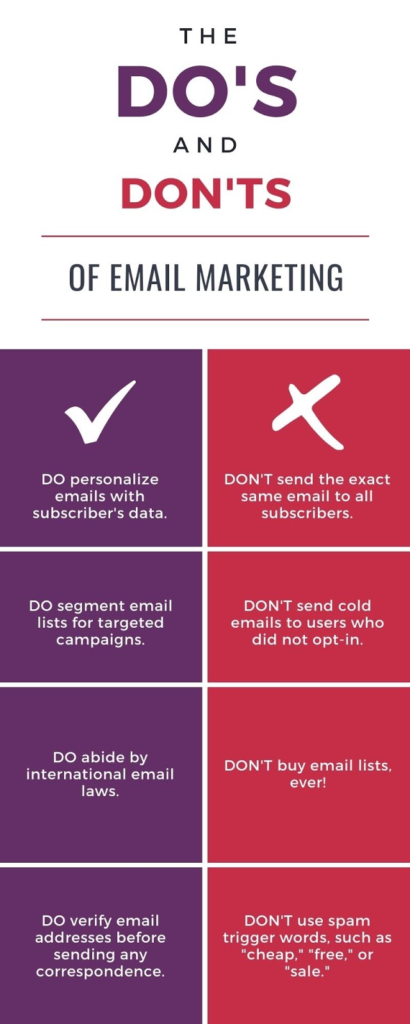
    Email marketing remains one of the most effective digital marketing channels for businesses to reach and engage with their audience. When done right, it can drive high conversion rates and ROI. In this blog, we will explore email marketing best practices in simple language and provide examples to help you create high-converting email campaigns.

    Understand Your Audience

    Before sending any emails, it’s crucial to understand your audience’s preferences, interests, and needs. Collect data and segment your email list to create targeted campaigns. For instance, if you’re a fashion retailer, segment your list based on demographics, purchase history, and preferences.

    Example: If you know that a segment of your subscribers frequently buys women’s shoes, send them personalized emails about new arrivals in the women’s shoe section.

    Craft Attention-Grabbing Subject Lines

    Your email’s subject line is the first thing recipients see, so it must be compelling. Create subject lines that pique curiosity, offer value, or address a pain point.

    Example: “Exclusive 24-Hour Sale: 50% Off Your Favorite Products!” This subject line creates a sense of urgency and highlights a significant discount.

     Email Marketing

    Personalization

    Personalization goes beyond addressing recipients by their first name. Tailor your content and recommendations based on the recipient’s preferences and behavior.

    Example: “Hi [Name], We Noticed You Love Running – Check Out Our Latest Running Shoe Collection!” This email is personalized based on the recipient’s interest in running.

    Create Engaging Content

    The body of your email should be visually appealing and easy to read. Use a responsive design and include compelling images and well-structured text.

    Example: Include high-quality images of your products with concise and persuasive descriptions. Add clear CTA (Call to Action) buttons like “Shop Now” or “Learn More.”

    Mobile Optimization

    Many people check emails on their mobile devices, so ensure your emails are mobile-responsive. Test how your email looks on different devices and email clients.

    Example: Use a single-column layout with larger fonts and buttons for better mobile readability and navigation.

    A/B Testing

    Experiment with different elements of your emails, such as subject lines, email copy, images, and CTAs. A/B testing helps you identify what resonates best with your audience.

    Example: Send two versions of the same email to a small sample of your list, with one variation (e.g., subject line). Analyze which version generates higher open rates or conversions, and use the winning version for your main campaign.

    Build Trust

    Include trust-building elements in your emails, such as clear contact information, an unsubscribe option, and privacy policy links. This fosters trust and complies with email marketing regulations.

    Example: At the bottom of your email, add a link to your privacy policy and a sentence like “You can unsubscribe at any time by clicking here.”

    Timing and Frequency

    Send your emails at the right time to increase open rates. Consider the time zone of your audience and the nature of your content. Also, avoid bombarding subscribers with too many emails.

    Example: If you run a restaurant, sending a lunch special email at 9 AM might be more effective than sending it late in the afternoon when people have already made lunch plans.

    Measure and Analyze

    Track key email marketing metrics such as open rates, click-through rates, conversion rates, and unsubscribe rates. Use these insights to refine your email campaigns continually.

    Example: If you notice a drop in open rates for a specific type of email, like newsletters, consider tweaking the subject line or content to make it more engaging.

    Automation

    Use email marketing automation to send triggered emails based on user actions, such as welcome emails, abandoned cart reminders, or post-purchase follow-ups.

    Example: If a customer abandons their shopping cart, send an automated email reminding them of the items in their cart and offering an incentive to complete the purchase.

    Conclusion

    Email marketing is a powerful tool for building relationships and driving conversions. By understanding your audience, crafting engaging content, and following these best practices, you can create high-converting email campaigns that deliver results. Remember that email marketing is an ongoing process of testing, learning, and optimizing, so stay open to adapting your strategies based on your audience’s response.

    Email Marketing
  • How Digital Marketing Help to Grow Coaching Institutes

    How Digital Marketing Help to Grow Coaching Institutes

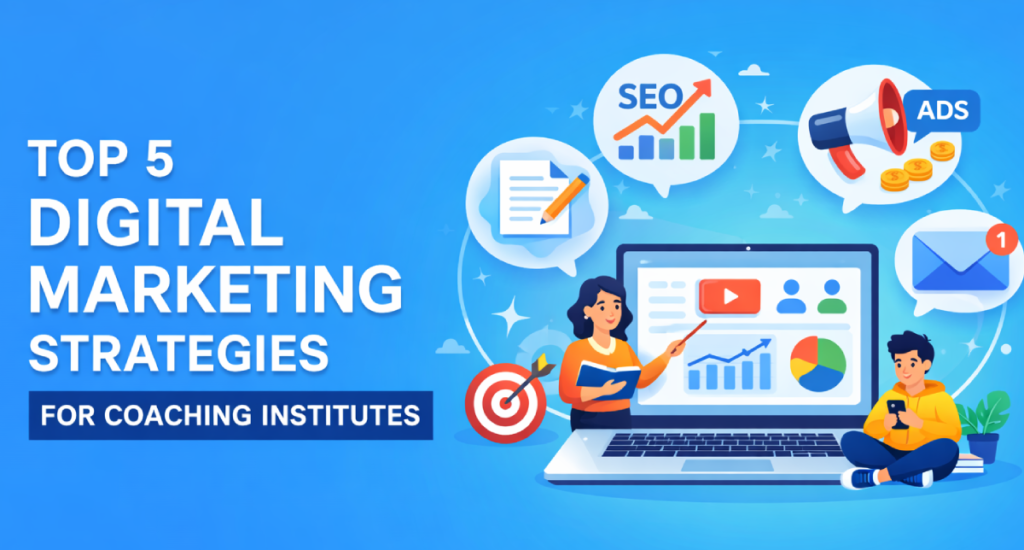
    In today’s digital age, the success of coaching institutes heavily relies on their ability to adapt and excel in the online realm. Traditional marketing strategies alone no longer suffice. Enter digital marketing – a powerful tool that can help coaching institutes not only survive but thrive in this competitive landscape. In this comprehensive guide, we’ll explore how digital marketing can be a game-changer for coaching institutes. We’ll break down complex concepts into simple language, supported by real-world examples to help you understand how to harness the full potential of digital marketing to grow your coaching business.

    Learn how Digital Marketing helps coaching institutes grow by increasing visibility, generating student leads, and boosting enrollments. Discover proven strategies like SEO, social media, and ads to scale your coaching business effectively.

    Chapter 1: Understanding Digital Marketing

    Before we dive into how digital marketing can boost coaching institutes, let’s start with the basics.

    What is Digital Marketing?

    Digital marketing encompasses all marketing efforts that use an electronic device or the internet. It’s the umbrella term for a wide range of online strategies and tactics aimed at connecting with potential students and nurturing them into paying customers.

    Why Digital Marketing?

    Digital marketing offers numerous advantages, including:

    1. Cost-Efficiency: Compared to traditional advertising channels like print and TV, digital marketing is often more cost-effective.
    2. Precise Targeting: It allows you to target specific demographics, ensuring your message reaches the right audience.
    3. Measurable Results: Digital marketing tools provide data on performance, enabling you to make data-driven decisions and optimize your campaigns.
    4. Global Reach: With the internet, you can reach students not only locally but also globally.
    Digital Marketing

    Chapter 2: Building a Strong Online Presence

    The foundation of a successful digital marketing strategy for coaching institutes is a strong online presence. Here’s how to get started:

    1. Website Development

    Your website is your virtual campus. Make sure it’s user-friendly, informative, and visually appealing. Showcase your coaching programs, faculty, success stories, and contact information.

    Example: Khan Academy

    Khan Academy’s website is a prime example of simplicity and effectiveness. It offers free educational content, making it an excellent resource for students and parents.

    2. Search Engine Optimization (SEO)

    SEO is the process of optimizing your website to rank higher in search engine results. Implementing relevant keywords and creating valuable content can help improve your website’s visibility.

    Example: Coursera

    Coursera’s SEO strategy has allowed it to dominate the online education space. A search for “online courses” will likely lead you to Coursera.

    3. Content Marketing

    Creating and sharing valuable content such as blogs, videos, and infographics can establish your coaching institute as an authority in your niche.

    Example: Byju’s

    Byju’s, an Indian ed-tech company, publishes engaging educational content on various platforms. Their YouTube channel features lessons, making learning fun and accessible.

    Chapter 3: Social Media Marketing

    Social media platforms are fertile ground for reaching and engaging with your target audience.

    1. Choose the Right Platforms

    Identify which social media platforms your target audience frequents. For instance, if you’re coaching for competitive exams, platforms like LinkedIn and YouTube might be more effective than Instagram or TikTok.

    Example: The Princeton Review

    The Princeton Review maintains an active presence on LinkedIn, offering valuable content to professionals looking to advance their careers.

    2. Content Strategy

    Create and share content that resonates with your audience. Share success stories, tips, and informative posts related to your niche.

    Example: Udacity

    Udacity’s Twitter account is a blend of informative posts about technology trends and stories of students who have achieved career success with their courses.

    3. Paid Advertising

    Consider investing in paid advertising on social media platforms. Targeted ads can reach a broader audience and drive traffic to your website or enrollment pages.

    Example: Khan Academy

    Khan Academy often runs Facebook ads, promoting their free educational resources to a wider audience.

    Digital Marketing

    Chapter 4: Email Marketing

    Email marketing remains one of the most effective ways to nurture leads and convert them into paying students.

    1. Building an Email List

    Collect email addresses through your website, social media, and events. Offer incentives like e-books or newsletters to encourage sign-ups.

    Example: Coursera

    Coursera offers a free trial and encourages users to sign up with their email to access a wide range of courses.

    2. Personalized Email Campaigns

    Segment your email list based on user behavior and preferences. Send personalized emails with relevant content and offers.

    Example: Duolingo

    Duolingo’s emails include tailored language learning exercises and reminders to keep users engaged.

    3. Automation

    Use email marketing automation tools to send timely emails, such as welcome messages, course recommendations, and follow-ups.

    Example: edX

    edX sends automated reminders to students about upcoming course deadlines and offers course recommendations based on their interests.

    Chapter 5: Pay-Per-Click (PPC) Advertising

    PPC advertising allows you to display ads on search engines and other platforms, paying only when a user clicks on your ad.

    1. Google Ads

    Google Ads is a powerful platform for coaching institutes. You can bid on keywords related to your courses to appear at the top of search results.

    Example: Kaplan

    Kaplan uses Google Ads to appear at the top of search results for keywords like “MCAT prep courses.”

    2. Facebook and Instagram Ads

    These platforms allow you to target users based on their interests, demographics, and behavior. Create visually appealing ads to capture attention.

    Example: Udemy

    Udemy uses Facebook and Instagram ads to promote its vast selection of online courses.

    3. Remarketing

    Remarketing involves showing ads to users who have visited your website but didn’t enroll. It’s a powerful way to re-engage potential students.

    Example: Udacity

    Udacity uses remarketing to remind users about the courses they viewed but didn’t enroll in, encouraging them to return and complete their enrollment.

    Chapter 6: Influencer Marketing

    Leverage influencers in your niche to promote your coaching institute.

    1. Identify Relevant Influencers

    Find influencers whose audience aligns with your target demographic. Reach out to them for collaborations.

    Example: MasterClass

    MasterClass partners with well-known experts and celebrities to teach various courses, attracting a broad audience.

    2. Collaborate on Content

    Work with influencers to create engaging and informative content that showcases your coaching institute’s strengths.

    Example: LinkedIn Learning*

    LinkedIn Learning collaborates with industry experts and influencers to create courses that cater to professionals seeking career growth.

    3. Measure Impact

    Track the performance of influencer marketing campaigns to ensure they deliver a positive return on investment (ROI).

    Example: LinkedIn Learning*

    LinkedIn Learning likely evaluates the success of influencer partnerships by monitoring course enrollments and engagement levels.

    Chapter 7: Analytics and Data-driven Decision Making

    One of the significant advantages of digital marketing is the wealth of data it provides.

    1. Google Analytics

    Use tools like Google Analytics to monitor website traffic, user behavior, and conversion rates.

    Example: Khan Academy

    Khan Academy likely uses Google Analytics to track user engagement with their educational content.

    2. Social Media Insights

    Platforms like Facebook and Instagram offer insights into the performance of your social media posts and ads.

    Example: Byju’s

    Byju’s can analyze social media insights to determine which types of content resonate best with their audience.

    3. A/B Testing

    Experiment with different ad copies

    , images, and landing pages to determine what works best.

    Example: Coursera

    Coursera might run A/B tests to optimize its course landing pages and increase conversion rates.

    Chapter 8: Online Reputation Management

    Your coaching institute’s online reputation can significantly impact its success.

    1. Reviews and Ratings

    Encourage satisfied students to leave positive reviews and ratings on platforms like Google, Yelp, and Trustpilot.

    Example: Kaplan

    Kaplan features positive student testimonials on its website, reinforcing its credibility.

    2. Addressing Negative Feedback

    Respond professionally to negative feedback and take steps to resolve issues to demonstrate your commitment to student satisfaction.

    Example: Udemy

    Udemy actively engages with users who leave negative feedback, offering solutions and seeking to improve their experience.

    3. Showcase Achievements

    Highlight your coaching institute’s achievements, such as high exam pass rates or student success stories.

    Example: The Princeton Review

    The Princeton Review proudly displays its high average score improvements and success stories on its website.

    Chapter 9: Mobile Marketing

    With the increasing use of smartphones, optimizing your marketing for mobile is crucial.

    1. Mobile-Friendly Website

    Ensure your website is responsive and offers a seamless experience on mobile devices.

    Example: Udacity

    Udacity’s website is mobile-friendly, providing an excellent user experience on smartphones.

    2. Mobile Apps

    Consider developing a mobile app for your coaching institute. Apps can offer additional learning resources and engagement opportunities.

    Example: Duolingo*

    Duolingo’s mobile app provides convenient language learning on the go, attracting millions of users worldwide.

    3. SMS Marketing

    Send targeted SMS messages to students about course updates, events, and special offers.

    Example: Coursera

    Coursera occasionally sends SMS notifications to users about new courses and discounts.

    Chapter 10: Staying Updated

    The digital marketing landscape is constantly evolving. It’s essential to stay informed about the latest trends and technologies.

    1. Continuous Learning

    Invest in the ongoing education of your marketing team or consider outsourcing to agencies with expertise in digital marketing.

    Example: HubSpot Academy*

    HubSpot offers free courses on digital marketing, making it easy for marketing professionals to stay updated.

    2. Networking and Conferences

    Attend industry conferences and connect with experts to gain insights into emerging trends.

    Example: MozCon*

    MozCon is a well-known conference in the digital marketing industry, featuring presentations from leading experts.

    3. Monitor Competitors

    Keep an eye on your competitors’ digital marketing strategies and adapt as needed.

    Example: Udemy*

    Udemy likely monitors competitors’ course offerings and pricing to stay competitive.

    Conclusion

    In today’s digital age, digital marketing is not an option but a necessity for coaching institutes looking to grow and succeed. By building a strong online presence, leveraging social media, harnessing the power of email marketing, and utilizing paid advertising, analytics, influencer marketing, and more, coaching institutes can connect with their target audience and thrive in the competitive education industry.

    Remember, digital marketing is not a one-size-fits-all solution. Each coaching institute is unique, and your digital marketing strategy should reflect your institution’s values, strengths, and goals. With continuous learning and adaptation, you can harness the full potential of digital marketing to drive growth and success for your coaching institute in the digital age,help digital marketing to grow .

    Thank You!

    Read More –

    Top 10 niche to create youtube channels and earn passive income

    Why SEO is important for website ?

    Digital Marketing Services in India