



In a world where competition is increasing every day, businesses cannot rely on guesswork. Success in marketing requires clarity, strategy, and measurement—and all three begin with one powerful step: setting the right marketing goals.
But simply writing goals is not enough. You must know how to set them, how to track them, and how to optimize them continuously. This guide will take you through every step so you can achieve predictable growth, better ROI, and a stronger brand presence.
What Are Marketing Goals?
Marketing goals are specific, measurable objectives that define what a brand wants to achieve using its marketing efforts.
Examples include:
- Increase website traffic
- Generate more qualified leads
- Improve brand awareness
- Grow social media engagement
- Boost e-commerce sales
- Increase ROI on ad campaigns
Without clear goals, marketing becomes directionless. With goals, every action becomes purposeful.


Why Setting Marketing Goals Is Important
1. Clear Direction – Marketing goals help your team understand what to achieve and why it matters.
2. Better Budget Allocation – You spend more smartly because you know which activity produces measurable results.
3. Improved Team Productivity– Each team member knows their responsibility and success benchmarks.
4. Accurate Performance Measurement – Tracking goals ensures you can calculate ROI for every strategy.
5. Long-Term Business Growth – Clear marketing goals align with business goals, ensuring consistent scaling.
Step-by-Step Guide: How to Set Your Marketing Goals
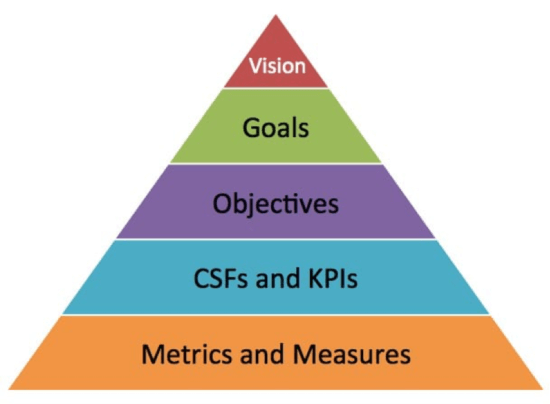
1. Understand Your Business Objectives
Your marketing goals should match the bigger business vision.
For example:
- If your business goal → Increase revenue
Then your marketing goal → Generate 30% more leads - If your business goal → Build brand authority
Then your marketing goal → Publish 4 blogs/month + grow search rankings
Marketing is not separate; it is the engine of business growth.

2. Use the SMART Goal Framework
Every marketing goal must be SMART:
| SMART Element | Meaning | Example |
|---|---|---|
| S – Specific | Clear & detailed | Increase website traffic |
| M – Measurable | You can track it | 20% increase in 60 days |
| A – Achievable | Realistic & practical | Possible with SEO + ads |
| R – Relevant | Matches business objective | More traffic → more sales |
| T – Time-bound | Has a deadline | 60-day goal |
Bad Goal: “Get more leads.”
SMART Goal: “Generate 150 qualified leads in 30 days through Google Ads and landing pages.”
3. Analyze Your Current Performance
You cannot set good goals until you know where you stand.
Use tools like:
- Google Analytics
- GA4
- Google Search Console
- SEMrush / Ahrefs
- Meta & Google Ads
- CRM reports
Check metrics such as:
- Website traffic
- Conversion rate
- Leads generated
- CAC (Customer Acquisition Cost)
- ROAS (Return on Ad Spend)
This baseline helps you set realistic targets.
4. Break Down Goals Into Actionable Tasks
Major goals require smaller steps.
Example Goal: Generate 1,000 leads in 3 months
Break it into:
- Run Google Ads campaigns
- Create 3 high-converting landing pages
- Improve website speed
- Add lead magnets (ebooks, checklists)
- Run remarketing ads
- Improve CTAs
This structure ensures your team knows “how” the goal will be achieved.
5. Assign Responsibilities
A goal becomes achievable only when someone is accountable.
Example:
- SEO Manager → Improve rankings
- Ads Specialist → Optimize campaigns
- Content Writer → Publish blogs
- Social Media Manager → Improve engagement
- CRM team → Nurture leads
Accountability drives consistent progress.

How to Track Your Marketing Goals
1. Defining KPIs (Key Performance Indicators)
Every goal must have KPIs to measure success.
Example KPIs:
For Lead Generation:
- Leads per month
- Cost per lead (CPL)
- Conversion rate
Website Traffic:
- Sessions
- Organic traffic growth
- Bounce rate
Branding:
- Impressions
- Reach
- Share of voice
For E-Commerce:
- Sales
- ROAS
- Average order value
Tracking KPIs helps you understand what’s working and what needs fixing.
2. Use Marketing Analytics Tools
Your tracking is incomplete without strong tools.
Here are the most used tools for measuring marketing goals:
- GA4 (Google Analytics 4)
- Google Search Console
- Google Ads Dashboard
- Meta Ads Manager
- HubSpot / Zoho CRM
- Hotjar (Heatmaps)
- Google Looker Studio (Dashboards)
Integrate everything with Google Tag Manager for clean tracking.
3. Set Up Dashboards for Real-Time Tracking
Use Google Looker Studio to build dashboards showing:
- Traffic sources
- Leads
- Sales
- ROAS
- Top-performing campaigns
- Conversions by channel
This helps you monitor performance daily without manually pulling reports.
4. Conduct Weekly & Monthly Reviews
Weekly Meetings
- Check trends
- Fix campaigns
- Add negative keywords
- Improve landing pages
Monthly Review
- Study growth
- Analyze ROI
- Compare goals vs performance
- Adjust strategy
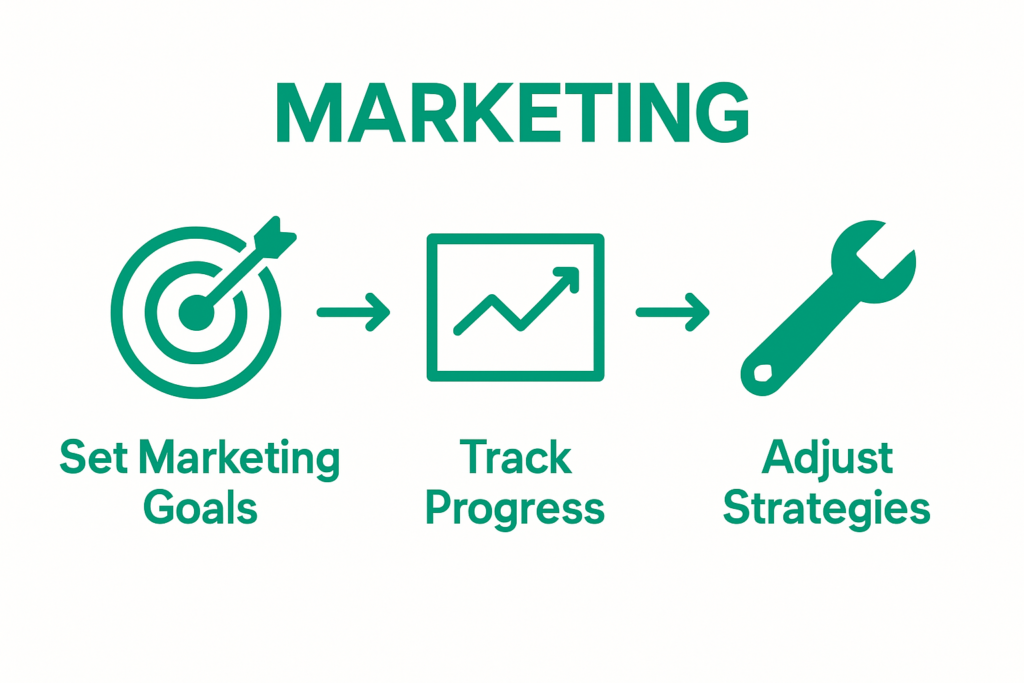
Marketing is not “set and forget.”
It is review → optimize → scale.
5. Adjust Goals Based on Data
If you see high performance, scale budgets.
If CPL or CAC is rising, refine targeting or landing pages.
Tracking allows you to make data-driven decisions, not emotional decisions.
Examples of Good Marketing Goals
1. SEO Marketing Goal – “Increase organic traffic by 40% in 6 months by ranking 15 new keywords in the top 10.”
2. Google Ads Goal – “Achieve ₹250 CPL and 5X ROAS through search + PMax campaigns.”
3. Social Media Goal – “Grow Instagram followers from 5,000 to 10,000 in 90 days with 20 reels and weekly engagement boosts.”
4. Content Marketing Goal – “Publish 12 long-form blogs per month and increase blog traffic by 50%.”
5. Lead Generation Goal – “Generate 500 leads per month using lead forms, landing pages, and remarketing.”
Common Mistakes When Setting Marketing Goals
- Goals without deadlines
- Goals without KPIs
- Setting unrealistic targets
- Not tracking the correct metrics
- Lack of strategy behind goals
- Not aligning goals with business needs
- Not reviewing performance regularly
Avoid these mistakes to ensure measurable growth.
Conclusion
Setting and tracking marketing goals is not optional—it is essential for predictable and scalable business growth. By understanding your business priorities, using SMART goals, assigning responsibilities, and tracking performance through analytics tools, you can transform your marketing from guesswork into a powerful growth engine.
Whether you are a small business, a digital marketing agency, or a large organization, this goal-setting framework will help you:
- Improve ROI
- Reduce wasteful spending
- Increase leads & sales
- Strengthen brand authority
FAQs
1. Why are marketing goals important?
They give direction, improve focus, and help measure success and ROI.
2. What is a SMART marketing goal?
A goal that is specific, measurable, achievable, relevant, and time-bound.
3. How often should marketing goals be tracked?
Weekly for optimization and monthly for performance review.
4. Which tools are best for tracking marketing goals?
GA4, Google Ads, Meta Ads Manager, Search Console, Looker Studio, and CRM tools.
5. What should businesses avoid while setting goals?
Unrealistic targets, no KPIs, and not aligning goals with business outcomes.