Content marketing helps businesses attract and engage their audience through valuable and relevant content. Learn strategies for creating blogs, videos, and social media content that build trust, increase traffic, and support long-term business growth.
In today’s competitive digital landscape, businesses are constantly searching for effective ways to attract customers, build trust, and increase revenue. Having a website or social media presence alone is no longer enough. What truly drives growth is meaningful, consistent, and strategic content.
This is where a professional Content Marketing Agency in Indore becomes essential.
If you are looking for a reliable partner to help you grow online, Code With Kamlesh Digital Marketing Agency is a strong choice. Founded by kamlesh singad, a recognized Digital Marketer in Indore, the agency focuses on helping businesses achieve measurable results through powerful content strategies.
Understanding Content Marketing
Content marketing is a strategic approach focused on creating and distributing valuable, relevant, and consistent content to attract and engage a target audience.
The purpose is not just promotion, but building relationships with potential customers by providing useful information.
Common types of content include:
Blog articles
Website pages
Social media posts
Videos and reels
Email newsletters
Case studies
Effective content marketing ensures that your audience finds your business when they are searching for solutions.
Hiring an agency allows you to focus on your core business while experts handle your marketing.
About Code With Kamlesh Digital Marketing Agency
Code With Kamlesh Digital Marketing Agency is a growing digital marketing firm based in Indore. The agency is known for its practical approach and commitment to delivering real results.
Founded by kamlesh singad, the agency combines creativity with data-driven strategies to help businesses grow online.
As an experienced Digital Marketer in Indore, he has worked with various businesses and understands what works in the local and digital market.
Services Offered
Content Strategy Development
The agency creates customized content plans aligned with your business goals and target audience.
Blog Writing
High-quality, SEO-optimized blog posts designed to increase traffic and improve search rankings.
Website Content Creation
Professional website content that enhances user experience and drives conversions.
Social Media Content
Engaging content tailored for platforms like Instagram, Facebook, and LinkedIn.
SEO Content Optimization
Improving existing content to make it more search engine friendly.
Lead Generation Content
Content designed specifically to convert visitors into leads and customers.
Content marketing works as a step-by-step process:
A user searches for information online
Your content appears in search results
The user visits your website
They find useful and relevant information
Trust is built
The user contacts your business
This process turns visitors into customers without aggressive selling.
What Makes Code With Kamlesh Different
There are many agencies offering similar services, but Code With Kamlesh Digital Marketing Agency stands out for several reasons:
Deep Understanding of Local Market
The agency understands the behavior and needs of customers in Indore.
Focus on Results
The goal is not just content creation but generating traffic, leads, and conversions.
Customized Strategies
Every business receives a tailored approach instead of a one-size-fits-all solution.
Affordable Solutions
Services are designed to be accessible for startups, small businesses, and growing brands.
Strong SEO Knowledge
Content is created with proper keyword targeting and optimization techniques.
The Role of kamlesh singad in Business Success
kamlesh singad plays a key role in guiding businesses toward digital growth. As a Digital Marketer in Indore, his approach focuses on:
Understanding business goals clearly
Creating practical marketing strategies
Delivering measurable outcomes
Continuously improving performance
His experience and insights help businesses achieve sustainable results.
Content Marketing Strategy Used by the Agency
A successful content strategy includes several important steps:
Keyword Research
Identifying the right keywords that potential customers are searching for.
Audience Analysis
Understanding the needs, behavior, and preferences of your target audience.
Content Planning
Creating a structured content calendar for consistent publishing.
Content Creation
Producing high-quality content that is informative and engaging.
SEO Optimization
Ensuring proper keyword placement, formatting, and readability.
Performance Tracking
Analyzing data to measure success and improve future strategies.
Businesses That Can Benefit from Content Marketing
Content marketing is effective across various industries, including:
Local service providers
E-commerce businesses
Startups
Real estate companies
Healthcare providers
Educational institutions
Consultants and freelancers
Any business that wants to grow online can benefit from a professional Content Marketing Agency in Indore.
Common Challenges Businesses Face
Many businesses struggle with content marketing due to:
Lack of clear strategy
Inconsistent posting
Poor content quality
Ignoring SEO practices
Focusing only on promotion instead of value
Working with an experienced agency helps overcome these challenges effectively.
How to Get Started
Getting started with Code With Kamlesh Digital Marketing Agency involves a straightforward process:
Initial consultation to understand your business
Strategy development based on your goals
Content planning and creation
Publishing and promotion
Regular performance monitoring
This structured approach ensures steady and measurable growth.
Expected Results
With a well-executed content marketing strategy, businesses can achieve:
Increased website traffic
Higher search engine rankings
More leads and inquiries
Improved brand awareness
Better customer engagement
Higher conversion rates
Final Thought
Choosing the right Content Marketing Agency in Indore can directly impact how your business grows online. Content is not just about writing articles or posting on social media; it is about delivering value, building trust, and guiding potential customers toward your services.
Code With Kamlesh Digital Marketing Agency, led by kamlesh singad, focuses on creating strategies that bring real and measurable results. With the right approach, consistency, and expertise of a skilled Digital Marketer in Indore, your business can achieve strong visibility, steady traffic, and higher conversions.
Investing in content marketing today is a step toward long-term success and sustainable business growth.
FAQs
1. What does a Content Marketing Agency in Indore do?
A Content Marketing Agency in Indore helps businesses create and share valuable content such as blogs, website content, and social media posts to attract customers, improve search rankings, and generate leads.
2. Why should I choose Code With Kamlesh Digital Marketing Agency?
Code With Kamlesh Digital Marketing Agency, led by kamlesh singad, focuses on result-driven strategies, SEO-optimized content, and customized plans that help businesses grow online effectively.
3. How does content marketing help my business grow?
Content marketing increases your website traffic, builds trust with your audience, improves your Google rankings, and converts visitors into paying customers over time.
4. How long does it take to see results from content marketing?
Content marketing is a long-term strategy. You may start seeing initial results within 2 to 3 months, but strong and consistent growth usually happens over 4 to 6 months.
5. Can small businesses benefit from content marketing services?
Yes, small businesses can benefit greatly. With the right strategy from a Digital Marketer in Indore, even small businesses can compete with larger brands and attract targeted customers.
Content marketing is a powerful tool for brands to connect with their audience, build trust, and drive engagement. While it may seem like creating compelling content is a straightforward task, it takes creativity, strategy, and consistency to succeed. In this blog, we’ll explore some real-life examples of brands that have aced content marketing and examine the strategies behind their success.
Red Bull: Energizing the Extreme
Red Bull, the energy drink company, has consistently demonstrated the art of content marketing. They have taken their brand beyond just beverages and have created a lifestyle around extreme sports and adventure. One of their most famous content marketing initiatives is the “Red Bull Stratos” project, where Felix Baumgartner jumped from the edge of space. The event was livestreamed, garnering millions of views and creating buzz worldwide.
What they did right:
They tapped into their target audience’s passion for extreme sports and adventure.
They leveraged the power of video content, creating a captivating and shareable experience.
They used social media platforms to amplify their reach, turning the event into a global sensation.
Airbnb: Stories of Wanderlust
Airbnb, a platform for travelers to book unique accommodations, is renowned for its content marketing strategy. They launched “Airbnb Magazine,” a print publication that features inspiring travel stories and stunning photography. The magazine isn’t just about Airbnb listings but aims to inspire wanderlust and a love for travel.
What they did right:
They understood the emotional connection people have with travel and used it to create engaging content.
They embraced a medium (print) that stands out in the digital age, providing a tangible and immersive experience.
They incorporated user-generated content, making travelers part of the storytelling process.
GoPro: Turning Customers into Heroes
GoPro, the action camera company, has mastered the art of turning its customers into brand advocates. They encourage users to share their GoPro-captured adventures and curate these videos on their YouTube channel. By doing so, they’ve created a community of loyal fans who are not just consumers but active content creators.
What they did right:
They tapped into user-generated content, showcasing the incredible capabilities of their product through real-life experiences.
They fostered a sense of belonging among their customers, creating a GoPro tribe.
They consistently engaged with their audience, running contests and challenges to encourage participation.
Dove: Real Beauty Campaign
Dove’s “Real Beauty” campaign has been a game-changer in the world of content marketing. By challenging conventional beauty standards and promoting self-acceptance, Dove created a meaningful and emotional connection with its audience. The campaign included videos, billboards, and social media posts featuring real women, not models.
What they did right:
They addressed a societal issue and advocated for positive change, aligning their brand with a larger purpose.
They used real people instead of models, making their content relatable and authentic.
They encouraged conversations around self-esteem and beauty, sparking engagement and sharing.
Blendtec: Will It Blend?
Blendtec, a blender manufacturer, took a quirky and entertaining approach to content marketing with their “Will It Blend?” series on YouTube. In these videos, they blend unusual items like iPhones and golf balls to demonstrate the power of their blenders. The series went viral, attracting millions of views and boosting brand awareness.
What they did right:
They used humor and shock value to capture viewers’ attention.
They showcased their product’s unique selling point in a fun and memorable way.
They encouraged audience participation by asking, “Will It Blend?” and sparking curiosity.
Conclusion
These content marketing success stories showcase that creativity, authenticity, and a deep understanding of your audience are key to nailing content marketing. Whether it’s Red Bull’s thrilling events, Airbnb’s wanderlust-inducing stories, GoPro’s user-generated content community, Dove’s empowering message, or Blendtec’s quirky experiments, these brands have all left a mark by creating content that resonates with their audience. So, take a page from their playbook, and craft content that not only promotes your brand but also creates a meaningful connection with your customers.
In the digital age, video content has become one of the most powerful mediums for communication and information sharing. YouTube, as the world’s second-largest search engine, offers content creators an enormous platform to connect with audiences and share their expertise. However, the key to standing out in this crowded space is conducting thorough topic research for your YouTube videos. This comprehensive guide will walk you through the process of searching for topics and conducting content research that will help you create compelling and engaging videos.
In this blog, learn how to find YouTube video ideas using keyword research, trending topics, and smart content strategies to grow your channel and increase views faster.
Why Is Topic Research Important?
Before delving into the intricacies of conducting topic research for YouTube videos, it’s crucial to understand why it matters in the first place. Effective topic research sets the foundation for your content creation strategy by helping you:
Identify Audience Interests: Research helps you understand what your target audience is searching for, ensuring your videos resonate with their interests and needs.
Enhance SEO and Discoverability: By focusing on popular and relevant topics, you can optimize your videos for search engines, increasing the likelihood of them appearing in search results.
Differentiate Yourself: Research allows you to find gaps in existing content, enabling you to create unique videos that stand out in a saturated market.
Build Authority: Providing well-researched and valuable information helps you establish yourself as an expert in your niche, fostering trust and credibility among your audience.
Step-by-Step Guide to Effective Topic Research:
1. Define Your Niche and Audience:
Before you start searching for topics, it’s essential to define your niche or the area you want to create content about. This could be anything from technology and beauty to fitness and cooking. Once you have a niche, narrow down your target audience. Who are they? What are their interests, problems, and preferences? Understanding your audience will guide your topic selection.
2. Brainstorm Broad Topics:
Begin by brainstorming general topics related to your niche. These are the overarching themes that your videos will revolve around. For instance, if your niche is fitness, broad topics could include “Strength Training,” “Nutrition Tips,” “Cardio Workouts,” etc.
3. Keyword Research:
Keywords are the foundation of YouTube SEO and play a vital role in topic research. Use keyword research tools like Google Keyword Planner, Ubersuggest, or TubeBuddy to identify high-volume keywords related to your broad topics. Look for keywords with a decent search volume and low competition.
4. Analyze Competitor Content:
Study successful YouTube channels in your niche. What topics are they covering? How are their videos performing? This doesn’t mean you should copy their content, but analyzing their approach can give you insights into what works and what gaps you can fill.
5. Utilize YouTube’s Search Suggestions:
YouTube’s search bar provides valuable insights into what users are actively searching for. Start typing your broad topics and see what auto-suggestions come up. These suggestions are often based on popular search queries.
6. Explore Related Videos and Tags:
When you watch a video on YouTube, take a look at the right-hand side of the screen. You’ll find a column titled “Up Next” with related videos. This section can provide you with additional topic ideas. Also, check the video’s tags (if visible) to get an idea of the keywords associated with that content.
7. Reddit and Quora:
Platforms like Reddit and Quora are treasure troves of discussions and questions related to various niches. Search for your broad topics and see what questions people are asking. These questions can serve as excellent starting points for your videos.
8. Social Media Trends:
Monitor social media platforms for trends, especially on platforms like Twitter, Instagram, and TikTok. What topics are gaining traction? How can you adapt these trends to your niche?
9. Google Trends:
Google Trends can provide insights into the popularity of specific search terms over time. This can help you gauge whether a topic is consistently in demand or just a passing trend.
10. Content Gap Analysis:
Identify gaps in the existing content landscape. Are there subtopics within your niche that aren’t adequately covered? Addressing these gaps can help you establish yourself as a go-to resource for specific information.
11. Survey Your Audience:
If you already have an audience, consider conducting surveys to understand their preferences and pain points directly. This can provide you with invaluable insights into the type of content they’re looking for.
Organizing and Refining Your Ideas:
After gathering a pool of potential topics, it’s time to organize and refine your ideas:
1. Categorize Topics:
Group similar topics together under broader categories. This helps you create a content calendar that covers a range of subjects within your niche.
2. Check Viability:
Not all topics may be suitable for video content. Ensure your chosen topics are visually engaging and can be effectively communicated through video.
3. Search Volume and Competition:
Using your keyword research tool, assess the search volume and competition for each topic. Strike a balance between high search volume and manageable competition.
4. Long-Tail Keywords:
Consider incorporating long-tail keywords into your topics. These are more specific and can help you target a niche audience.
Conclusion:
Effective topic research is the cornerstone of successful YouTube content creation. By understanding your niche, identifying audience interests, and conducting thorough research, you can create videos that resonate with viewers, enhance your discoverability, and establish your authority in your chosen field. Remember, the digital landscape is dynamic, so continuous research and adaptation are key to staying relevant and engaging on YouTube. So, roll up your sleeves, dive into research, and get ready to craft compelling videos that captivate and educate your audience.
In this blog, learn how to create video content with a step-by-step process from scripting to editing. Discover proven strategies to produce engaging videos and grow your audience faster.
Video is like a magic tool that helps us tell stories and share information. Imagine you want to show your friends how you baked a delicious cake. Instead of just describing it, you can make a video where they see every step: mixing the ingredients, putting it in the oven, and the cake rising. They can even see your excited expression when you take it out. That’s the power of video – it lets you show things as if your friends were right there with you. It’s like having a window into your world.
Benefits of Creating High-Quality Videos: Making videos that look and sound great can have some really cool advantages. Think about a funny cat video you saw online. If the video was blurry and you couldn’t hear the cat’s cute meow, it wouldn’t be as fun, right? High-quality videos make people more interested because they can see and hear everything clearly. If you’re trying to teach something or show your awesome dance moves, a high-quality video can help people understand and enjoy it better. Just like how a clear picture on your phone looks way better than a blurry one, making high-quality videos makes your stories and ideas shine.
How to Create Video Content
Defining Your Video’s Purpose and Goals: This is like figuring out why you want to make a video in the first place. Imagine you’re making a video about your favorite recipe. Is your goal to show people how to cook it step by step? Or maybe you want to make them excited about trying it out themselves? Knowing your purpose helps you focus on what your video should achieve.
Identifying Your Target Audience: Think about who you want to watch your video. Let’s say you’re making a video about skateboarding tricks. Are you aiming your video at beginners who are just learning, or do you want to impress experienced skateboarders? Knowing your audience helps you make a video that they will enjoy and find helpful.
Brainstorming Creative Ideas: This is like coming up with fun and interesting ways to make your video special. Imagine you’re making a video about a travel destination. Instead of just showing the famous landmarks, you could brainstorm creative ideas like interviewing locals to get their unique perspective or using time-lapse shots to capture the changing scenery.
So, when you’re thinking about making a video, start by figuring out why you’re making it, who you want to watch it, and come up with cool and creative ways to make it awesome and memorable.
Scriptwriting and Storyboarding
1. Crafting a Compelling Narrative: Imagine you’re telling a story to your friends. You want to make it interesting so that they stay engaged. In video content creation, crafting a compelling narrative means creating a story that grabs the viewer’s attention and keeps them interested. For example, if you’re making a video about cooking, instead of just showing how to make a sandwich, you could start with a problem like a character being hungry and wanting something delicious. Then, as the video goes on, you show how the character solves this problem by making an amazing sandwich. This makes the video more exciting to watch.
2. Structuring Your Script: Think of the script like a recipe you’re following to cook a meal. A good script helps you organize what you’re going to say or show in your video. It’s like having a plan so you don’t forget important parts. Let’s say you’re making a video about hiking. Your script could start with an introduction where you explain why hiking is fun and good for you. Then, you might have different sections, like talking about the best hiking trails, what gear to bring, and safety tips. Finally, you’d wrap up your video by summarizing why people should go hiking. Structuring your script this way helps you deliver information in a clear and organized manner.
3. Creating Visual Storyboards: Imagine you’re drawing a comic book that shows what happens in your video. A visual storyboard is a series of simple drawings or pictures that represent each scene or shot in your video. It’s like a visual plan that helps you see how your video will look before you start filming. For instance, if you’re making a video about a funny cat adventure, your storyboard might have a drawing of the cat getting curious, another drawing of the cat chasing a butterfly, and a final drawing of the cat resting after its adventure. This helps you know how to film each part to tell your story effectively.
So, to sum it up: Crafting a compelling narrative is about making your video interesting like a good story. Structuring your script is like making a plan for what you’re going to say or show. Creating visual storyboards is like drawing a comic book version of your video to help you visualize how it will look.
Pre-Production Planning
Pre-Production Planning
Think of pre-production planning like getting ready for a big party. Before the party, you need to plan everything out to make sure it goes smoothly and everyone has a good time.
Developing a Production Schedule
Imagine you’re making a movie. You wouldn’t just start filming randomly, right? You’d create a plan that says when and where you’ll film each scene. This plan is like a schedule. It helps everyone know what to do and when. Just like you’d decide that you’ll have games at the party from 3 PM to 4 PM, and then food from 4:30 PM to 5:30 PM.
Securing Locations, Props, and Talent
Picture yourself making a video about a detective solving a mystery. You need a place where the detective’s office looks real, right? That’s the location. You also need things like a magnifying glass and a detective hat. These are props. And who’s going to act as the detective? That’s the talent. So, before your movie, you make sure you have the right place, things, and people.
Assembling Your Production Team
Think of making a video like building a sandcastle. You can’t do it all alone. You need help. Your production team is like your sandcastle-building crew. Just like some people dig and others shape the sand, different people in your team have different jobs. Someone might be good at filming, someone else at making things look nice, and another person might be good at making sure the actors say their lines right. Each person does their part to make the video awesome, just like each person at the sandcastle builds a part to make it amazing.
Choosing the Right Equipment
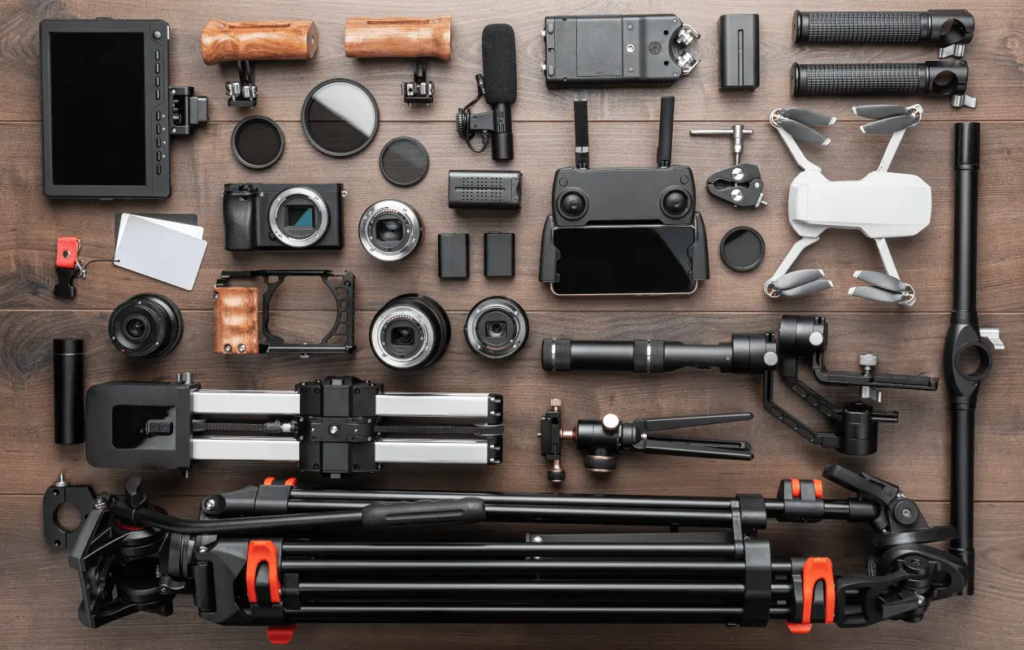
1. Cameras, Lenses, and Accessories: Imagine you’re making a video just like a movie director. The camera is like your eyes – it captures what you see. But there are different types of cameras, like how there are different phones with various cameras. Some cameras are better for close-ups, and some are better for capturing a big scene. It’s like picking the right phone camera for a selfie or a beautiful landscape.
Just like glasses help you see better, lenses help cameras focus on different things. For instance, if you’re filming a bird far away, you might need a lens that acts like binoculars for your camera. Accessories are like the cool extras you can attach to your camera to make it work even better, such as stabilizers that prevent shaky shots, or fancy screens that show you exactly what the camera is seeing.
2. Audio Recording and Microphone Selection: Think about recording sound like recording a song on your phone. If you’re at a concert and you’re too far from the stage, the music might sound blurry and distant. But if you’re closer, you can hear the details better. Microphones are like your ears for the camera. They capture sound, and there are different types for different situations.
For example, if you’re recording someone talking, you might use a microphone that clips to their clothes. This makes their voice clear even if there’s background noise. Just like picking the right tool for a job, you need to pick the right microphone so that the voices and sounds in your video are clear and not muffled.
3. Lighting and Setup for Professional Shots: Have you ever noticed how a room looks different when it’s bright sunlight versus when it’s a cozy lamp light? Lighting in videos works in a similar way. Good lighting makes things look clearer and more interesting, just like good lighting in a photo makes your face look nice.
Imagine you’re taking a picture of your friend. If the light is behind them, they might look like a dark shadow. But if the light is shining on their face, you can see their features clearly. For videos, you need to set up lights in a way that makes everything look just right, whether it’s an interview, a scene at night, or a fun adventure.
In short, choosing the right equipment for making videos is like picking the right tools for a craft project. You need the right camera and lens to capture the scenes, the right microphone to catch the sounds, and the right lighting to make everything look great, just like choosing the right colors for your craft project to make it look awesome.
Filming Techniques and Principles
1. Framing and Composition: Imagine you’re taking a picture with your phone. When you decide what to include in the picture and where to position it, you’re thinking about framing and composition. In videos, it’s similar. It’s about arranging everything you see in the video in a way that looks pleasing and helps tell the story.
For example, think of a cooking video where the chef is showing how to make a delicious cake. They want to make sure the camera captures not just their face but also their hands mixing the ingredients and the cake in the oven. This way, you can see everything clearly and understand what’s happening.
2. Camera Movement: Panning, Tracking, and Dolly Shots: Have you ever watched a video where the camera seems to move smoothly from side to side, like showing a beautiful view of a city skyline? That’s called panning. It’s like when you turn your head to look around.
Tracking is when the camera follows something that’s moving, like a dog running through a park. It’s like the camera is “tracking” the action.
A dolly shot involves moving the entire camera closer or farther away from the subject while keeping the subject in focus. Imagine you’re watching a video about a skateboarder doing tricks. As the skateboarder rides towards you, the camera starts far away and smoothly moves in to show more detail.
3. Capturing Dynamic Shots: Close-ups, Wide Shots, and Angles: Close-ups are like looking at something really close, so you can see all the small details. Imagine you’re filming a video about a butterfly. A close-up shot would show the butterfly’s wings and its colors up close.
Wide shots, on the other hand, show a lot of what’s happening around the main subject. Think of a concert video where you can see the entire stage and the excited crowd.
Angles are about where the camera is placed in relation to the subject. Imagine you’re filming a video of a basketball game. If you place the camera low to the ground, it’ll make the players look big and powerful. But if you film from above, the players might look smaller and the court might seem larger.
These filming techniques and principles help make videos more interesting to watch and help tell stories in a visually appealing way.
On-Set Best Practices
On-Set Best Practices
When you’re making a video, the “on-set” is the place where you’re actually filming. It’s like the stage where a play happens. On-set best practices are like the rules and good habits that everyone follows to make sure the video turns out great.
Directing Your Talent and Crew
Imagine you’re making a movie, and you have actors who play different characters. The director is like the boss who tells the actors what to do and how to act. They help the actors understand their roles and emotions. For example, if a scene is about a happy family dinner, the director might tell the actors to smile and talk like a real family.
Monitoring Audio and Video Quality
Think about a video you’ve watched where the sound was too quiet, and you had to turn up the volume, or the picture was blurry. Monitoring audio and video quality means keeping an eye on these things while filming. It’s like checking that the volume is just right and the picture is clear. If it’s not, the crew makes adjustments to fix it.
Problem-Solving on the Set
Sometimes things don’t go as planned while filming. It’s a bit like a puzzle. Imagine you’re shooting a scene outdoors, but suddenly it starts raining. Problem-solving is like finding a solution to this puzzle. Maybe the crew quickly sets up umbrellas to keep the actors and equipment dry, or they change the scene to make it work with the rain.
In short, “on-set best practices” are about following the right ways to film, “directing” is guiding actors to act well, “monitoring audio and video quality” is checking that everything sounds and looks good, and “problem-solving” is finding creative solutions when unexpected things happen.
Capturing Quality Audio
1. Selecting the Right Microphone for Each Situation: Think of microphones as tools that capture sound, just like a camera captures images. Imagine you’re recording an interview. If you use a microphone built into a smartphone, it might pick up a lot of background noise like people talking nearby or cars passing by. But if you use a microphone that’s designed to capture just the voice of the person speaking, you’ll get clearer and better quality sound. It’s like using a magnifying glass to see tiny details – the right microphone helps you hear the important stuff clearly.
2. Recording Clear Voiceovers and Sound Effects: Let’s say you’re making a video about a superhero flying through the sky. You might need a voiceover to describe what’s happening. If you record this with a lot of echo in a big empty room, it might sound like the voice is bouncing around. But if you use a microphone close to your mouth, the voice will be clear and easy to understand, like talking to someone right next to you. Similar to how you choose a quiet spot to talk on the phone so the person on the other end can hear you clearly.
3. Audio Mixing and Cleaning: Imagine you’re at a party with music playing in the background, and you’re trying to have a conversation with a friend. Sometimes the music is too loud, and you can’t hear your friend properly. In video-making, we face a similar challenge. After recording different sounds like voices, music, and sound effects, we need to adjust their volumes so they all sound balanced and nothing is too overpowering. Also, sometimes there might be a hissing sound or a sudden noise in the recording, like a sneeze. Just like you clean a dirty window to see clearly, we “clean” the audio by removing these unwanted sounds, making the final sound much better and easier to listen to.
Remember, capturing good audio is like having a clear phone call – you want to hear everything without any disturbances or distractions. The right microphone, careful recording, and a bit of editing help us achieve that clear and enjoyable audio experience in videos.
Editing Workflow
Editing Workflow:
Think of editing as putting together a puzzle. You have all these pieces (video clips) that you need to arrange in a way that tells a clear and engaging story. Editing is like the glue that holds everything together and makes the final video look smooth and interesting.
Importing and Organizing Footage:
Imagine you took a lot of pictures during a vacation. Before you make an album, you would want to sort those pictures, right? Similarly, when you’re editing a video, you start by bringing in all the video clips you shot. It’s like gathering all your vacation pictures in one place. Then, you organize these clips so you can easily find what you need when you’re putting your video together. Just like you’d put all your beach pictures together and all your mountain pictures together.
The Art of Cutting: Editing Techniques and Timing:
Have you ever seen a movie where scenes change quickly? That’s because of cutting. It’s like changing the channel on your TV really fast. When you’re editing, you decide which parts of your video clips to use and how long each part should stay. It’s like picking the best moments from your vacation pictures and deciding how long to show each picture. This helps make your video exciting and keeps people interested.
Adding Transitions, Visual Effects, and Titles:
Imagine you’re reading a storybook, and every time you turn the page, there’s a special design that connects the pages together. That’s a bit like transitions in videos. Transitions are cool ways to smoothly move from one scene to the next. They can be like a fade, where the picture slowly disappears and the next one appears.
Visual effects are like magic touches that can make your video look more interesting. For example, if you’re making a video about space, you might add stars twinkling in the background to make it feel more spacey.
Titles are like the chapter headings in a book. They tell you what the next part of the video is going to be about. Just like when you see a title like “Beach Adventures” before a section of your vacation pictures.
So, in short, editing is like putting together a story with your video clips, making sure they flow nicely, look cool, and help people understand what’s happening.
Color Correction and Grading
Color Correction and Grading
Have you ever noticed that sometimes videos or movies look a little different in terms of colors? That’s because of color correction and grading. It’s like giving your video a special look to make it better and match what you want people to feel.
Enhancing Visual Consistency
Imagine you’re making a video and you filmed some parts on a sunny day and some indoors with artificial lights. The colors might look different between these shots. Color correction helps make all the scenes look like they belong together. It’s like making sure the colors look nice and even so that the video flows smoothly.
Adjusting Color Balance and Exposure
Think of color balance like a temperature knob for your video. Sometimes, videos can look too warm (orange-ish) or too cool (blue-ish). Color balance fixes that so things look just right. Exposure is like making sure the video isn’t too bright or too dark. Imagine taking a picture in a room with too much light – everything might look washed out. Color correction fixes this by making sure everything is clear and easy to see.
Creating a Mood through Color Grading
Have you noticed that some videos feel cheerful, while others feel mysterious or serious? Color grading is like painting a mood with colors. If you want your video to feel happy, you might use bright and vibrant colors. But if you want it to feel mysterious, you might use darker tones. Remember those Instagram filters? It’s a bit like that, but for videos.
So, color correction and grading help fix the colors in your video, make them match, and even set the mood you want to convey. It’s like giving your video its own unique personality through colors!
Discover the latest content marketing trends in 2026 that are driving traffic, leads, and real business growth. Learn what’s working now and how to stay ahead of your competitors.
Content marketing is like the magic potion that helps businesses connect with their target audience, build trust, and grow their brand. In this guide, we’ll uncover the top content marketing trends that are shaping the digital landscape. Think of content marketing as telling a story that people love to read, watch, and share!
Video Storytelling:
Imagine your favourite bedtime story coming to life on screen. That’s what video storytelling is all about! It’s using videos to share your brand’s story, products, or services.
Example: A fitness brand creating short workout videos featuring real people achieving their fitness goals.
Interactive Content:
Have you ever played a quiz that tells you which superhero you are? That’s interactive content! It engages users and makes them a part of the experience.
Example: A skincare brand offering an interactive quiz to help users find their personalized skincare routine.
User-Generated Content:
Remember that time you shared a pic of your yummy meal? Brands love when you do that! User-generated content is when regular folks create content about a brand.
Example: A clothing brand reposting customer photos wearing their latest fashion collection.
Voice Search Optimization:
Talking to your phone or virtual assistant is cool, right? Voice search optimization makes sure your content is easily found when people talk to their devices.
Example: A recipe blog optimizing for voice search so people can easily find cooking instructions.
Long-Form Value:
Ever read an in-depth blog post that felt like a mini-course? That’s long-form value! It’s about creating comprehensive content that educates and entertains.
Example: A finance company publishing a detailed guide on managing personal finances.
Social Consciousness:
Brands with a heart? Absolutely! Social consciousness involves supporting causes and sharing values to connect with socially aware audiences.
Example: An eco-friendly brand promoting sustainable practices and supporting environmental campaigns.
Augmented Reality (AR) Content:
Ever tried on virtual sunglasses before buying them online? AR content enhances real-world experiences using your smartphone or computer.
Example: A furniture store allowing customers to visualize how a new sofa would look in their living room through an AR app.
Podcasts and Audio Content: Listening to stories while driving or jogging? Podcasts and audio content offer on-the-go entertainment and knowledge-sharing.
Example: A marketing agency hosting a podcast series featuring industry experts discussing the latest trends.
Latest Trend:
AI-Powered Personalization
AI-Powered Personalization is the newest kid on the content marketing block. It’s like having a super-smart assistant that helps tailor content to match each individual’s preferences and needs. Imagine a virtual genie that knows exactly what you want and serves it up on a silver platter. AI analyzes user behavior, interests, and demographics to deliver content that feels like it was made just for them.
Example: Let’s say you’re shopping online for shoes. The website uses AI to recommend shoes based on your past purchases, style preferences, and even the weather in your area. It feels like the website understands your taste and helps you find the perfect pair.
Ongoing Trend: Storytelling
Storytelling is the timeless heart of content marketing. It’s like sharing a captivating bedtime story that keeps your audience hooked and coming back for more. Through stories, brands create emotional connections, making their products or services more relatable and memorable.
Example: A beverage company doesn’t just talk about their drink’s ingredients. They tell the story of how those ingredients are sourced from exotic places, woven together by generations-old recipes, and brought to your table to quench your thirst and spark your curiosity.
In a nutshell, while AI-Powered Personalization is the fresh face making content more tailored than ever, Storytelling remains the evergreen technique that makes your content resonate with your audience’s hearts and minds. Both trends have their unique strengths and are vital ingredients in the recipe for successful content marketing.
Here’s a list of “Do’s” and “Don’ts” for navigating content marketing trends effectively:
Do’s:
Stay Updated: Keep your finger on the pulse of the latest trends in content marketing. Follow industry blogs, attend webinars, and engage with thought leaders to stay informed.
Understand Your Audience: Know your target audience inside out. Research their preferences, pain points, and behaviors to create content that resonates with them.
Experiment: Don’t be afraid to try new content formats, platforms, and strategies. Experimentation can lead to discovering what works best for your brand.
Quality Over Quantity: Focus on creating high-quality content that provides real value to your audience. Quality content generates more engagement and trust.
Consistency: Establish a consistent posting schedule. Regularly publishing content helps keep your audience engaged and builds anticipation.
Embrace Visuals: Visual content, such as images, videos, and infographics, can capture attention and convey information more effectively than text alone.
SEO Optimization: Implement solid SEO practices to ensure your content is discoverable by search engines and reaches a wider audience.
Engage with Your Audience: Respond to comments, messages, and feedback. Engaging with your audience builds a sense of community and loyalty.
Collaborate: Partner with influencers, other brands, or content creators to expand your reach and tap into new audiences.
Don’ts:
Don’t Follow Trends Blindly: Not every trend will align with your brand or audience. Evaluate trends carefully before incorporating them into your strategy.
Don’t Sacrifice Quality for Quantity: Pumping out a high volume of low-quality content can harm your brand’s reputation. Always prioritize quality.
Avoid Over-Promotion: Content marketing isn’t just about selling; it’s about building relationships. Avoid being overly promotional in your content.
Don’t Neglect Analytics: Regularly analyze your content’s performance using metrics like engagement, shares, and conversions. Adjust your strategy based on data.
Avoid Ignoring Feedback: Negative feedback can be an opportunity for growth. Address criticism constructively and make improvements where necessary.
Don’t Overlook Mobile Optimization: With the rise of mobile usage, ensure your content is optimized for various devices and screen sizes.
Avoid Being Inauthentic: Authenticity builds trust. Don’t jump on a trend or adopt a tone that doesn’t align with your brand’s values and personality.
Don’t Underestimate Storytelling: Even amid trends, remember the timeless power of storytelling to connect emotionally with your audience.
By adhering to these “Do’s” and avoiding the corresponding “Don’ts,” you can navigate content marketing trends effectively and create a strong, engaging, and successful content strategy.
Various aspects of the field of content marketing, including skills, career opportunities, job roles, salary potential, and scope:
Skills:
Writing Skills: Strong writing skills are essential for creating compelling and engaging content that captures the audience’s attention and delivers the intended message effectively.
Creativity: Content marketers need to come up with fresh and innovative ideas to stand out in a crowded digital landscape.
SEO Knowledge: Understanding search engine optimization (SEO) techniques is crucial for ensuring your content ranks well in search engine results and gets discovered by your target audience.
Data Analysis: Proficiency in analyzing data and metrics helps you measure the effectiveness of your content and make data-driven decisions to optimize your strategy.
Social Media Savvy: Familiarity with various social media platforms and trends is important for promoting and distributing your content effectively.
Visual Content Creation: Basic graphic design skills or knowledge of tools for creating visual content like images and infographics can enhance your content’s impact.
Career Opportunities:
Content Writer: Create written content for websites, blogs, social media, and other digital platforms.
Content Strategist: Develop content strategies, plan editorial calendars, and ensure content aligns with overall marketing goals.
Social Media Manager: Focus on creating and managing content for social media platforms to engage with the audience and drive brand awareness.
SEO Specialist: Optimize content for search engines to improve its visibility and ranking.
Copywriter: Craft persuasive and concise copy for advertisements, email campaigns, and other promotional materials.
Editorial Manager: Oversee the creation and publication of content, ensuring it meets quality standards and brand guidelines.
Influencer Relations Manager: Collaborate with influencers to create and promote content that resonates with your target audience.
Job Roles:
Junior Content Writer/Creator
Content Marketing Specialist
Content Strategist
Content Manager/Director
Social Media Content Manager
SEO Content Writer/Strategist
Editor-in-Chief
Digital Marketing Manager
Salary Potential:
Salaries can vary widely based on factors such as experience, location, industry, and job role. Here’s a general overview:
Junior Content Writer: $30,000 – $50,000
Content Marketing Specialist: $40,000 – $70,000
Content Strategist: $50,000 – $90,000
Content Manager/Director: $60,000 – $120,000+
Social Media Content Manager: $45,000 – $80,000
SEO Content Writer/Strategist: $40,000 – $80,000
Digital Marketing Manager: $60,000 – $120,000+
Scope:
The scope is vast and continuously expanding. As long as businesses and brands exist, the need for effective content marketing will remain. With the rise of digital platforms and the increasing importance of online presence, content marketing professionals are in high demand. The field offers opportunities in various industries, from e-commerce and technology to healthcare and entertainment.
It is an ever-evolving landscape, and staying updated with trends and new technologies will be essential for professionals to remain relevant and successful in their careers. As businesses increasingly recognize the importance of connecting with their audiences through valuable content, the scope for content marketers is likely to continue growing.
Becoming an expert in the field takes time, dedication, and a combination of learning, hands-on experience, and continuous improvement.
Here’s a step-by-step guide to help you on your journey to becoming a content marketing expert:
Educational Foundation:
Start by gaining a solid understanding of the fundamentals of marketing, digital marketing, and content creation. Online courses, textbooks, and educational platforms can provide you with a strong foundation.
Deepen Your Content Knowledge:
Study various types of content, such as blog posts, videos, infographics, podcasts, and social media content. Learn how to create, optimize, and distribute each type effectively.
Stay Updated with Trends:
Content marketing is constantly evolving. Stay informed about the latest trends, tools, and technologies through industry blogs, webinars, podcasts, and conferences.
Develop Writing Skills:
Content marketing heavily relies on writing. Improve your writing skills by practicing regularly, seeking feedback, and studying copywriting techniques.
Learn SEO Principles:
Understand the basics of search engine optimization (SEO) to ensure your content ranks well on search engines and reaches your target audience.
Explore Visual Content Creation:
Familiarize yourself with basic graphic design tools and techniques to create visually appealing content like images and infographics.
Practice Content Creation:
Start creating your own content. This could be a personal blog, social media posts, or even guest posts on established websites. Practice different formats and styles.
Analyze Data and Metrics:
Learn how to use analytics tools to track the performance of your content. Analyzing data will help you understand what’s working and what needs improvement.
Experiment and Iterate:
Don’t be afraid to try new strategies and experiment with different approaches. Learn from your successes and failures, and refine your strategies accordingly.
Networking and Collaboration:
Connect with other content marketing professionals, attend industry events, and engage in online communities. Collaborate on projects to gain diverse perspectives.
Build an Online Presence:
Create a strong online presence by consistently sharing valuable content on your social media profiles, personal blog, or website. Showcase your expertise to attract opportunities.
Continuous Learning:
Content marketing is a dynamic field. Stay curious and keep learning. Consider pursuing advanced courses, certifications, and workshops to enhance your skills.
Mentorship and Guidance:
Seek mentorship from experienced content marketers. Their insights and guidance can accelerate your learning and growth.
Lead by Example:
As you become more skilled, use your expertise to mentor and guide others. Sharing your knowledge can solidify your own understanding and reputation.
Becoming an expert in is a journey that requires dedication, ongoing learning, and a genuine passion for creating valuable and impactful content. Remember that expertise is built over time, and your commitment to continuous improvement will set you apart in the field.
Here are some popular online courses and resources that cover content marketing trends and strategies:
HubSpot Academy Content Marketing Certification:
HubSpot offers a comprehensive certification that covers content marketing strategy, creation, promotion, and measurement. It’s a great starting point for beginners.
Coursera – The Strategy of Content Marketing:
This course, offered by the University of California, Davis, on Coursera, explores content marketing strategy, audience targeting, and distribution across various digital channels.
Udemy – Content Marketing Masterclass:
This Udemy course covers content creation, SEO, social media, email marketing, and more. It provides a well-rounded understanding of marketing techniques.
Copyblogger’s Content Marketing Certification:
Copy blogger offers a free content marketing certification program that focuses on writing compelling content, building an audience, and driving traffic.
This course covers the basics of content marketing, including strategy, SEO, and social media. It’s suitable for beginners looking to build a strong foundation.
Moz Academy – SEO Training Course:
While not exclusively a content marketing course, understanding SEO is crucial for content success. Moz Academy offers comprehensive SEO training.
Content Marketing Institute (CMI) Webinars and Resources:
CMI regularly hosts webinars and provides a wealth of resources on content marketing trends and best practices.
Google Digital Garage – Fundamentals of Digital Marketing:
Google’s free course covers various digital marketing topics, including content marketing, social media, and search engine advertising.
Neil Patel’s Content Marketing Course:
Neil Patel, a well-known digital marketer, offers a free content marketing course that delves into content creation, distribution, and measurement.
Coursera – Viral Marketing and How to Craft Contagious Content : This course, offered by the University of Pennsylvania on Coursera, explores the psychology behind viral content and how to create shareable.
Before enrolling in any course, make sure to read reviews, check the course curriculum, and verify the credibility of the provider. Additionally, consider your current knowledge level and learning style to choose the courses that best suit your needs and goals.
Conclusion:
It is like a treasure hunt where the treasure is your audience’s attention and loyalty. By embracing these trends, you’ll be well-equipped to create that resonates with your audience and keeps them coming back for more. So, grab your pen (or keyboard) and let your creativity shine in the world of marketing!